
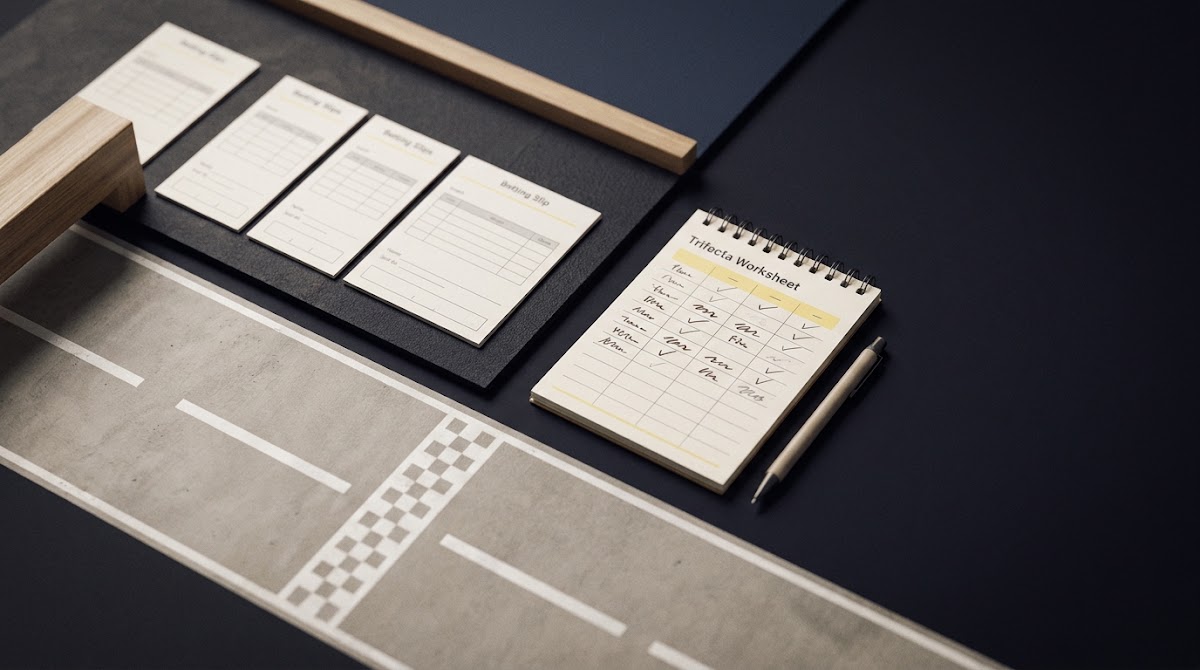
What a trifecta is and why the exact order matters
Definition and core terms - betting a trifecta
A trifecta is a pari-mutuel wager where you must pick the first three finishers in exact order, and the payout comes from the pool after the track takes out its share. This fundamental definition explains why betting a trifecta is harder than a simple win or place wager and why the payout varies with how other bettors structure their tickets and where money lands in the pool. Investopedia's trifecta overview
Compute combinations for boxes and part-wheels in one place
Use for quick cost estimates
That higher difficulty comes from the exact-order requirement. Picking the top three in sequence multiplies the number of possible outcomes compared with selecting a winner only, so ticket structure and combination counting matter before you even consider stake size.
That sensitivity is why trainers, jockey changes, and late scratches can reshape expected value quickly; the underlying pay mechanism does not change with ticket type, only which combinations you buy.
Because a trifecta demands exact order, a small change in which horses finish first or second can move money between many different combination tickets in the pool and thus shift payouts in sometimes large ways. When bettors concentrate on one likely order, that concentration can compress payouts; when many bettors pick different orders or longshots succeed, payouts expand.
Why order vs placement changes payout dynamics
That sensitivity is why trainers, jockey changes, and late scratches can reshape expected value quickly; the underlying pay mechanism does not change with ticket type, only which combinations you buy.
How trifecta payouts are determined: the pari-mutuel mechanics
Pools, takeout, and how payouts are calculated
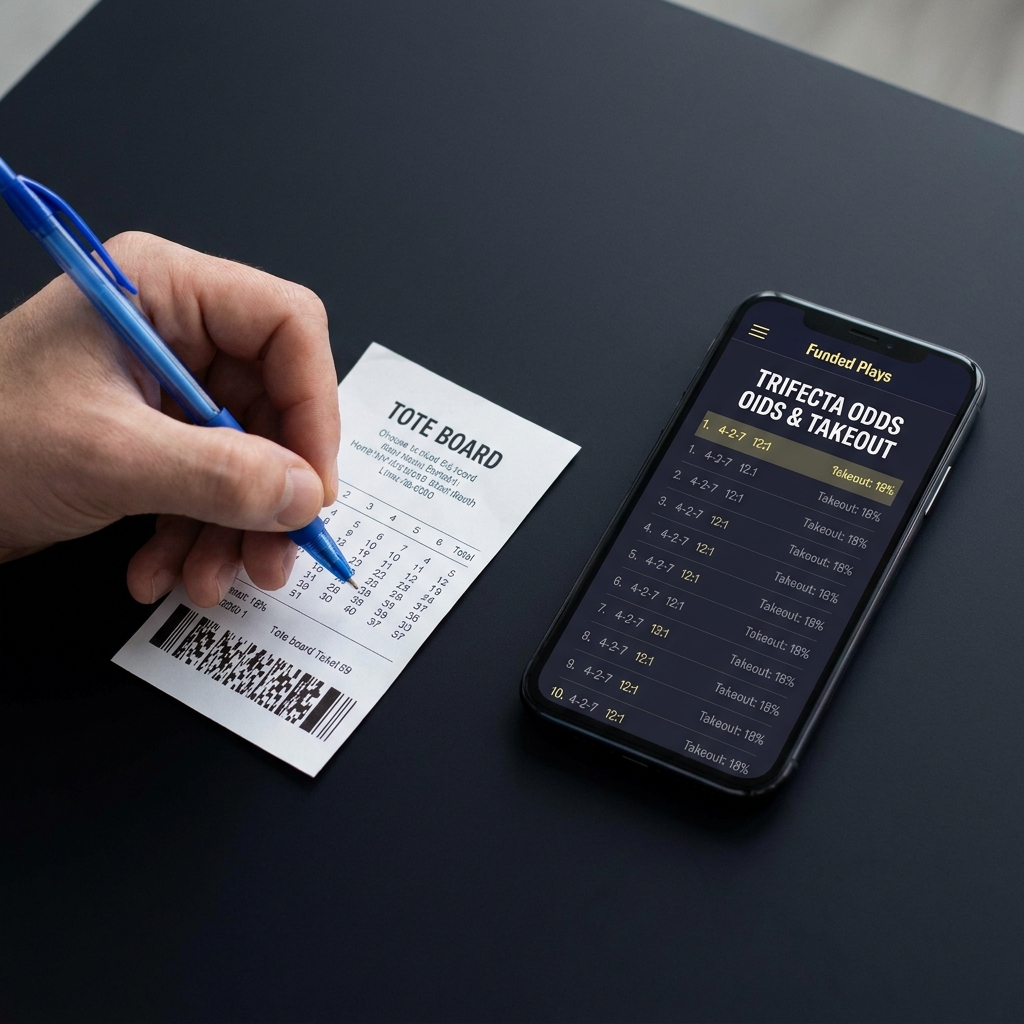
Trifecta payouts are calculated from the pari-mutuel pool after the track removes takeout, so the payoff per winning combination equals the remaining pool divided among winning tickets. This means the ticket format you choose does not alter the math that divides the net pool among winning tickets. Investopedia's trifecta overview pari-mutuel pool
Because the pool is shared, the same winning order can pay quite differently depending on how many bettors hit that precise sequence and how much money was wagered into other combinations.
When a race’s top three include multiple longshots, few tickets usually match that exact order, so the pool divides among a small number of winners and the payoff per ticket can be large. That is not a rule of guarantee, but a function of how pari-mutuel splitting works when payees are scarce. TwinSpires Edge how-to guide
Because takeout rates for trifectas are typically higher than for straight win or place bets and vary by track, bettors should consult the venue’s wagering menu before assuming value in a specific ticket structure. NYRA wagering information
Ticket types explained: straight, boxed, keyed, wheel and part-wheel
Straight trifecta
A straight trifecta is the simplest form: you nominate one horse for first, another for second, and a third for third in exact order. It buys a single combination and keeps cost minimal when you are confident about the top finishing order. TwinSpires Edge how-to guide
A straight is a good choice when there is a clear favorite and you want to risk one precise sequence rather than cover multiple possibilities.
Boxed trifecta (how combos scale)
Boxing horses purchases all order permutations of the selected horses, so a three-horse box creates six combinations without changing how the pool is paid. That increases your coverage at a linear cost per combination while leaving payout mechanics unchanged. TwinSpires Edge how-to guide
A box is an efficient way to cover a small cluster of contenders when you want to protect against order flips among them rather than to name a single precise sequence.
Choose based on field size, price distribution, and your bankroll: use straight or tight keys for small, clear races and boxes or part-wheels for larger, chaotic fields; always confirm takeout and rules first.
Key and part-wheel approaches
Key and part-wheel tickets let you anchor one or more positions and list other horses underneath, which targets outcomes and reduces cost compared with buying a full box of the same horses. By choosing a key horse in first and multiple runners for second and third you buy fewer combinations while keeping the most likely scenarios covered. America's Best Racing trifecta primer
Part-wheels let you mix breadth and focus: include a small core of horses in every position while limiting longshot inclusions to preserve bankroll.
Ticket cost math: how combinations and pricing work
Counting permutations and basic cost formulas
Combination counts translate directly to ticket counts because each permutation equals one bet line; for example a three-horse box equals six permutations, and your total cost equals the number of combinations times your bet unit. That relationship lets you estimate ticket cost before you bet. TwinSpires Edge how-to guide
Keeping a simple worksheet or the earlier calculator helps you avoid accidental over-buying when moving from straight tickets to boxes, wheels, or part-wheels.

Examples that show relative cost differences
As combinations multiply, costs scale linearly: adding horses to a box or wheel increases your combinations by predictable permutation counts, so the practical question becomes how many combination lines your bankroll and stake rules allow rather than guessing at payouts. Investopedia's trifecta overview
Using unit bets that match your bankroll plan keeps each race within a fixed risk envelope and makes it easier to compare outcomes after the race for future adjustments.
Which trifecta format is best for a given race: decision criteria
Field size and price distribution
There is no universally best trifecta; choice depends on field size, how many legitimate contenders exist, and how volatile prices are in the race. Small fields with a clear top selection often call for straights or tight keying, while larger, more chaotic fields usually benefit from boxes or part-wheels to capture unexpected orders. Investopedia's trifecta overview
Part of your decision should also factor in the venue takeout, because higher takeout reduces expected value and influences how wide you should spread coverage.

When to use straight or tight keying vs broad boxes and part-wheels
Use straight or tightly keyed tickets when the favorite is dominant and your research shows a narrow likely finishing order; use boxes or part-wheels when the race looks open and price volatility is high. The intent is to balance the probability you assign to a few orders against the linear cost of covering permutations. TwinSpires Edge how-to guide
Always confirm post positions, scratches, and takeout before committing to a broader coverage plan since those factors change both cost and expected payoff.
Rules, scratches and dead-heats: what can change your ticket
Common jurisdictional rules that affect trifectas
Official rules govern trifecta eligibility, minimum field size, and how wagers are handled in unusual cases; jurisdictions may reconfigure, convert, or refund bets if conditions are not met. It is essential to know the rule set that applies at the track where you are betting. California Horse Racing Board rule on trifecta administrative regulation
Because rules differ, a ticket that is valid at one track might be altered or voided at another if, for example, scratches reduce the field below a specified minimum.
How scratches and dead-heats are handled
Tracks usually have prescribed procedures for scratches and dead-heats that determine whether combinations are substituted, reduced, or paid by proportionate division; checking the local rules before placing complex tickets prevents surprises after the race. California Horse Racing Board rule on trifecta
Confirming these rules immediately before betting is a simple defensive habit that can save money and avoid invalid wagers.
A step-by-step framework to construct a cost-controlled trifecta ticket
Assess the race
Step 1, read the program and identify probable top finishers based on form, pace, and post position, then note which horses are most likely to mix into the top three.
Step 2, decide on your coverage level given field size and your confidence, choosing straight, key, box, wheel, or part-wheel patterns that match that coverage.
Practice structured trifecta tickets with FundedPlays Challenges
Try this checklist on the next race, but confirm scratches and takeout before you buy any combination.
Choose format and compute cost
Step 3, compute permutations for your chosen format and multiply by your unit bet to get the ticket cost; if the cost exceeds your preset maximum, tighten the ticket by removing longshot inclusions or switching to keyed lines. TwinSpires Edge how-to guide
Step 4, double-check that your stake size obeys bankroll rules and that the combinations match your intended coverage rather than an accidental over-buy.
Place tickets and document rationale
Step 5, place the validated tickets, then immediately record why you built the ticket in that way so you can review outcomes later and iterate on your approach. DRF guide on trifecta strategies

Keeping brief notes on expected order and the reasoning behind included horses builds a record you can use to measure whether your edge exists across many races.
Practical cost-control tactics and when to use them
Mixing boxes and keyed tickets
Part-wheels and keyed tickets let you prioritize specific outcomes while avoiding the full cost of a large box, which is useful when one horse looks substantially better but the rest of the field is uncertain. TwinSpires Edge how-to guide
For example, anchor a likely first or second finisher and use a short list beneath for the remaining slots to keep coverage focused and affordable.
Using part-wheels to reduce combinations
Part-wheels mix a fixed core with rotating outsiders so you buy fewer total combinations than a full wheel; they trade some coverage for lower cost and can be tailored to your bankroll plan. DRF guide on trifecta strategies
Be explicit about the tradeoff: fewer combinations increases the chance of missing a surprise exact order but preserves capital for more future opportunities.
Bankroll principles and long-run thinking for exotic players
Why structure and discipline matter
Good bankroll rules limit the proportion of your bankroll risked on a single race and emphasize repeatable ticket-sizing and record-keeping so you can test whether your approach yields a measurable edge over time. DRF guide on trifecta strategies
Because payouts are pool-based and variable, chasing a rare longshot payoff without a repeatable edge is unlikely to produce reliable results in the long run.
Setting realistic expectations
Expect variance and avoid treating occasional large payoffs as a proof of a profitable method; instead use small units or simulations to understand how different ticket structures perform across many races. Investopedia's trifecta overview
Document outcomes, update your decision rules, and resist scaling until you have consistent, documented improvement in results.
Typical mistakes and how to avoid them
Over-boxing and chasing payoffs
Buying too many combinations stretches bankroll and often produces negative long-term results because increased coverage raises cost linearly while payouts remain dependent on pool distribution and share among winners. TwinSpires Edge how-to guide
Set a hard limit on the number of combinations you will buy per race and stick to it to prevent emotional over-extension after seeing tempting carryovers or large pools.
Ignoring takeout and rules
Failing to verify takeout rates or local rules can turn an otherwise sensible ticket into a poor value or an invalid wager; always check the wagering menu and rule documents immediately before placing bets. NYRA wagering information
Simple preparatory steps-recomputing combinations after scratches and confirming the posted takeout-are inexpensive insurance against avoidable errors.
Practical scenarios and ticket templates to try
Small field with clear favorite
Tight 6-horse fields with one standout typically suit a straight or single-key approach: pick the favorite where you expect it and use a short list for the remaining positions so you buy minimal combinations while covering likely permutations. Investopedia's trifecta overview
This template prioritizes precision over coverage and keeps cost predictable when you have a high-confidence primary choice.
Large, open field with multiple longshots
In a 12-horse open race, combine small boxes and targeted part-wheels to include more potential outcomes without paying for every permutation; the aim is to preserve bankroll while capturing plausible surprise orders. TwinSpires Edge how-to guide
Practice these templates with small unit bets or in simulation to see how often they pay relative to cost before applying them with larger stakes.
Quick checklist and final checks before you place a trifecta
What to confirm in the minutes before betting
Before you commit: confirm scratches and post positions, check the track's wagering menu for takeout rates, recompute combinations and cost after any late changes, and ensure your stake matches your bankroll rules. California Horse Racing Board rule on trifecta wagering menu
These final checks are simple but essential; they turn an intention into a valid ticket that matches your plan.
Record-keeping and review
Save or note the ticket details and the reasoning behind your choices so you can review performance later and refine your templates based on observed outcomes. DRF guide on trifecta strategies
Regular review helps you separate luck from skill and supports disciplined scaling only after demonstrated improvement.
Conclusion: no single best trifecta, but a repeatable process is
Summary of key points
There is no one-size-fits-all answer to which trifecta is best; the right format depends on field size, price distribution, takeout, and your bankroll rules. Choose formats that match those conditions and use disciplined ticket sizing rather than chasing occasional large payoffs. Investopedia's trifecta overview
Next steps for practice and review
Practice templates with small stakes or simulated funds, keep brief records of your rationale, and adjust using measurable results rather than impulse. Over time, a repeatable process will reveal whether your approach produces a sustainable edge. NYRA wagering information
A boxed trifecta buys all order permutations of chosen horses, so a three-horse box creates six combinations; it increases coverage at a linear cost per combination.
Takeout reduces the net pool available for payouts, so higher takeout lowers expected value and should influence how wide you spread your coverage.
Recompute your combinations immediately and check the track rules; some jurisdictions may reconfigure or refund complex wagers depending on the situation.
References
- https://www.investopedia.com/terms/t/trifecta.asp
- https://edge.twinspires.com/racing/how-to-bet-a-trifecta/
- https://www.nyra.com/aqueduct/racing/wagering-information
- https://www.americasbestracing.net/gambling/betting-101-trifecta
- https://www.fundedplays.com/challenges
- https://www.chrb.ca.gov/wp-content/uploads/Rule_1979_Trifecta.pdf
- https://www.drf.com/learn/handicapping/understanding-trifectas-and-part-wheels/
- https://en.wikipedia.org/wiki/Parimutuel_betting
- https://www.kentuckyderby.com/wp-content/uploads/sites/3/2024/04/CDRT-Wagering-Rules.pdf
- https://www.fundedplays.com
- https://www.fundedplays.com/blogs
- https://www.fundedplays.com/blogs/how-fundedplays-evaluations-work
- https://www.nyra.com/aqueduct/racing/nyra-wagering-info/