

What does best odds guaranteed mean?
The phrase best odds guaranteed describes a policy that promises to pay a bettor at the better of the odds available when the bet was placed and a later improved price under specified conditions. This explanation focuses on the practical meaning so you can recognize when a posted price could be replaced by a later, more favorable one.
best odds guaranteed
In plain language, the rule means if the market moves in the bettor's favor before a defined cutoff, the bettor receives the improved price instead of the original price. The effect is simple to grasp, and the main value is avoiding the risk of missing a better payout that arrives shortly after you place a wager.
It typically applies to eligible price improvements that occur between placement and a defined policy cutoff such as market close, but applicability depends on the operator's published terms and the market type.
Plain-language definition
A non-technical definition: best odds guaranteed is a promise to credit a bettor with the highest eligible odds available within the policy window. Think of it as a safety net that preserves any immediate improvement in price for eligible bets.
Why operators offer it and the basic mechanics
Operators use the policy to reduce complaints about late price moves, to make their product more appealing, and to align customer experience with market volatility. Mechanically, the operator records the placed price and then checks eligible market feeds up to the policy cutoff and applies the most favorable eligible price at settlement.
Common limits often matter. Typical conditions include specific time windows from placement to market close, explicit lists of eligible bet types, and settlement rules that define when the improved price can be applied. Always check the exact terms that accompany any offer before assuming coverage.

When do you get best odds guaranteed? Timing and typical windows
When do you get best odds guaranteed? Timing and typical windows
Applicability is not automatic and varies by policy and market. Many users expect an improvement between the moment of placement and the market close (see closing line value), but what counts as a qualifying improvement depends on the published rules and the market type.
Typical timing windows you will encounter include short windows that extend from placement until the start of the event, a check at market close before settlement, and sometimes special provisions for ante-post markets where outcomes are decided well in advance. Each window creates a different expectation about whether late price moves will be captured.
Key moments when the rule is likely to apply
Common moments to watch are the immediate minutes after placing a bet, the official market close for settlement, and the start of an event where pre-match prices are locked. If a policy covers the interval between placement and market close, improvements that occur in that interval are the ones most likely to be credited.
Examples of common timing windows (pre-match, in-play, ante-post)
Pre-match markets often have the clearest cutoffs because there is a single market close. In-play scenarios are more complex and may be excluded or covered only for a short period around a specific trigger. Ante-post markets, where outcomes are decided far in advance, may have longer and more restrictive settlement rules that limit eligibility for improvement claims.

Before placing a bet, check whether the policy names the exact cutoff and whether the market you plan to use is listed as eligible (how Funded Plays evaluations work). Also note whether price improvements are checked against the operator's own feed or an external price source, since that detail affects the timing that matters for you.
How operators apply best odds guaranteed in practice
Operators typically spell out which bet types are eligible and which are excluded. Common exclusions can include novelty propositions, certain futures, markets subject to voiding, and bets affected by later official updates. Clear exclusions are the primary reason the policy does not apply universally.
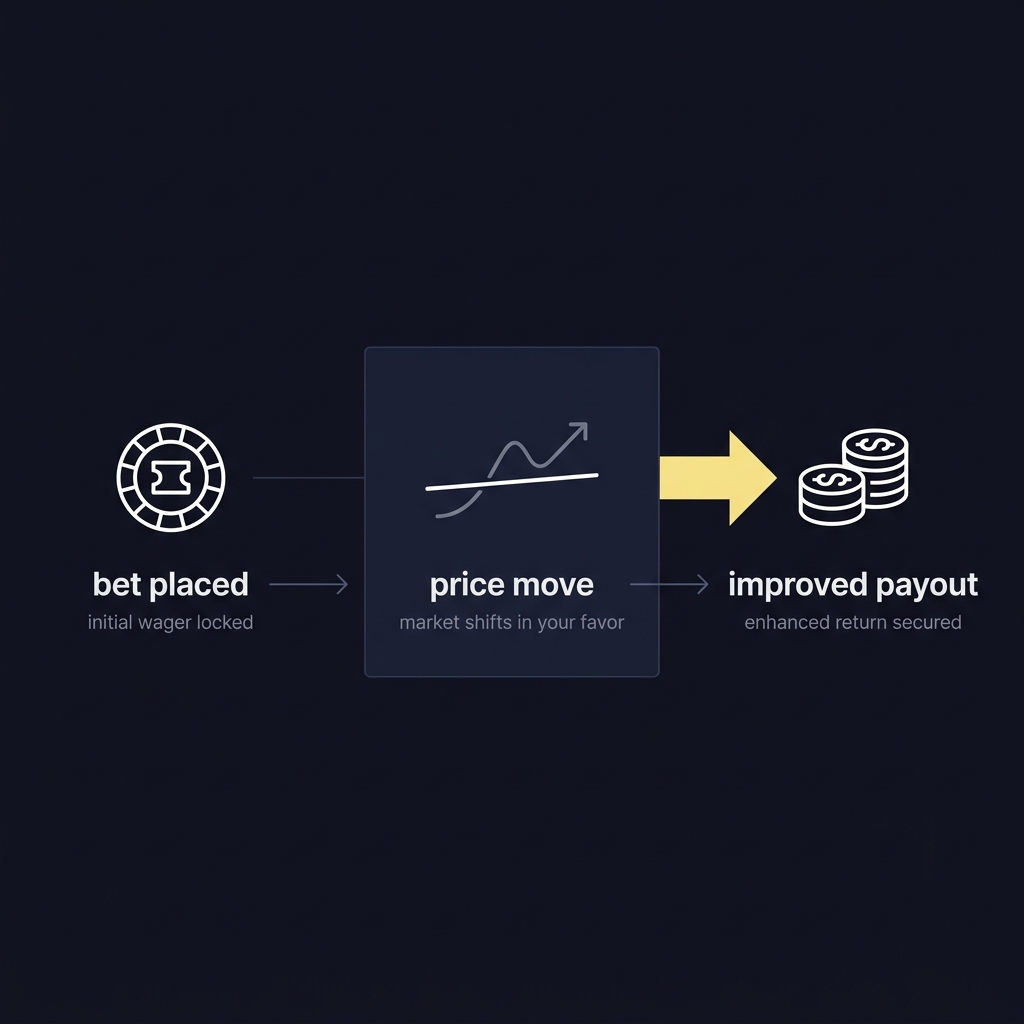
When odds improve and a bet is eligible, payout calculations normally use the improved decimal or fractional line applied to the original stake. The practical effect is a higher payout amount for winning bets when the improved price is credited. Check the terms to see whether the payout uses the improved odds only or whether other adjustments are made for partially settled markets.
Common operational rules and exceptions
Operationally, the published terms and automated systems determine eligibility (see examples of operator rules such as Fanatics' house rules). That means a recorded timestamp, market identifier, and the operator's internal matching logic ultimately decide whether an improvement is applied. Users should treat the published terms as authoritative and save their bet confirmations to support any later enquiry.
Which bet types and markets are frequently excluded
Frequently excluded categories include voided bets, special one-off proposition markets, and markets with complex settlement rules such as multiple-stage events. If a market has unusual settlement mechanics, the improvement rule may either not apply or be applied subject to detailed conditions in the terms.
How to use best odds guaranteed in your betting workflow
Use a concise pre-bet checklist every time you consider relying on the rule. Step one is to confirm that the policy applies to the market and bet type you plan to use. Step two is to capture the placed price and timestamp. Step three is to note any settlement or market-close conditions that might affect eligibility. Step four is to decide whether to wait or lock in the current price.
1. Confirm policy coverage for your market and bet type.
2. Record the placed price and timestamp from your bet confirmation or account history.
3. Note settlement cutoff rules and any language on ante-post or in-play exceptions.
Try structured challenges to sharpen timing and decision skills
Apply this checklist in your next bet to test whether relying on price improvement fits your process.
4. Decide whether to accept the posted odds or wait for movement based on your read of the market and your risk tolerance.
5. Set a monitoring reminder or use an odds capture method so you can capture any later improvement if it occurs.
When you document the bet, keep the confirmation and any screenshots that show the posted price and time. If you need to raise an issue later, those records make it easier to communicate what happened to customer service. A simple, consistent workflow reduces the chance of disputes and keeps decision-making disciplined.

How to decide when best odds guaranteed actually matters: decision criteria
Not every situation benefits from waiting for an improved price. Consider a few key criteria when you evaluate whether the rule is material to a specific wager: market volatility, expected magnitude of line movement, stake size, time until market close, and your personal risk tolerance. These factors together determine whether the likely improvement justifies the extra waiting risk.
Quick heuristic to estimate potential value of waiting for price movement
Use conservative inputs
A simple decision framework helps you act under uncertainty. Estimate the probability of a favorable movement and multiply by a conservative expected improvement to form a rough expected benefit. Compare that benefit to the cost of waiting, such as losing a current hedging option or risking a change that makes the bet ineligible.
Heuristic example: if the market is highly volatile and you place a significant stake far from market close, the chance and scale of a useful improvement may be higher. In contrast, in very stable markets with small expected improvements, the rule is unlikely to materially affect value and you may prefer to lock the current price.
Factors that change the value of relying on the rule
Market volatility and anticipated line movement are the primary drivers. Larger stake sizes magnify the value of an improved price, while short remaining time until market close reduces the window in which an improvement can occur. Your personal tolerance for execution risk also affects whether you prefer to wait for better odds or take the guarantee of the current price.
A simple decision framework
Use the following plain-language test: when probability of movement times expected improvement times stake exceeds your action threshold, waiting may be reasonable. If it does not, accept the current price and continue disciplined stake sizing and bankroll management instead of relying on rare improvements.
Common mistakes and pitfalls with best odds guaranteed
One common mistake is assuming universal coverage. Policies differ widely and do not always apply to every market. A short remedy: read the terms that apply at the time you place the bet and save a copy or screenshot of those terms.
Another mistake is failing to record timestamps and bet confirmations. If you do not capture evidence of the placed price and time, you have little ground to request a later correction. Preserve the bet confirmation and a clear screenshot of the posted odds to make any later enquiry straightforward.
Typical misunderstandings
Some users assume in-play improvements are always covered or that ante-post moves behave the same as pre-match moves. In practice, many policies exclude or restrict those cases. Treat each market on its own terms and do not extrapolate coverage from one market type to another without checking the published rules.
How to avoid disputes and preserve evidence
To reduce friction, keep a short evidence trail: bet confirmation, page screenshot with timestamp, and a note of the relevant terms. If you raise a dispute, present this documentation calmly and reference the precise wording of the terms that were in effect when you placed the bet.
A final pitfall is overreliance on the rule instead of sound stake and bankroll management. The policy can improve a payout in some cases, but it does not substitute for consistent staking discipline or a tested prediction process.
Practical examples and scenarios
Below are brief case studies that show how the rule might play out. The aim is not to provide exact numeric outcomes but to make clear where the rule changes what happens and where it does not.
Pre-match example
Scenario: You place a pre-match wager and within minutes the market odds improve. If the policy covers the interval between placement and market close and the bet type is eligible, you would receive the improved odds at settlement. In practice, this is a common case where the rule delivers immediate value for bettors who captured the original price (see discussion at Rules of Sport).
In-play example
Scenario: You place a bet shortly after the event has started and the market later offers a better price. Some policies exclude in-play price improvements or limit their application to very short windows. In such cases the rule might not help, or the improvement may be applied only under narrow conditions. Before placing an in-play wager, check how the policy treats live markets.
Ante-post example
Scenario: You wager on a long-term outcome well before the event date and the market drifts in your favor months later. Ante-post markets often have special settlement rules and may restrict improvement claims or require different evidence. Expect additional conditions for long-duration markets and document the terms carefully at purchase.
Across all scenarios, the useful practice is the same: document the placed price, understand the cutoff window, and check whether the market type is explicitly listed as eligible or excluded.
Quick checklist and next steps
Save this one-page checklist on Funded Plays and review it before you place any bet where you might rely on a later improvement.
Checklist:
- Confirm the policy applies to your market and bet type.
- Capture and save the placed price and timestamp.
- Note settlement and market-close conditions that affect eligibility.
- Estimate expected improvement and compare to your action threshold.
- Set a monitoring reminder to capture later movement if needed.
Recommended habits for consistent use include testing the workflow with small stakes, keeping a tidy record of confirmations, and periodically reviewing outcomes to see how often the rule produced useful gains. Remember that policies differ and past outcomes do not guarantee future results. See our blog for related posts.
Final note: best odds guaranteed can be a useful tool in a disciplined prediction process, but it is a narrow protection that depends on explicit terms and timely documentation. Use it as part of overall risk management rather than a substitute for thoughtful stake sizing.
No. Coverage varies by policy and market. Check the specific terms that apply at placement to see whether your bet type is eligible.
Save the bet confirmation, take a timestamped screenshot of the posted odds, and note the applicable terms at the time of placement.
Not always. Decide based on market volatility, expected improvement, stake size, and your risk tolerance.
References
- https://www.fundedplays.com/challenges
- https://www.fundedplays.com/blogs/how-fundedplays-evaluations-work
- https://oddsjam.com/betting-education/closing-line-value
- https://sportsbook.fanatics.com/legal/tn/house-rules/
- https://www.rulesofsport.com/betting/articles/what-is-closing-line-value-in-betting-and-does-it-really-matter/
- https://www.fundedplays.com
- https://www.fundedplays.com/blogs