
What does 'bengals odds' mean? Definitions and quick context
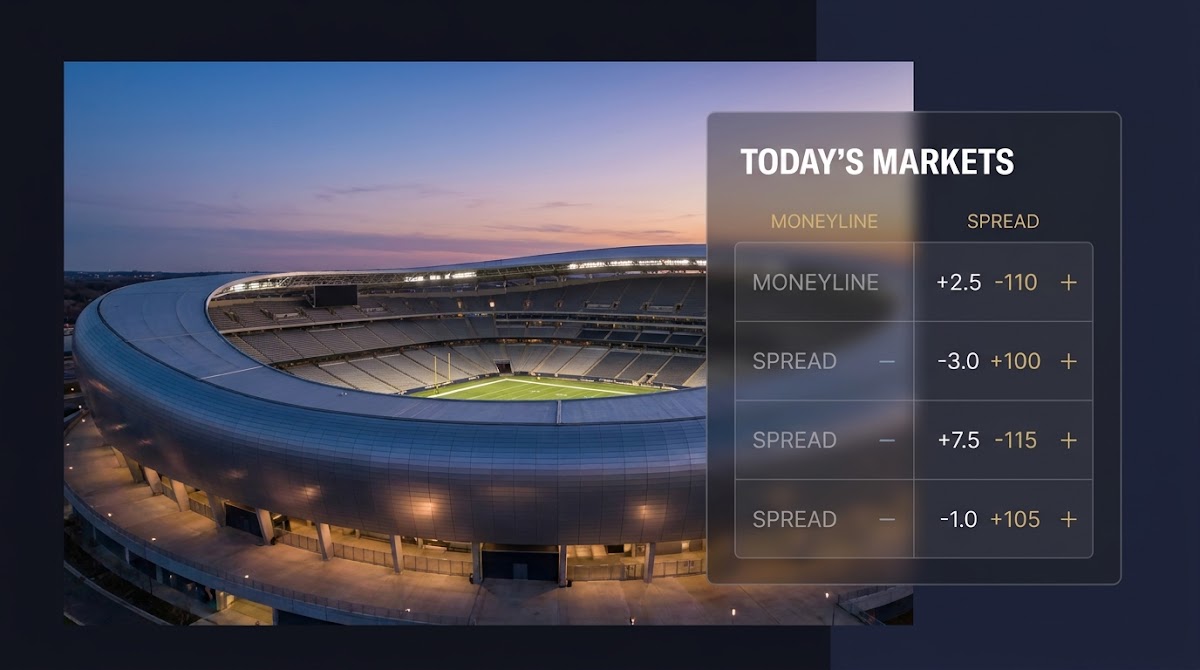
When you check bengals odds you are looking at market signals that show how likely bookmakers and bettors think Cincinnati will win a specific game. The clearest signals are the moneyline, which expresses a straight win price, and the point spread, which shows the expected margin. For a quick definition of moneyline mechanics, see the Investopedia moneyline definition Investopedia moneyline definition and our blog overview.
A moneyline presented as a negative number means the team is the favorite, while a positive number marks an underdog; that sign is the fastest way to see whether the market currently expects a Bengals win. That core rule about negative versus positive moneyline prices helps you interpret who the market favors without extra math.
The point spread gives the expected margin of victory, and a negative spread for a team means it is laying points and is considered the favorite on the line. For a concise definition of how point spreads work, consult the Investopedia point spread explanation Investopedia point spread.
Implied probability converts a moneyline into a percent chance of winning and is a useful way to compare how strongly the market favors one side over another. The standard approach to convert moneyline to implied probability is explained in the general implied probability guide Investopedia implied probability.
See live consensus odds
Check a live consensus odds page to see the moneyline and spread across books; that snapshot shows whether the Bengals are broadly priced as the favorite.
Step-by-step: How to tell if the Bengals are picked to win
1) Look at the moneyline first. If the Bengals have a negative moneyline, the market lists them as the favorite. This is the single fastest indicator to check when you want to know whether the Bengals are expected to win, based on market pricing.
2) Check the point spread next. If Cincinnati is listed with a negative spread, the market expects them to win by that margin and the spread confirms favorite status. Combining the moneyline and spread provides a consistent read on market expectations.
3) If moneyline and spread disagree, convert the moneyline to an implied probability to see how confident the market is numerically, and then compare that to the spread signal. Using both signals together reduces the chance of misreading an early or shifted line.
Check the moneyline: favorite or underdog?
Open the active line and scan the moneyline sign. A negative value indicates the Bengals are favored; a positive value indicates they are the underdog. This direct test relies on the basic moneyline rule and avoids misreading small price differences.
Check the spread: who is giving points?
Read the spread next. If the Bengals are listed with a minus sign before the spread number they are giving points and the market treats them as the expected winner by that margin. Use the spread as a cross-check against the moneyline for a fuller picture.

Consensus odds and aggregators: where to check and why it helps
A consensus odds page aggregates prices from many books so you can see whether the Bengals are broadly priced as a favorite or an underdog across the market. Aggregators display moneyline and spread values side by side and highlight movement in a way that a single-book check cannot, which helps you avoid being misled by an outlier price. For an example of a consensus odds resource for the Bengals, see the Cincinnati Bengals odds market comparison TheLines Cincinnati Bengals odds. You can also check the live lines on Action Network's Bengals odds Action Network's Bengals odds.
Aggregators also let you spot line movement, showing where books have moved and where early action has concentrated. Tracking movement across several books gives a more reliable market read than any single opening or midweek price.
Check whether the Bengals have a negative moneyline and a negative point spread across consensus pages; use implied probability and closing-line checks to judge how strongly the market favors them.
Because prices can vary by operator and timing, use the consensus page to confirm whether the majority of the market aligns on who is favored; this reduces the risk of basing a decision on one anomalous line.
What a consensus odds page shows
Consensus pages typically list multiple books, the moneyline, the spread and any noted movement or best available price. They make it faster to see whether most operators have the Bengals as the favored side or the underdog and to identify when prices start to converge ahead of kickoff.
How to read price movement across books
When you see a consistent shift in the same direction across several books, that movement usually reflects new information or heavy market action; when movement is scattered and isolated to one or two operators it is less predictive. Use that pattern recognition to decide how much weight to give a current line.
Timing matters: why lines move and when to trust the market
Odds move because new information arrives and money flows. Injuries, weather alerts and changes in betting volume are the main drivers that can change whether the Bengals are priced as favorites, so you should expect lines to shift as these factors update. For a practical overview of how lines react, see the sports betting primer on spreads, moneylines and totals VSiN betting basics. Compare books such as BetMGM for another operator perspective BetMGM Bengals.
Because of this volatility, the market snapshot closest to kickoff tends to be the most trustworthy read on whether the Bengals are picked to win. Closing lines aggregate the most up-to-date information and typically reflect late-breaking injuries and other game-day signals.
Pre-game volatility: injuries, weather and betting volume
Late injury reports can flip a favorite into an underdog or widen a spread significantly, and weather can alter expected scoring which affects both moneyline and spread. Heavy betting on one side will also move prices, especially early in the market when books balance exposure.
The value of closing lines close to kickoff
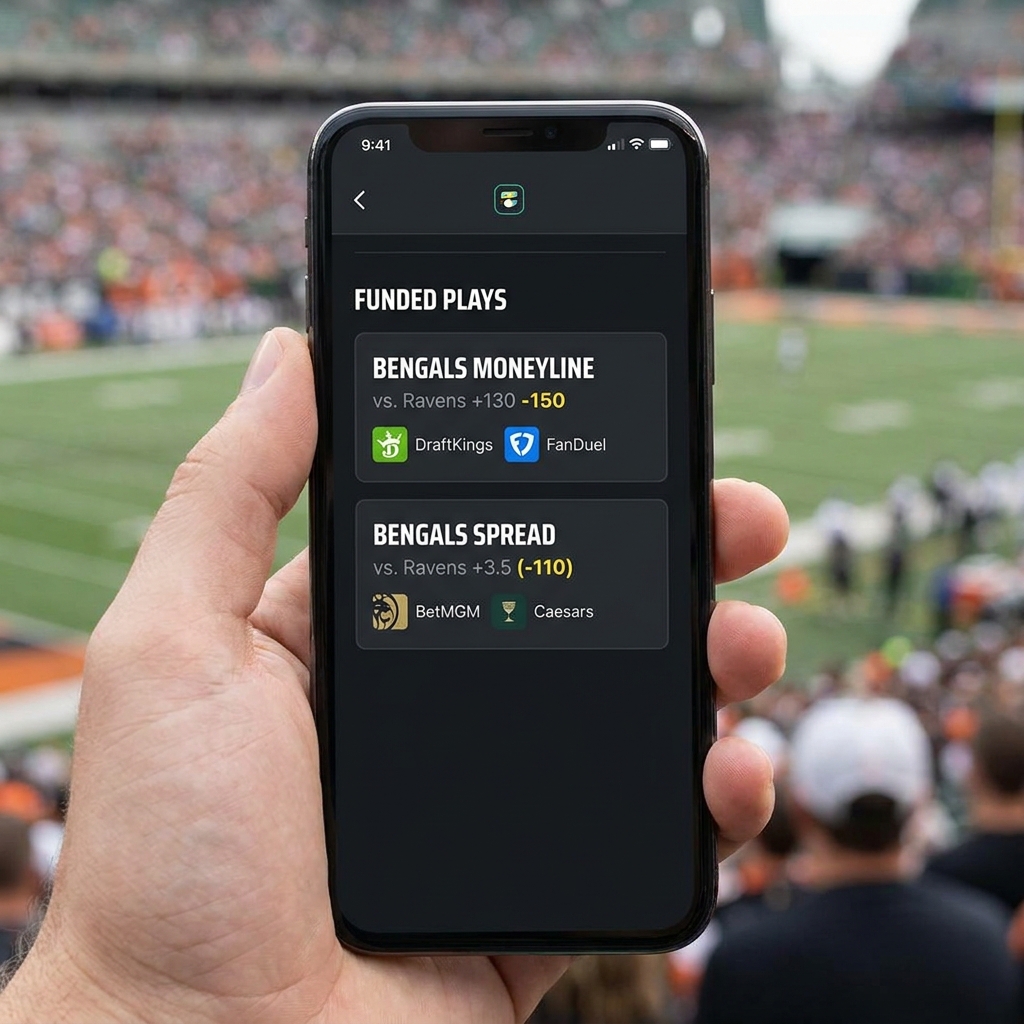
Closing lines often converge across books and are generally the most stable indicator for who the market believes will win when compared to early or opening prices; for that reason, verify lines as close to kickoff as possible before making a final call on whether the Bengals are favored.
How to convert moneyline to implied probability (and why it helps)
Converting a moneyline to implied probability turns a price into a percent chance and helps you compare how strongly the market favors the Bengals versus a simple favorite/underdog label. The standard conversion approach and examples are available in the implied probability overview Investopedia implied probability.
As a rule of thumb, favorites will have higher implied probabilities than underdogs, and the percentage gives you a useful sense of how likely a market expects a Bengals win to be rather than relying only on signs or spreads.

Simple formula and quick mental checks
For positive moneylines use the conversion 100 / (moneyline + 100) times 100 to get the implied percent; for negative moneylines use negative-moneyline divided by negative-moneyline plus 100, times 100. Framing the formula as a quick mental check helps you see whether a market is lukewarm or strongly favors one side.
Using implied probability to compare confidence
When implied probability and spread both indicate a clear favorite you have stronger market confidence; when implied probability is marginal and the spread is tight, treat the game as close and re-check lines later for movement before deciding.
Expert picks vs market lines: how to weigh opinions
Expert picks offer informed viewpoints but they are qualitative and can disagree with aggregated market lines; treat expertise as context rather than a replacement for the market snapshot. Major pundit hubs provide commentary and predictions, but those picks are opinions and should be balanced against consensus odds pages rather than taken as definitive. For an example of expert coverage, see the season hub of NFL expert picks CBS Sports NFL picks.
When expert views and market prices diverge, ask why. Experts may weigh injuries, matchups or inside information differently from where money is moving. Use the market as the final arbiter for who is currently priced to win, while using experts to identify reasoning behind movement.
Why expert picks can disagree with closing odds
Experts may form a view before markets digest all information or they may prioritize matchup analysis over market signals; that can produce persistent disagreement between pundit opinion and the consensus closing line.
Using expert analysis as context, not a replacement for market data
Read expert picks to understand potential reasons for a price, but confirm with a consensus odds page and implied probability so you know whether the market actually prices the Bengals as the favorite.
Decision checklist: concrete criteria to declare the Bengals 'picked to win'
Primary rule: Bengals show a negative moneyline and a negative point spread across consensus pages. If both are negative, the market is aligned and you can regard Cincinnati as the team picked to win in that matchup.
Convert moneyline to implied probability quickly
Enter whole-number moneyline values
Secondary checks: implied probability well above a minimal threshold and confirmation of consensus movement across multiple books. Use these to judge how strongly the Bengals are favored rather than just whether they are favored at all.
Primary signals: moneyline and spread alignment
If both core signals align, treat that as a strong market vote that the Bengals are expected to win. This dual confirmation reduces the chance that a single anomalous price is misleading.
Secondary signals: implied probability and consensus movement
When moneyline and spread align, the implied probability gives you a numeric sense of confidence and watching consensus movement shows whether that confidence is growing, shrinking or stable as kickoff approaches.
Marker placement: where the article will include interactive elements
This section documents where each marker appears in the article body and what content it contains; markers are single-paragraph blocks placed in the upper half of the article and are not enclosed in paragraph tags. For more detail on how our evaluations work, see how Funded Plays evaluations work how Funded Plays evaluations work.
CTA appears in the H2 labeled "What does 'bengals odds' mean? Definitions and quick context" as a single factual prompt to check live consensus odds pages, without a link. Question marker sits in the H2 labeled "Consensus odds and aggregators: where to check and why it helps" between two paragraphs to frame the aggregator explanation. Product marker is placed in the H2 labeled "How to convert moneyline to implied probability (and why it helps" and contains the Funded Plays Challenges link. Tool marker is included in the H2 labeled "Decision checklist" as a small calculator spec to help convert moneylines to implied probability.
How to use the markers: placement instructions
Place CTA as a standalone paragraph within the definitions section to prompt readers to consult a live consensus page; keep it short and neutral and do not include a link inside it.
Insert the empty question marker between two paragraphs in the consensus section to highlight a single clarifying question that prepares the reader to interpret aggregator output.
Put the Product marker in the implied probability section as a single paragraph containing the Funded Plays Challenges link, used only as a factual platform mention when describing simulation or challenge-style testing methods.
Common mistakes and pitfalls when reading Bengals odds
Relying on a single book can mislead you because isolated books can have outlier prices that do not reflect the broader market; aggregators reduce this single-book risk by showing multiple operators side by side. For how aggregators present multiple prices, see the Bengals market comparison resource TheLines Cincinnati Bengals odds.
Misreading juice or thinking small differences change favorite status is another frequent mistake; tiny price variations often reflect margin adjustments rather than a true flip in which team is favored. Keep focus on the sign of the moneyline and the sign of the spread when deciding favorite status.
Treat expert picks as opinion rather than market truth; expert commentary can be useful but it should not replace a cross-book market check when the goal is to decide if the Bengals are picked to win.
Practical scenarios: applying the checklist without using live prices
Scenario A, market-aligned signals: imagine both the moneyline and spread indicate the Bengals are the side giving points and the implied probability also tilts clearly toward Cincinnati; in that case the market consensus supports calling the Bengals the picked team and you can move forward with that interpretation.
Scenario B, conflicting signals: suppose the spread favors Cincinnati but the moneyline suggests they are underdogs. In that case re-check the consensus across multiple books, convert the moneyline to implied probability and wait for movement closer to kickoff before making a final call.
In both scenarios, the recommended action is to re-check lines as game time nears to capture late information that could resolve or widen a conflict between signals.
Quick pre-game checklist readers can follow (printable)
Top 5 quick checks in under 60 seconds
- Moneyline sign: negative means favorite
- Point spread sign: negative means giving points and expected winner
- Aggregator consensus: confirm the majority of books align
- Injury and weather alerts: note any late developments
- Closing-line check: verify the snapshot near kickoff
What to verify in the final 30 minutes: confirm there are no new injury reports or weather advisories and that consensus prices have not shifted enough to flip favorite status.
When the market is unclear: conservative approaches
When signals conflict, wait for closing lines close to kickoff before making a firm decision, since closing lines typically aggregate late-breaking information and betting flow. This approach reduces the risk of acting on premature or thin-market prices. For a primer on why closing lines matter, consult the betting basics resource VSiN betting basics.
Use smaller exposure or simulated accounts to test interpretation methods before committing larger stakes; simulation helps verify your process without relying on single outcomes.
Remember that expert picks cannot substitute for market consensus if the books disagree; favor the aggregated line when forming a final view of whether the Bengals are priced to win.
Glossary: quick reference of terms to scan a line fast
Moneyline: straight win price; negative indicates favorite, positive indicates underdog. See the standard definition for moneyline interpretation Investopedia moneyline definition.
Point spread: the expected margin of victory; a minus sign before the spread shows the team is giving points and is the favorite. For a short spread primer, consult the point spread overview Investopedia point spread.
Implied probability: the percent chance derived from a moneyline; use this to compare the strength of a favorite numerically. For method details, see the implied probability explanation Investopedia implied probability.
Consensus: aggregated prices across books; use consensus to reduce single-book risk. Aggregators like the market comparison page display multiple operators side by side TheLines Cincinnati Bengals odds.
Final takeaways and recommended next steps
Core rule to decide if the Bengals are picked to win: check for a negative moneyline and a negative point spread across consensus pages; when both align, the market is signaling the Bengals as the favored team.
Use implied probability to judge how strongly the market favors Cincinnati and re-check lines close to kickoff because injuries, weather and heavy betting volume can shift the market quickly. When expert picks differ from the consensus, treat pundits as context but rely on aggregated lines to determine current market expectations.
Adopt a short daily routine: open an aggregator, check moneyline and spread signs, convert the moneyline to implied probability when needed, and verify the closing line near kickoff to confirm whether the Bengals are truly picked to win. Also check sportsbooks like DraftKings for quick live prices DraftKings Bengals odds.
If the Bengals have a negative moneyline they are listed as the favorite; check an aggregator to confirm across multiple books.
A negative spread means the Bengals are giving points and are considered the expected winner by that margin.
Use expert picks as context but rely on consensus odds and implied probability for the market view, since experts are opinion-based.