
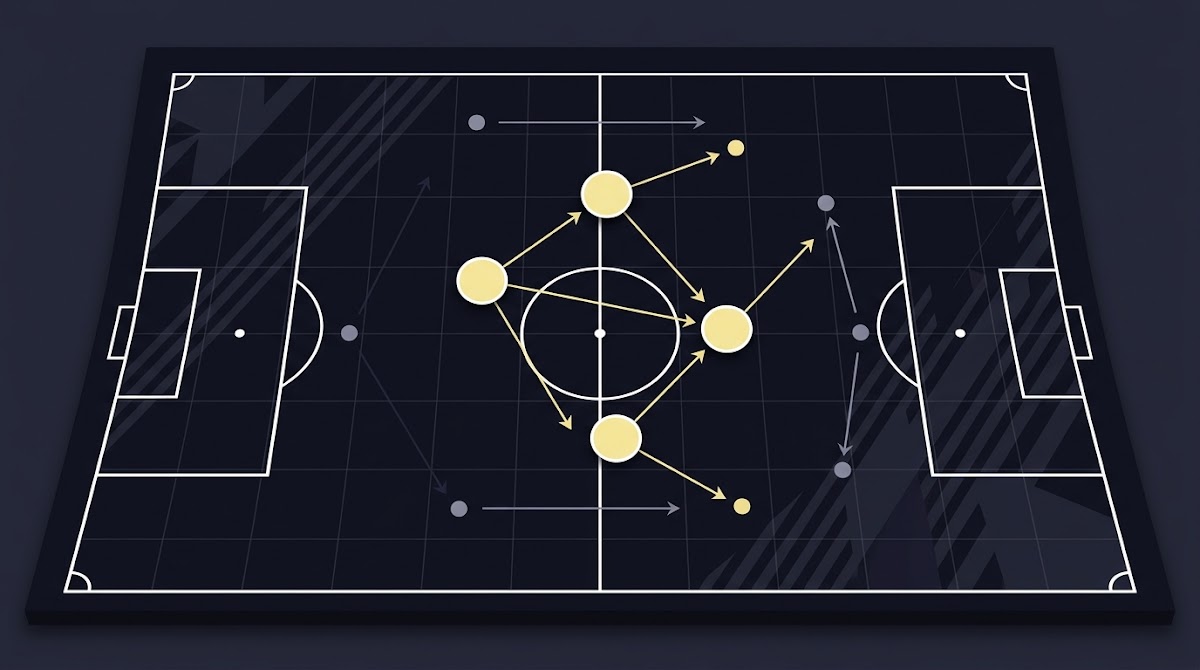
benfica prediction: what 'Big Three' means in soccer and why it matters
In a benfica prediction context, the phrase "big three players" means a concise trio of players most likely to influence the outcome of a single match, chosen because their roles, minutes, and recent involvement give them outsized leverage on events such as goals, assists, and chance creation.
Develop your prediction skills with structured challenges
Follow this short guide to learn a stepwise method for picking those three players and turning that shortlist into a simple, repeatable benfica prediction.
A neutral definition helps: the big three are not a guarantee of results, but an evaluation framework that focuses attention on a small number of high-leverage contributors so you can reduce noise in forecasting. By narrowing focus to three players you trade breadth for depth, which makes it easier to track measurable signals and to explain why a forecast looks the way it does.
For practical work this means you treat the big three as an interim model, not the final truth. Use the trio to structure checks on availability and recent minutes, to inspect likely tactical roles, and to flag the most important lineup risks before finalizing a benfica prediction. This approach is intended as a disciplined evaluation technique rather than a promise of outcomes.
Short example: selecting a front-line scorer, a creative midfielder who supplies chances, and a fullback who often contributes to attacking width gives a balanced set of levers to monitor in a match. That mix covers direct goal threat, creation, and wider influence, and can map directly onto common match-level prediction targets such as goal involvement or chance creation.
Historical and tactical context: how Benfica’s system shapes which players matter
Team formation and playing style strongly influence which positions tend to produce the most influential players. If a coach fields a narrow midfield the creative number might matter more. If wing-backs supply the width, those defenders can become primary chance creators. In short, formation and formation tendencies determine where the biggest marginal returns on individual performance appear.
Common positional groups that supply the most influential players include forwards who finish chances, creative midfielders who thread passes or create shots, and all-action fullbacks or wing-backs who add overloads on the flank. Which of these groups supplies your big three depends on the prevailing formation, and on how the coach uses those positions to create or prevent chances.
Formation patterns also shift over time. A move from a 4-2-3-1 to a 3-4-3 rebalances influence toward wing-backs and wide forwards, while a compact 4-3-3 can centralize influence in an advanced midfielder. Always treat the current tactical setup as a primary filter when deciding which three players to monitor.
Finally, opponent style and match state change who matters. Against a low-block defense the players who can break lines or shoot from distance gain importance, whereas against a high-press opponent the technical midfielders who can escape pressure and sustain possession become more valuable. Those context shifts mean your benfica prediction should begin with a tactical read before finalizing the trio.
How to identify Benfica’s current 'big three players' in practice
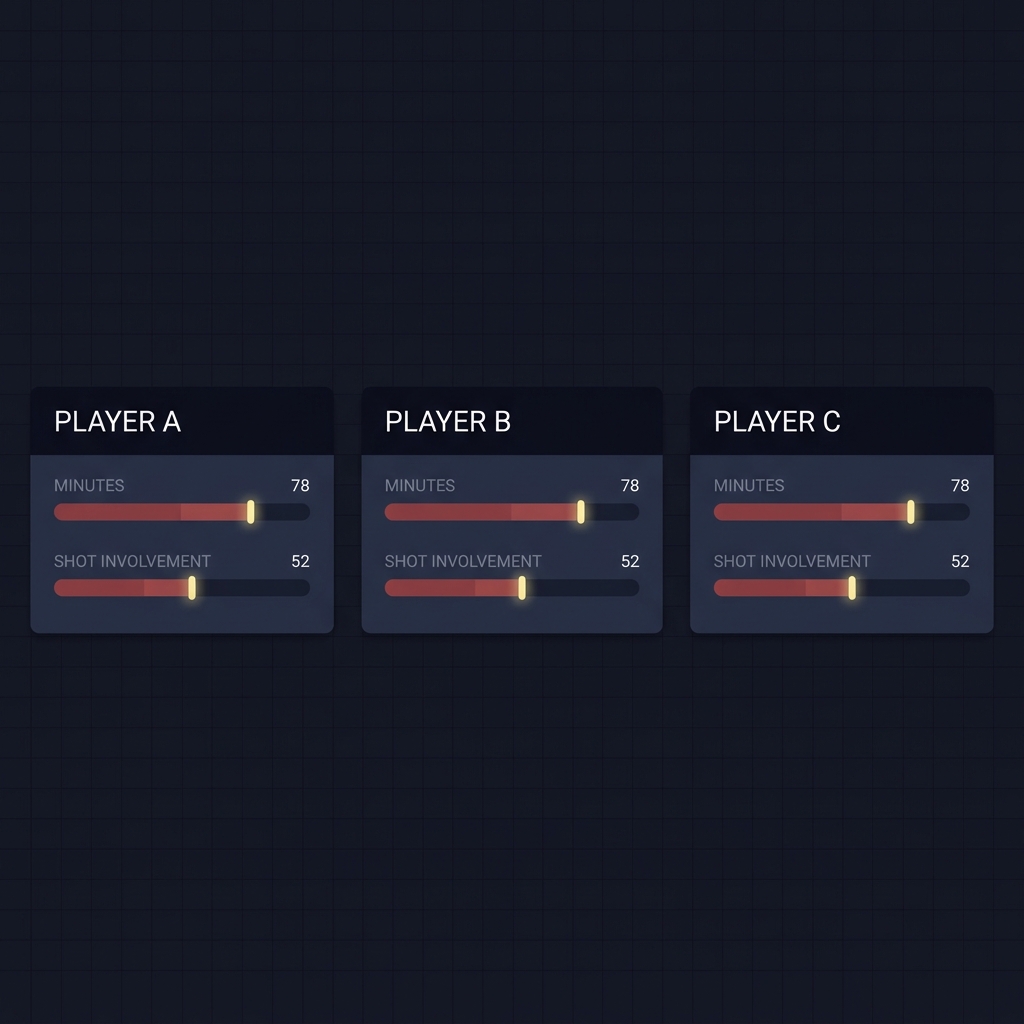
Begin with quantitative filters. Start by checking recent minutes to ensure role consistency, then look at goal involvement over the past few matches, shot volume for attacking players, and chances created for creative players. These basic filters reduce the candidate list to a handful who are both available and regularly influential.
Concrete quick checks, in order: 1) minutes played in the last three to five matches, 2) direct goal involvement in the same window, 3) shot volume or key pass frequency, and 4) positional stability, meaning the player has a consistent role within the starting lineup. Use these in sequence to eliminate players who are inconsistent or rotation risks.
Quick shortlist to identify main contributors
Check trends over three matches
Next add qualitative filters. Verify fitness and injury status, confirm whether the player’s tactical role is stable for this fixture, and consider matchup specifics such as whether the opponent is weak on a flank or in central transitions. A healthy player who is out of position or likely to be substituted frequently is less useful for a short-term benfica prediction even if metrics look strong.
Use this stepwise shortlist method to produce your top three candidates: start broad, apply quantitative cuts, then add qualitative adjustments. The output should be a ranked trio with a brief justification for each selection that notes minutes, involvement, and tactical fit. That justification is the backbone of a defensible benfica prediction.
Practical framework: building a simple benfica prediction for a single match
Choose a prediction target first. Common, practical targets are: goal involvement for individual players, combined expected contribution to team chances, or a simple match-level impact such as "player from the trio scores or assists". Pick a target that maps to the signals you can measure reliably.

Once the target is chosen, weight the big three. A straightforward weighting could assign 50 percent to your primary candidate, 30 percent to the second, and 20 percent to the third, reflecting relative minutes, involvement, and role certainty. Keep the weighting simple so you can explain adjustments after the match and avoid overfitting to one performance.
Example weighting bullets:
- Primary candidate: 50 percent, backed by consistent starts and recent goal involvements.
- Secondary candidate: 30 percent, strong chance creation and stable position.
- Tertiary candidate: 20 percent, lower minutes but high-impact actions when present.
Aggregate the weights into a single match-level forecast by mapping the weighted roster to your chosen target. For instance, if your target is "any of the trio to register goal involvement," translate weights into implied chances or confidence bands rather than absolute predictions. Keep outcomes described as probabilities or directional expectations, not certainties.
Finally, include a simple sanity check: confirm starting lineup after the final team news, re-evaluate any last-minute injuries, and adjust weights if substitution risk changes. Small manual overrides grounded in lineup confirmation are a normal and prudent part of a benfica prediction workflow.
Common prediction pitfalls when focusing on three Benfica players
Overreliance on a single metric is a frequent mistake. For example, using only expected goals or only shots ignores context such as role changes or opponent strategy. Avoid tying a benfica prediction to one number; instead triangulate across minutes, involvement, and tactical fit.
Small sample bias is another issue. A short hot streak should be tempered by minutes and previous patterns. If a player has two standout matches but limited prior involvement, treat that sample with skepticism and consider expanding your candidate list until the pattern stabilizes.
Rotation and lineup risk also create errors. Benfica, like other clubs, rotates for tactical reasons and for rest. If a player is a rotation risk or has inconsistent minutes, they are an unreliable component of a three-player shortlist for short-term predictions. Always check official team news and recent minutes exposure to reduce this risk.
To test sensitivity, run alternate versions of your forecast with each of the three players removed in turn. If the forecast changes dramatically when one player is excluded, that single-player dependence is a red flag that the model is unstable and should be broadened or reweighted.
Practical examples: translating player signals into match scenarios
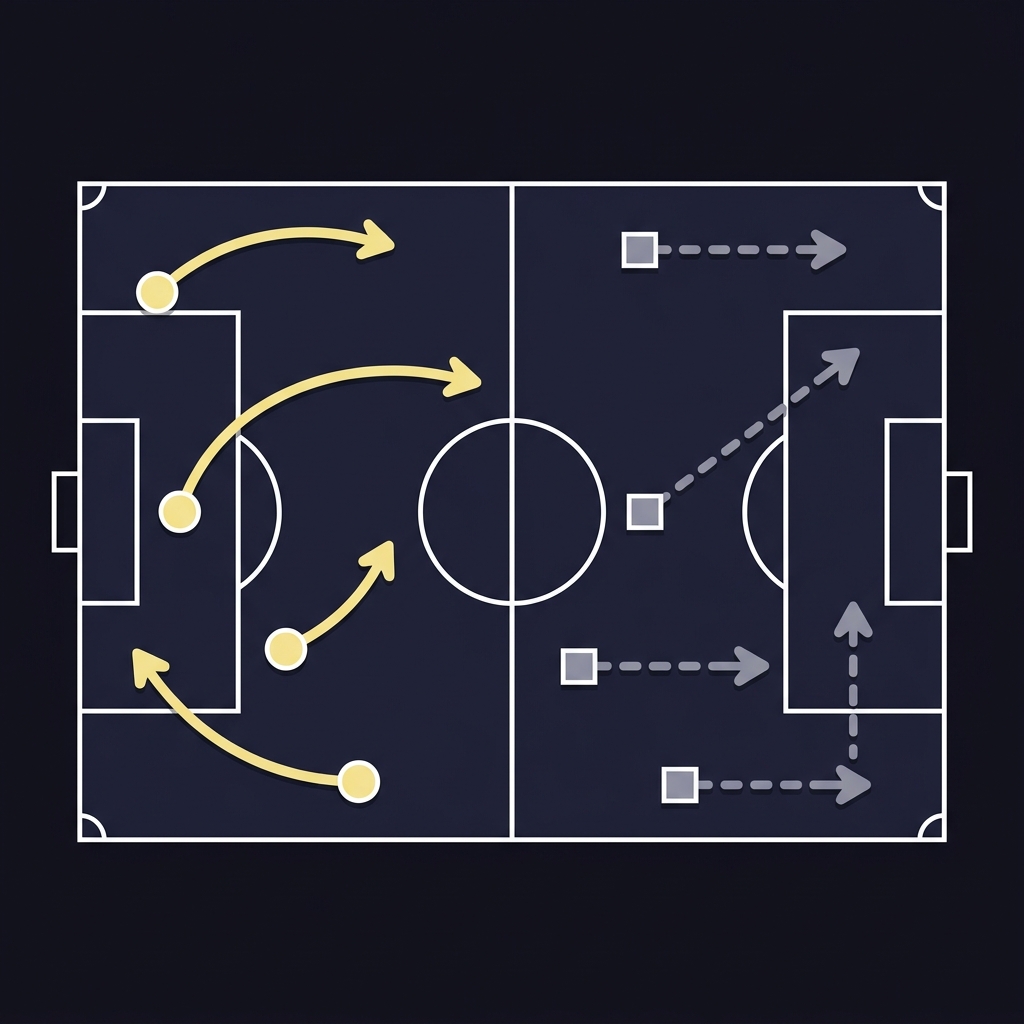
Scenario A: away match against a low-block defense. In this scenario the players who can create shots from distance or who are skilled at breaking compact lines become more valuable. Your trio might prioritize a forward with outside shooting and a midfielder who can play through tight spaces.
Step-through for Scenario A: increase weight on the players who can attempt and convert long-range opportunities and on the creative midfielder who can supply those chances. Reduce weight on wide players who usually rely on space behind the backline, because space will be limited.
Use a short, repeatable process: apply quantitative filters for minutes and involvement, add qualitative checks for fitness and role clarity, and translate the top three into weighted probabilities for your match-level forecast. Confirm final weights after official team news.
Scenario B: home match against a high-press opponent. Here, a technically composed midfielder who can resist pressure and an attacking fullback who exploits the wide areas when the press is bypassed matter more. Balance your trio toward possession retention and quick vertical transitions.
Step-through for Scenario B: raise the weight of the midfielder who holds the ball under pressure and the fullback who offers overloads. Lower the weighting for players who need long build-up or who depend on isolation to be effective.
Pre-match checklist to verify both scenarios: confirm starting lineup, check for late injuries, look for tactical notes suggesting a shift in approach, and reassess minutes for players at risk of early substitution. These verifications ensure your benfica prediction reflects the match reality rather than an outdated model assumption.
Assembling a repeatable benfica prediction model: tools, data and workflow
Minimal data inputs to track each week include minutes played, shot involvement, chances created, and a short tactical note summarizing the probable formation and key opponent traits. This minimal set gives you enough signal to shortlist players reliably without requiring complex proprietary feeds.
Weekly workflow, condensed: 1) data check to confirm minutes and involvement, 2) contextual check including opponent style and team news, 3) weight assignment to the big three, and 4) final sanity check against official lineup and late developments. Repeat this cycle each matchweek to build a consistent process.

Notes on automation: you can automate the first-stage data checks using basic spreadsheets or a small script that flags minutes and involvement thresholds, but keep human judgement for tactical reads and late lineup checks. Automation reduces repetitive work, while a short human review preserves the contextual understanding needed to finalize a benfica prediction.
Where to override raw metrics: when a tactical switch, clear rotation signal, or confirmed injury contradicts the quantitative indicators. In those cases privilege the verified news item and reassign weights accordingly. A repeatable model should specify when judgment overrides metrics, and record those decisions for later review.
Decision criteria: when to include a Benfica player in a short-term forecast
Use hard gates first. A player must meet availability criteria such as no injury report and a confirmed role in the expected starting lineup to be eligible for your top three. If a player fails the hard gates, exclude them regardless of attractive recent metrics.
Soft gates include recent form and matchup fit. Form can be operationalized as measurable contributions across the last three matches, such as minutes and goal involvements. Matchup fit is a qualitative assessment of whether the opponent’s style enhances or suppresses the player’s strengths.
Combine gates into a pass-fail system: require both a hard gate pass and at least one soft gate pass to include a player in the trio. This simple rule keeps your shortlist focused and reduces the chance of placing a rotation risk in a benfica prediction.
Always re-evaluate after official lineup announcements. Final confirmation can invalidate earlier inclusions, and a quick reweight or substitution in the shortlist is a normal part of responsible forecasting practice.
Conclusion and quick checklist for reliable benfica prediction practice
Three-step quick checklist to use now: 1) shortlist three players using minutes, involvement, and role clarity; 2) run contextual checks including tactical setup and opponent profile; 3) assign simple weights and confirm with final team news before publishing your benfica prediction.
Next steps for systematic improvement: track outcomes in a log, review sensitivity to each of the three players, and adjust weights based on observed calibration over time. Keep notes about tactical quirks and rotation patterns so your shortlist rules improve each week.
Final note on responsible participation: this guide describes a method for structuring forecasts and does not guarantee outcomes. Treat predictions as disciplined exercises in evaluation, keep records of decisions, and avoid overconfidence in single-match forecasts.
Start with minutes and goal involvement, then add checks for tactical role stability and injury status. Combine quantitative filters with a quick matchup review before finalizing your shortlist.
Treat substitution or rest as a lineup risk. Reweight your model or replace the player on the shortlist after official team news to keep the forecast aligned with match reality.
Automation helps with data checks and flagging, but human judgement should override metrics for tactical reads and late lineup changes.
References
- https://www.sciencedirect.com/org/science/article/pii/S1941629626000133
- https://footystats.org/clubs/sl-benfica-78
- https://statz.ai/team/benfica/goals
- https://www.fundedplays.com/blogs
- https://www.fundedplays.com
- https://www.fundedplays.com/challenges
- https://www.fundedplays.com/blogs/how-fundedplays-evaluations-work