
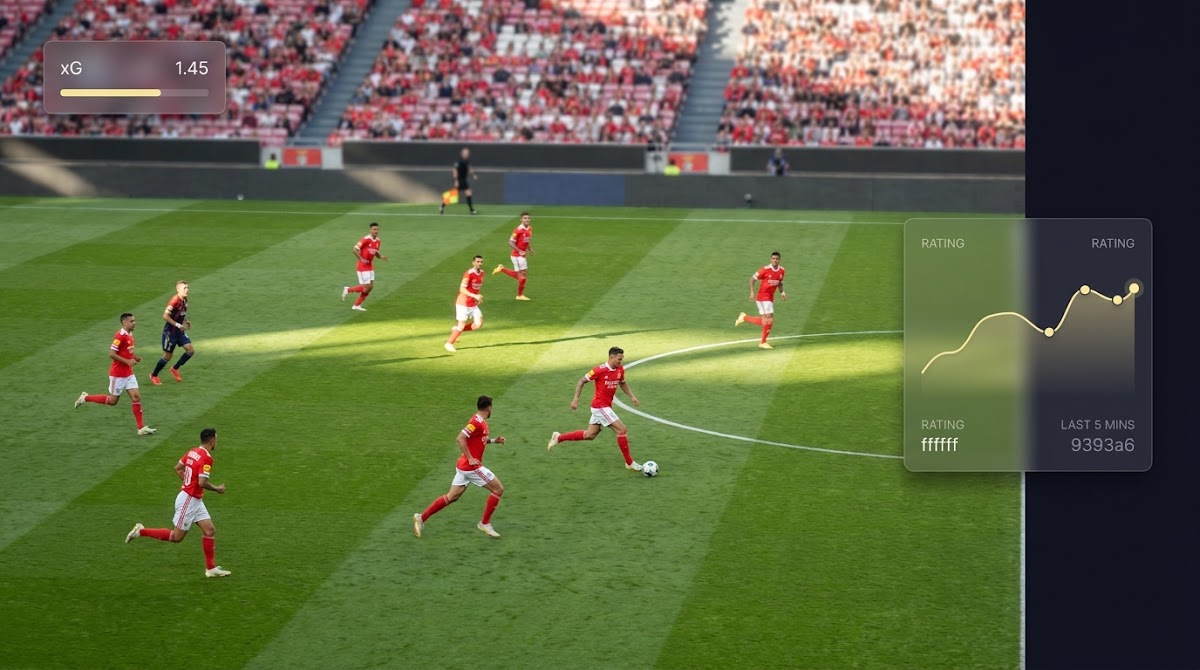
What we mean by 'best player right now' and how we measure it
When we ask who is Benfica's best player right now, we mean a reproducible, time-bound signal that weights a player's recent form higher than distant results while still respecting season-long production. This piece treats the phrase as an operational flag used in short-window benfica prediction and model features, not as a definitive career label.
Concretely, the working definition combines a recent-window of the last six to eight matches with season-normalized metrics expressed per-90 minutes, plus minimum minutes thresholds so the comparison is fair. For chance-quality metrics, we rely on established definitions for expected goals and expected assists to interpret whether a player is creating or taking high-quality chances The Analyst on expected goals.

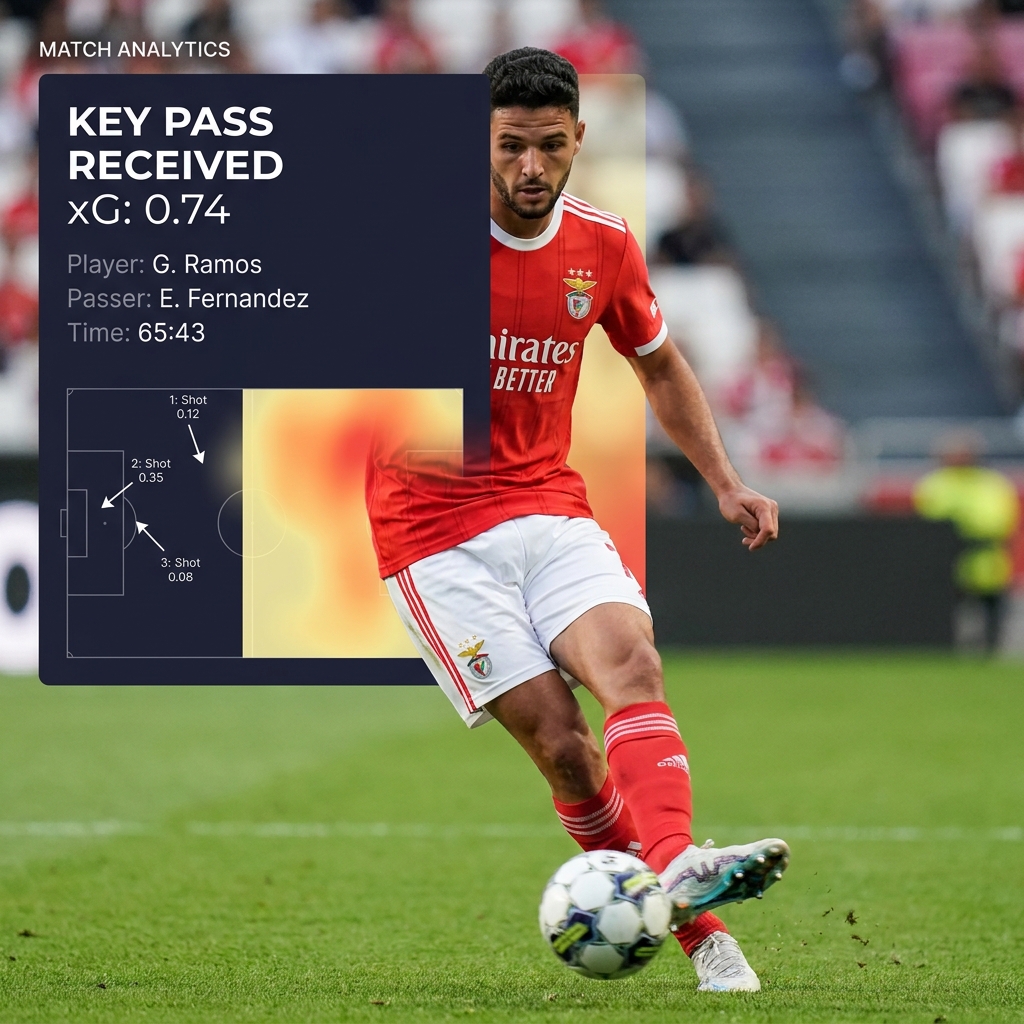
Primary data sources used in this workflow are rolling match-by-match ratings to capture running form and event-level databases to normalize production. WhoScored provides rolling ratings that help pinpoint short-term standouts, while FBref and Liga Portugal supply per-90 and league-only metrics for apples-to-apples comparisons, and UEFA pages capture performance in continental fixtures. For availability and minutes checks we cross-reference Transfermarkt.
All of these sources are public and suitable for a repeatable benfica form tracker approach. To be transparent, the workflow below explains which pages to pull and how to weight recent form against season context so a reader can replicate the ranking steps.
Defining 'right now': recent-window vs season-long
We treat 'right now' as a convex combination of a short recent-window and season-level indicators. The recent-window, typically the last six to eight first-team matches across competitions, receives extra weight because it captures current fitness, tactical role, and confidence. Season-long metrics give context and prevent overvaluing small-sample spikes.
Minimum minutes and appearance thresholds prevent a single substitute cameo from dominating the ranking. Using per-90 metrics means a player with limited minutes can be compared fairly where appropriate, but a minimum threshold avoids false positives.
Which data sources we use and why
WhoScored's rolling match-by-match ratings are a convenient way to see which players are producing above their baseline in the immediate term, and they form the primary short-window signal WhoScored Benfica team report. You can also check the alternative WhoScored Benfica listing WhoScored Benfica page for additional stat views.
FBref supplies detailed per-90 and total outputs for the season so we can normalize goals, assists, xG and defensive actions by minutes played and directly compare roles FBref Benfica season stats.
Liga Portugal's official database provides league-only, verified metrics which we use when we want a domestic-only baseline for comparisons that exclude cup and continental noise Liga Portugal squad statistics.
For European fixtures we check the UEFA competition pages so continental-level minutes and outputs can be weighted alongside domestic performance UEFA Benfica statistics. For player-level continental metrics you can also consult the UEFA player stats listing here.
Finally, Transfermarkt is useful for cross-checking appearances, exact minutes and role consistency across competitions when we set minimum thresholds and interpret position-specific usage Transfermarkt Benfica squad data.

Quick shortlist: the current top candidates for Benfica's best player
This shortlist is intentionally provisional and framed as candidate types rather than final rankings. Each entry below represents the kind of player who typically leads in the short-window or season metrics we value; the shortlist will be validated with the exact FBref, Liga Portugal and UEFA splits in the later sections.
One-sentence snapshot for each candidate
Leading attacker: the forward who tops goals per-90 or goals plus xG while also creating chances at a high rate in the last six to eight matches.
Primary playmaker: the creative midfielder who leads progressive passes, chances created per-90 and expected assists over the recent-window and season, supplying consistent chance quality.
Defensive anchor: the central defender or defensive midfielder with the highest pressures and ball-recovery metrics in the short-window and strong duel and interception rates across the season.
Wing or full-back contributor: the wide defender who combines progressive carries with key passes and defensive actions per-90, providing both attacking width and reliable defensive metrics.
How recent fixtures shaped this shortlist
The shortlist is assembled by checking WhoScored's rolling ratings for recent match form and then cross-checking who leads particular per-90 metrics on FBref and the official league pages. Recent fixture congestion, rotation and minutes picked up in UEFA ties are considered when deciding whether a short-term spike is sustainable.
Because the candidates come from different roles, the shortlist purposefully mixes attackers, midfielders and defenders so the method avoids apples-to-oranges comparisons until we apply role-specific criteria.
Core framework: how we combine ratings and event data to pick the leader
This section gives a step-by-step method you can repeat. The framework has four stages: collect, normalize, weigh and rank. The idea is to turn rolling ratings and event counts into a single, defensible leaderboard for current form.
Step-by-step: collect, normalize, weigh, and rank
1) Collect rolling ratings from WhoScored for the team to identify short-window standouts and note their recent match-by-match scores WhoScored Benfica team report.
2) Pull per-90 and totals from FBref to normalize goals, assists, xG, key passes, pressures and defensive actions by minutes so comparisons are fair across players with different workloads FBref Benfica season stats. For full-season and all-competitions tables see FBref Benfica all competitions.
3) Verify league-only outputs on Liga Portugal when you need a domestic baseline that excludes cups and continental competition Liga Portugal squad statistics.
4) Check UEFA pages to add or isolate continental performance when recent European fixtures materially affect minutes or outputs UEFA Benfica statistics.
5) Cross-check appearances and minutes on Transfermarkt to ensure role consistency and to set minimum minutes thresholds for per-90 comparisons Transfermarkt Benfica squad data.
6) Create a combined score by weighting the recent-window rating higher, for example 60 percent to the last six to eight matches and 40 percent to season-normalized per-90 metrics, then adjust for minutes and role. The exact weights are flexible but should be documented when used in models.
Explore FundedPlays Challenges for structured performance tracking
Follow the checklist above before locking in a top-player flag, and refresh the rolling ratings and per-90 pulls after each Benfica match to keep the signal current.
After computing the weighted score separately for attackers, midfielders and defenders, rank players within their role groups and then apply role-specific tie-breakers such as goals+xG for attackers or duel win rate for defenders.
Because chance quality matters for attackers, we privilege expected goals and expected assists as foundational metrics for shot and chance evaluation; those model-based measures help separate volume-driven outcomes from true chance quality The Analyst on expected goals.
How to balance hot streaks and season consistency
Hot streaks should move a player's combined score significantly but not completely override season context. A simple approach is to require that a player leading the recent-window also meets minimum season thresholds, for example a sensible minutes cutoff so transient bench appearances do not distort the leaderboard.
When possible, test the sensitivity of your benfica prediction model to different recent-window weights to see whether a larger or smaller hot-streak effect improves predictive accuracy. Always re-run the weighting after injury news or lineup confirmations because availability can flip the signal quickly.
Role-specific decision criteria: attackers, midfielders, defenders, and keepers
Comparisons across positions require position-aware metrics and thresholds. The following criteria give concrete, role-specific rules to determine which player is the top performer for that role group.
Which metrics matter most by position
Attackers: prioritize goals, goals plus xG, chances created, xA and shots on target per-90, combined with WhoScored attacking ratings to capture movement and finishing quality. Use xG and xA as the primary measures of chance quality rather than raw counting stats when possible The Analyst on expected goals.
Midfielders: emphasize progressive passes and chances created per-90, pressures and interceptions per-90, and WhoScored midfield ratings to capture defensive contribution plus creative impact. Look for players showing both high progressive passing and consistent pressures if you value both phases.
Defenders and keepers: use duel win rates, clearances, blocks and interceptions per-90, and UEFA defensive stats for continental-level checks. For keepers consider saves per-shot-on-target faced and clean-sheet context rather than raw saves counts.
Minimum minutes and role-consistency checks
Set a minimum minutes threshold before a player is eligible for the top-spot. A practical rule is to require at least 450 minutes in the season for a fair per-90 comparison, plus at least four starts in the recent-window to validate role consistency. Verify minutes and starting role via Transfermarkt before ranking final candidates Transfermarkt Benfica squad data.
When a player has been moved between roles, separate their statistics by position if possible and apply the role-based criteria to the split with the most minutes to avoid mixing winger and central midfielder production in the same comparison.
Common mistakes and pitfalls when naming 'the best' player
Several recurring errors can produce misleading rankings; being aware of them helps maintain discipline when creating a Benfica player rankings list.
Overvaluing small-sample hot streaks
Counting stats from a two-match hot streak are often noise. Use per-90 normalization plus a recent-window of six to eight matches and require minimum minutes to reduce false positives. If a player spikes in minutes and output due to a one-off role change, treat the spike as provisional until it repeats.
Ignoring minutes, role changes, and competition-level differences
Mixing domestic and European stats without adjusting for competition level can mislead. Use Liga Portugal league-only metrics when you need a domestic baseline and account for UEFA minutes separately when continental fixtures affect workload or minutes distribution Liga Portugal squad statistics.
Do not forget to cross-check appearance details and minutes to rule out a player who looks productive per-90 but lacks sufficient sample. Transfermarkt is the go-to for appearance and minute verification in this workflow Transfermarkt Benfica squad data.
Practical walkthroughs: two concrete player comparisons using live-data logic
The following examples show how to apply the framework in two role-matched comparisons. They are process demonstrations; specific numbers should be pulled from the live pages before finalizing a ranking.
endpoints to fetch live WhoScored, FBref and Liga Portugal player pages
use current matchday filters when available
Attacker comparison: goals, xG, and chances created
Step 1, collect: pull the last six WhoScored ratings for the two forward candidates and note their averages and variance. Then pull FBref per-90 goals, goals plus xG and chances created numbers to normalize production across minutes WhoScored Benfica team report.
Step 2, normalize: convert totals to per-90 where needed and ensure each candidate exceeds the minimum minutes threshold. If one candidate has superior goals per-90 but the other leads in goals+xG and chances created, the latter may be creating higher quality opportunities even if raw goals differ.
Step 3, weigh: apply the recent-window weight to WhoScored averages and combine with season-normalized per-90 metrics into a single composite. If expected goals indicate that a player is outperforming their xG rate for a sustained run, treat that as a cautionary signal rather than definitive evidence of superior finishing.
Step 4, interpret: the winner should be the attacker with the best combined score and appropriate minutes. Explain the decision in plain terms: for example, 'Candidate A leads in recent ratings and chances created, so the combined signal favors them for a short-window benfica prediction.' Because the example uses live data, repeat the pulls before using the verdict in models.
Midfielder or defender comparison: pressures, progressive passing, and WhoScored rating
Step 1, collect: compare the recent WhoScored midfield or defensive ratings and the FBref per-90 pressures, interceptions and progressive passes. Where continental minutes differ, split the FBref and UEFA numbers to see whether European matches inflate or deflate performance FBref Benfica season stats.
Step 2, normalize: as before, require minimum minutes and compare per-90 figures. If one player leads in pressures and progressive passing per-90, they provide both disruptive defense and forward momentum, a combination valuable for match projections.
Step 3, weigh and decide: combine the WhoScored recent rating with the per-90 defensive and progressive metrics. Prefer the player who shows role consistency and minutes availability because that stability makes the short-window signal more reliable.
Limitations: these walkthroughs depend on live pulls from the referenced pages. A lineup change, injury or new European fixture can change minutes and therefore the normalized picture before the next matchday.
How the verdict matters for benfica prediction and match projections
Identifying the current top performer provides a simple feature that can be added to short-window prediction models. A top-performer flag, used prudently, can shift probabilities in favor of outcomes tied to that player's influence such as goal-scoring chances or expected key passes.
For example, if an attacker is flagged as the current best player and is available to start, you might increase the model's expected goal share attributed to Benfica by a modest, tested percentage. The flag should never be used as a deterministic switch; it is a probabilistic input that requires calibration.
Use a reproducible combination of recent rolling ratings and season-normalized per-90 metrics, apply role-specific criteria and minimum minutes thresholds, then treat the result as a probabilistic input for short-window prediction models.
Remember to refresh continental minutes and lineup confirmations before final model runs because UEFA fixtures and recent rotations often materially affect availability and the short-window signal UEFA Benfica statistics.
In player-prop contexts, a current-top-performer label can inform side bets like shots-on-target or anytime scorer probabilities, but modelers should always present adjusted probabilities with uncertainty bands rather than absolute claims.
Summary and recommendations for readers tracking Benfica form
Key takeaways: combine WhoScored rolling ratings for recent form with FBref per-90 season metrics and verify league-only baselines on Liga Portugal. Cross-check minutes and role consistency on Transfermarkt before finalizing any top-player flag.
When to refresh: after each Benfica match, before model runs and after confirmed lineup or injury news. Keep a short audit trail of the data pulls and the exact weights used for recent-window versus season context so you can reproduce past decisions and test alternatives.
In practice, this reproducible method reduces subjectivity and makes benfica prediction signals easier to calibrate and explain to teammates or subscribers.
Refresh after every Benfica match and before any model run or betting decision, and again after confirmed lineup or injury updates.
Use WhoScored for a rapid rolling rating check, then verify per-90 and minutes on FBref and Transfermarkt for context.
No, it should be a probabilistic feature; adjust model weights modestly and include uncertainty rather than treating it as certain.
References
- https://theanalyst.com/eu/2021/08/expected-goals-xg-explained/
- https://www.fundedplays.com/challenges
- https://www.whoscored.com/Teams/211/Show/Portugal-Benfica
- https://fbref.com/en/squads/8f4d8e3b/Benfica-Stats
- https://www.ligaportugal.pt/en/liga/clubes/2025-26/ligaportugal/clube/4/benfica
- https://www.uefa.com/uefachampionsleague/clubs/50147--benfica/statistics/
- https://www.transfermarkt.com/sl-benfica/leistungsdatenverein/verein/294/saison_id/2025/plus/1
- https://www.fundedplays.com/blogs/how-fundedplays-evaluations-work
- https://www.whoscored.com/teams/299/show/portugal-benfica
- https://fbref.com/en/squads/a77c513e/2025-2026/all_comps/Benfica-Stats
- https://www.uefa.com/uefachampionsleague/statistics/players/
- https://www.fundedplays.com
- https://www.fundedplays.com/blogs