

What Athletic Club is and why it is unique
Quick definition
For anyone preparing an athletic bilbao prediction, the starting point is the club's identity: Athletic Club is defined first by a long-standing, self-imposed Basque-only recruitment principle and by a membership structure that keeps the club closely tied to its community.

The Basque-only policy means Athletic prioritises players who were developed in the wider Basque footballing region, and the club operates a member-owned governance model that shapes finances and long-term decisions. This combination gives Athletic a distinctive planning horizon compared with most top-flight teams, where transfer markets and private ownership often drive rapid roster turnover. The Guardian coverage
On matchdays the identity appears as a strong local fanbase and a matchday culture that emphasises homegrown talent and regional pride. Off the pitch the club's member ownership and local ties encourage steady, development-focused budgeting and patient squad building rather than short-term spending spikes. These organizational features matter when assessing team resilience over a full season, because continuity from the academy can translate into predictable tactical habits and lower sensitivity to single transfer windows. LaLiga's explainer
How uniqueness shows up on and off the pitch
On matchdays the identity appears as a strong local fanbase and a matchday culture that emphasises homegrown talent and regional pride. Off the pitch the club's member ownership and local ties encourage steady, development-focused budgeting and patient squad building rather than short-term spending spikes. These organizational features matter when assessing team resilience over a full season, because continuity from the academy can translate into predictable tactical habits and lower sensitivity to single transfer windows. LaLiga's explainer
Recent milestones that reinforced the model
2023/24 Copa del Rey and why it mattered
The 2023/24 Copa del Rey win was a concrete validation of Athletic's long-term approach: the club beat Mallorca on penalties to take the cup on 6 April 2024, its first victory in the competition since 1984, and that result underscored how a coherent development model can lead to major silverware.
Beyond the trophy itself, the win changed how many observers view Athletic's ceiling: instead of seeing the club solely as a romantic outlier, the Copa del Rey highlighted that a homegrown core can deliver knockout success against varied opposition. BBC Sport match report

That single trophy does not guarantee future titles, but it does alter reasonable expectations for Athletic across seasons: domestic cup runs become a realistic target and league ambitions shift toward consistent top-half performance, provided the academy pipeline keeps producing first-team quality players. This framing helps when setting probabilities in short-term forecasts and season-long models. Reuters match coverage
Lezama academy: the club's operational engine
How the academy pipeline works
Lezama is the formal academy that supplies Athletic's first team and the system through which local talent is scouted, coached and integrated into senior squads. Players who progress through Lezama are familiar with the club's tactical expectations and cultural norms, which lowers integration friction when they step up to the senior side.
That continuity also matters for prediction: players bred within the same system often deliver steadier performances across seasons because the club emphasizes a single game model and shared training philosophies. This reduces variance for match-level forecasts compared with teams that rebuild frequently.

Quantitatively, Lezama's role shows up in minutes played: in 2023/24 Athletic was among the big-five European clubs with the highest share of minutes played by club-trained players, a clear signal of the academy's sustained output and a structural advantage for internal continuity. CIES Football Observatory report
That high share of club-trained minutes lowers transfer dependency but also imposes a planning constraint: squad depth must be managed through internal promotion and selective signings that fit the Basque-only rule, which means rotation strategies and injury coverage are central to season forecasting.
The Basque-only policy is a club tradition and selection rule rather than a legal limitation: Athletic selects players who were developed in the Basque footballing region or who have Basque ties, and the policy is enforced through internal recruitment definitions rather than external mandate. Common misconceptions treat the rule as exclusionary in a blanket sense, but in practice the club defines clear eligibility pathways for players coming through the regional system. The Guardian analysis
Practically, the rule narrows the available recruitment pool and increases the value of each academy graduate. That intensifies the club's focus on youth scouting, coaching quality and long-term retention of promising players, because each homegrown breakthrough has disproportionate competitive value compared with clubs with open markets.
Check player eligibility examples against regional criteria
Use club or league registration data for verification
The policy pushes Athletic toward maximising internal pathways instead of relying on wide-ranging transfers, which makes depth and rotation predictable concerns every transfer window. Clubs with broader recruitment reach can buy quick depth; Athletic must plan for it through multi-year development cycles and selective signings that meet the regional criteria.
For a forecaster this means paying special attention to the health of the youth pipeline and to the club's defensive and midfield backups, because a stretched roster during congested fixtures can materially lower expected points per game without changing the underlying tactical quality of the starting XI. LaLiga explainer
Under Ernesto Valverde in 2023/24 Athletic showed a high-intensity pressing style with a focus on attacking via the wings and frequent crossing. That tactical profile leverages wide players and fast transitions to create chances, and it aligns with a roster built from academy-trained personnel used to Valverde's game model. The Analyst tactical study
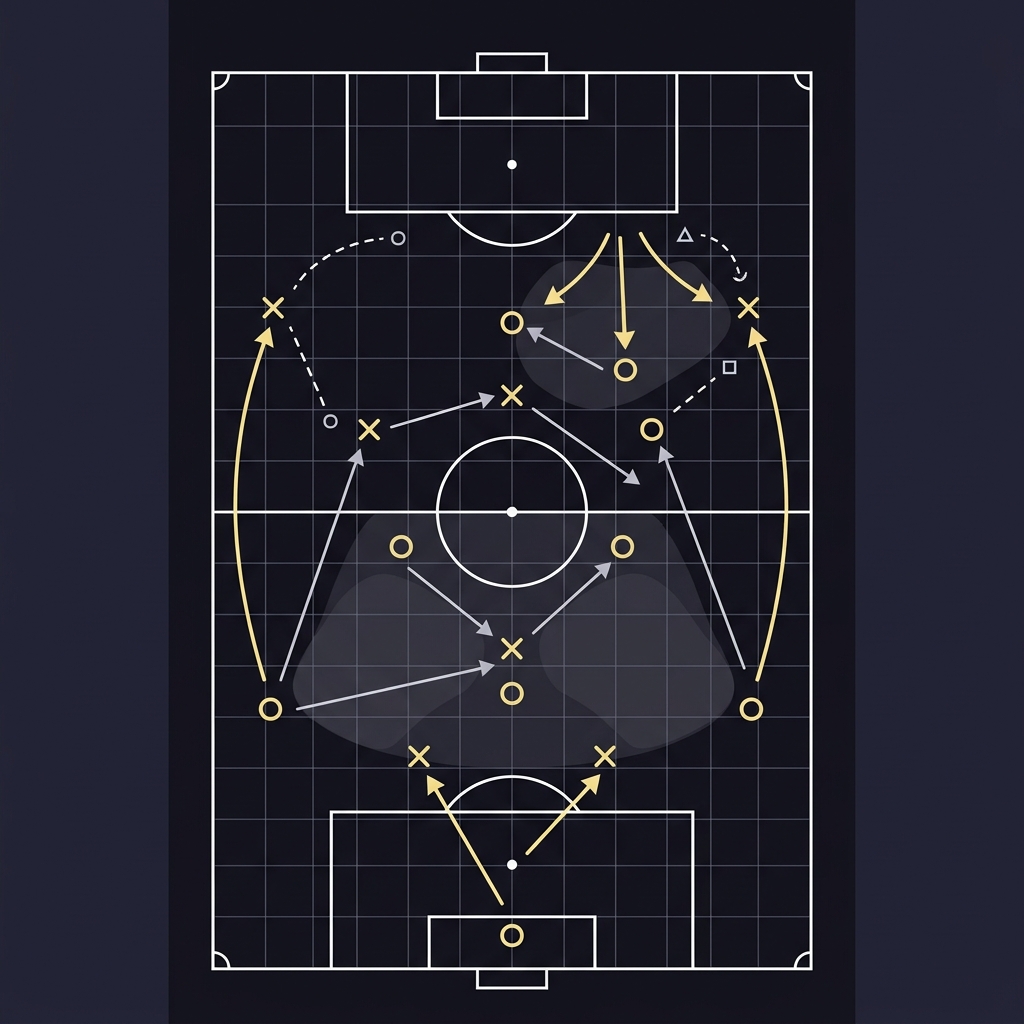
Because the team presses aggressively, matchups where the opponent can play through pressure or where Athletic cannot sustain intensity for long periods are informative signals when crafting single-match predictions. Pressing metrics and expected chance creation on the flanks should influence short-term probabilities more than isolated form lines in many cases.
A coherent tactical model suits an academy-born core: players developed together at Lezama are often schooled in the actions the manager requests, which reduces learning curves when new performers enter the lineup. The emphasis on wing play and crossing is a tactical lever Athletic can use repeatedly because squad members share formative training in those patterns.
When forecasting, the tactical fit suggests that Athletic will often overperform against teams vulnerable on the flanks and underperform against compact low-block teams who limit crossing opportunities. Tracking opponent defensive shape thus becomes important in an athletic bilbao prediction for individual matches.
Athletic's main strengths are continuity, a high share of club-trained minutes that fosters cohesion, and a stable tactical plan that amplifies individual and collective familiarity. Those strengths help explain why the club can sustain competitive results across seasons even without the widest possible recruitment net. CIES evidence on minutes
The member-owned structure and regional identity also produce strong home support and a clear club culture, which reduces volatility in home performances and can be beneficial in knockout cup contexts where familiarity and cohesion are often decisive. The Guardian on identity
The policy concentrates the club's competitive inputs around academy output and tactical continuity, which makes performance more dependent on player development, rotation and injury management than on wide transfer-market moves.
Constraints include the narrower recruitment pool, which can limit rotation options and expose the squad during injury spikes or congested fixture periods. Predictive models should therefore downgrade expected returns slightly in stretches with multiple competitions unless reliable rotation options are visible.
These trade-offs mean top-half league finishes and cup runs are realistic targets, while consistent European qualification often depends on small improvements in chance creation and careful rotation. Historical output suggests Athletic can get close to European places, but margins are small and subject to fixture luck and injury management. BBC Sport coverage
A common error is to assume the Basque policy prevents Athletic from competing at a high level. That ignores the empirical fact that the club regularly fields a large share of club-trained minutes and that those players can and do win trophies, as the 2023/24 Copa del Rey illustrates. Treating the policy as a categorical handicap leads to biased forecasts. CIES minutes report
Instead, forecasts should quantify the constraint and then account for the amplifying effect of continuity, rather than replacing evidence with a fixed penalty for the recruitment rule.
An opposite mistake is to interpret Athletic's identity as stagnation or tactical rigidity. While the club emphasises continuity, the team evolves incrementally through tactical tweaks, fresh academy profiles and selective signings that fit the model. Observers who conflate identity with immutability miss how athletic club academy development can produce adaptive advantages over time. The Guardian analysis
For predictions, that means treating Athletic as a dynamic system with stable inputs rather than a static team trapped by tradition.
Use a short checklist when forming an athletic bilbao prediction: consider Lezama academy continuity, recent minutes by club-trained players, opponent defensive shape and pressing matchups, fixture congestion and likely rotation plans. These elements combine tactical and structural signals in a way that is specific to Athletic.
Apply the checklist in order: first confirm likely starters and whether key wide players are fit; second assess opponent suitability to Athletic's wing play; third factor in squad depth for potential rotation and cup commitments; fourth weight home advantage and cultural continuity for marginal gains in expectation.
Try a short Athletic prediction checklist
Try the checklist on a single upcoming match: list likely starters, note opponent defensive shape, and decide whether Athletic can sustain high pressing for the full 90 minutes.
Scenario 1, league match vs a low-block team: Against compact opponents that defend deep and limit crossing lanes, Athletic's wing-focused game may be less effective, so a conservative prediction like a draw or narrow away loss is reasonable unless the opponent shows susceptibility to aerial or set-piece threats. This scenario values tactical matchup more than season form and explains why Athletic can underperform in specific tactical contests. The Analyst tactics piece
Scenario 2, cup tie at San Mames with rotation: If Athletic rests fringe players for a cup match and relies on academy rotation, the club's cohesion can carry them past weaker opponents, but the margin is thin; single-elimination ties favour teams that can combine tactical clarity with home support. A cautious prediction would reduce expected goals for Athletic if multiple starters are absent. BBC coverage
Scenario 3, season-end projection: Given Lezama output and a coherent tactical identity, a top-half finish with credible cup runs is a sensible season-level forecast, while European qualification is plausible but contingent on incremental gains in chance creation and reliable rotation through the year. Use the academy minutes metric and recent cup performance as weighting features in your season model. CIES season-level metric
Conclusion: what makes Athletic Bilbao special and what to expect in 2026/27
Key takeaways
Athletic Club is special because its Basque-only recruitment policy, member-owned governance, Lezama academy pipeline and member-owned governance together create a predictable competitive model that emphasises continuity and tactical familiarity. That model has real competitive value, as shown by the club's high share of club-trained minutes and by recent cup success. BBC Sport summary
Realistic short-term outlook
For 2026/27, the sensible expectation is a top-half LaLiga finish and credible cup ambitions, with European spots remaining within reach but dependent on small performance improvements in chance creation and rotation. Past success validates the approach, but it does not eliminate the uncertainty that comes from injuries, fixture congestion and narrow recruitment rules. CIES context
Athletic follows a self-imposed policy that prioritises players developed in the Basque footballing region or with Basque ties; it is a club rule rather than a legal requirement.
Lezama is central: the academy supplies a high share of first-team minutes and reduces transfer dependency, supporting continuity and tactical cohesion.
European qualification is plausible but not guaranteed; it depends on marginal gains in chance creation, squad rotation and avoiding key injuries.
References
- https://www.theguardian.com/football/2024/apr/07/athletic-bilbao-copa-del-rey-basque-identity-policy
- https://www.laliga.com/en-GB/news/why-athletic-club-only-sign-basque-players-explained
- https://www.bbc.com/sport/football/68777384
- https://www.reuters.com/world/europe/athletic-bilbao-beat-mallorca-win-kings-cup-after-penalties-2024-04-06/
- https://football-observatory.com/club-trained-players-2023-24-share-of-minutes-big-5
- https://theanalyst.com/eu/2024/03/athletic-club-pressing-ernesto-valverde-laliga-2023-24/
- https://www.fundedplays.com/challenges
- https://www.fundedplays.com
- https://www.fundedplays.com/blogs
- https://www.fundedplays.com/blogs/how-fundedplays-evaluations-work
- https://www.athletic-club.eus/en/teams/lezama/
- https://insideathletic.com/lezama-academy-facilities/
- https://www.theguardian.com/football/2018/oct/30/athletic-bilbao-players-la-liga