
Quick answer and who should read this
Short verdict, asian sportsbook
Asian lines are a market format that changes how a match outcome is settled to remove or reduce the draw, and they are common in football and some other global sports. If you want a concise takeaway: Asian lines are useful when you want clearer win or loss outcomes from a handicap market and when you care about partial settlement rules rather than full-push draws.
Who should read this: sports fans who want to understand the mechanics, odds readers who compare markets, and anyone checking whether an asian sportsbook offers the depth and settlement clarity they need before using a market in a strategy.
quick line-reading micro-checklist for Asian lines
use as a five-step quick scan
The article does not list specific operators. Instead it explains how to recognise Asian lines on an operator site, how settlement works, and what to check when you compare markets. Read on for step-by-step examples, a practical verification routine, and simple decision criteria you can use in five minutes.
Use the short checklist above to run a quick scan when you first open a market. It fits on one screen and helps you avoid the common early mistakes this article covers later.
What are Asian lines? Definition and context
Asian lines, often called Asian handicap in casual terms, are a way of handicapping a match so that bets avoid a three-way outcome in many cases. Instead of win, draw, or lose, the market structures one side with a goal disadvantage or advantage that changes how the result is settled. The net effect is fewer pushes and clearer risk management for stake settlement.
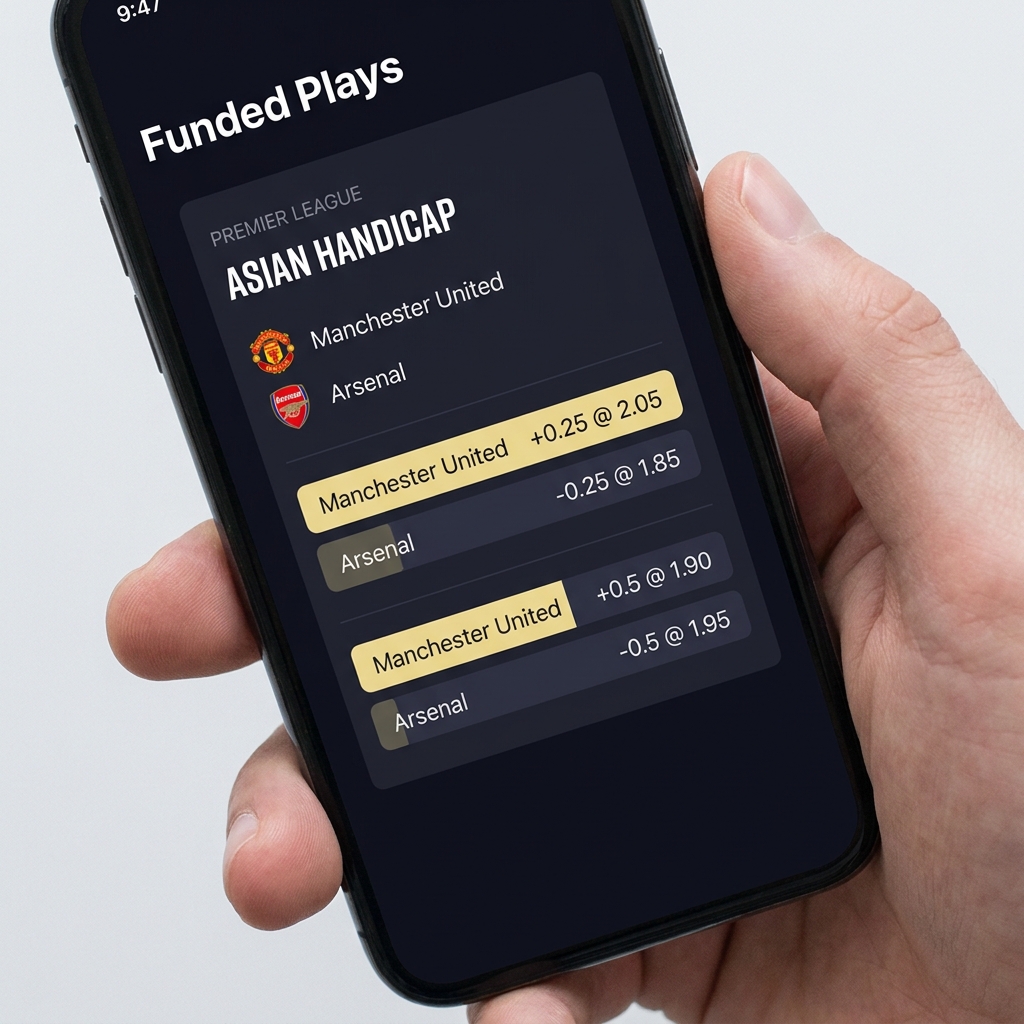
To be concrete, a basic Asian line assigns a positive or negative handicap in goals or points, for example one team starts at -0.5 or +1. Quarter-goal and half-goal increments alter how the stake is resolved if the margin matches the handicap. For sports like football the format is very common, and similar formats appear in other sports where a scoring margin can be applied.
Asian lines differ from European handicaps because they often remove the draw as a possible final outcome by splitting stakes or by ensuring that the settlement results in a win or loss except where specific push rules apply. That difference changes both how you think about value and how bookmakers display odds and limits.
How Asian lines work: the mechanics explained
Asian lines use whole, half, and quarter increments to define settlement. A whole-number handicap, such as -1, is simple: the selection must win by more than one goal for a full win, by exactly one for a push, and by less or lose for a loss. Half-goal lines, such as -0.5, remove the push because there is no way to draw at half-goal increments; the selection either wins or loses outright.
A quarter-goal line splits the stake. For example a -0.25 line is effectively half at 0 and half at -0.5. If the match finishes level, the half at 0 is a push and the half at -0.5 is a loss, so the bettor loses half the stake and the other half is returned. That split behaviour is why quarter lines are sometimes called split handicaps and why settlement rules must be read carefully per operator.
Settlement is usually calculated from the final score adjusted by the handicap. Bookmakers convert the result into stake outcomes and then apply the published odds to any winning portion. That means the implied probability of an asian sportsbook market differs from an equivalent three-way market and odds reflect the reduced draw risk.
Operators offering broad international soccer coverage and Asia-focused markets are most likely to list Asian handicap markets; confirm availability by searching for handicap markets, reading settlement text, and testing with a small simulation or sample stake.
When you read a line on a site, follow three micro-steps to settle it mentally: 1) identify the handicap and its type (whole, half, quarter), 2) adjust the final score by that handicap, 3) apply split rules if present and calculate the portion won or returned. Doing these steps consistently removes confusion when prices move or when you compare lines across sites.
Variants and naming: how bookies label Asian lines
Bookmakers use several labels for the same underlying market. Expect terms such as Asian handicap, handicap, split handicap, and goal line markets in different menus. Some sites hide Asian line options under advanced or specialist markets, so a quick site search for the word handicap will often surface the relevant lists.
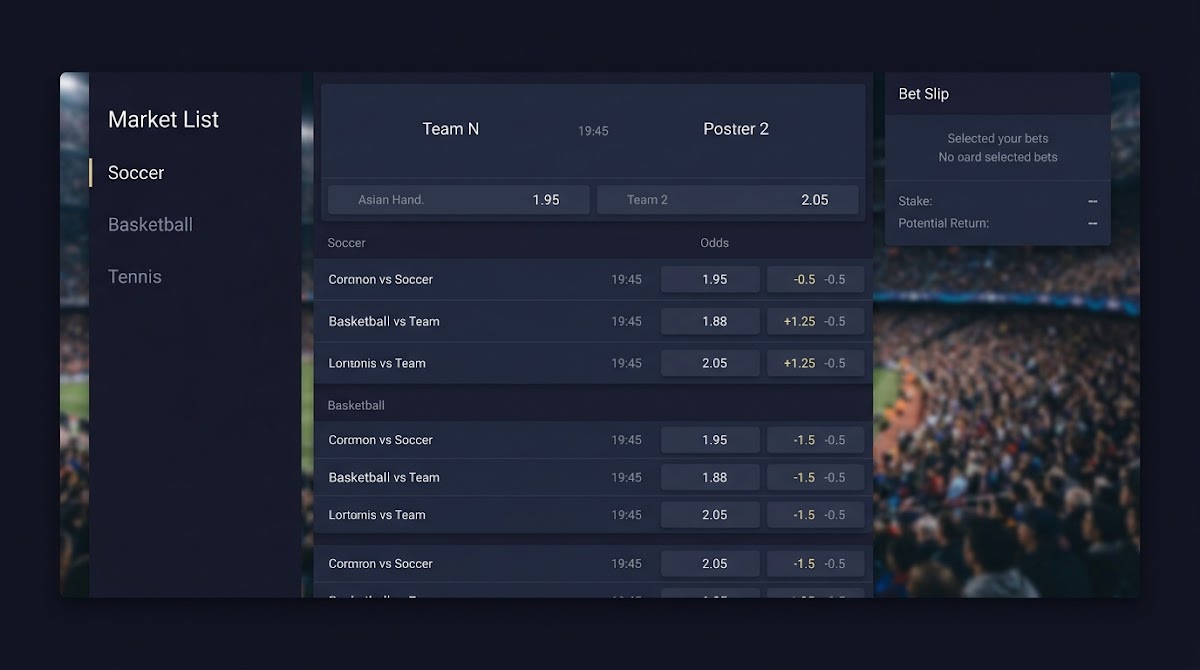
Interfaces vary. Desktop market lists may show a compact line table with multiple columns for different handicaps while mobile views often collapse those into a scrollable list or a modal. The same market can appear with different short labels: for example -0.25 might be shown as -0.25, -0.25 AH, or split -0/ -0.5 depending on the operator.
When you scan an operator, look for consistent naming across pre-match and in-play markets. Poorly labelled or inconsistent presentation is a red flag because it makes it easy to misread quarter and half-goal outcomes under pressure.
Where to look: which bookies offer Asian lines and how to find them
Several categories of operators commonly list Asian lines. Asia-focused operators and large international operators with broad soccer coverage are the most likely to support a wide range of Asian handicaps. Specialist markets for top leagues and cup competitions are where you will typically see the deepest set of Asian line options.
Search methods are straightforward. Use a site search for the term handicap or Asian, check the market list under a match for the word handicap or AH, and open the advanced markets or alternative handicaps column. Filters that let you show only handicap markets or more lines per match speed discovery on larger schedules.
Check markets quickly with a five-minute verification routine based on the challenge page description
Check the on-site market list and use the five-minute verification checklist described earlier to confirm whether Asian lines are present and how they are labelled
What to check on a betting page: confirm the market labels include half and quarter increments, read the market settlement text, and open a sample event page to see how in-play lines are shown. Also check whether the operator displays example settlements, because a clear example on the market page is a sign the bookmaker expects customers to understand the format.
When comparing availability across sites, note that regional restrictions may hide a market even if the operator lists it in other countries. If you cannot find the line, check advanced markets and the operator terms rather than assuming the market does not exist.
Regional availability, regulation and licensing considerations
Availability of Asian lines depends on where an operator is licensed and which markets it is permitted to offer in your jurisdiction. Some regulators restrict certain markets or require specific settlement rules, so operators often vary their offering by country or state. That is why a market visible to a user in one region may be hidden to a user in another.
To confirm compliance and safety, look for the operator's licensing information on the site footer, in account settings, or on the about page. Licensing details do not guarantee a market list but they help you identify the legal framework that governs settlement rules and customer protections.
Common reasons a market might be unavailable include local restrictions on certain event types, licensing limits that ban exotic settlements, and technical choices by an operator who focuses on a subset of sports or market types for their audience.
How to evaluate a bookmaker for Asian lines: decision criteria
When you assess whether a bookmaker suits your needs for Asian lines, apply objective criteria. First, market breadth: how many different Asian handicaps are offered per event for the competitions you follow. Second, market depth: how many alternative lines and sizes appear and how many price points are visible. Third, settlement clarity: does the operator publish clear rules and worked examples for quarter and half-goal lines. For background on bookmaker evaluation see Funded Plays.
Odds competitiveness and margin matter as well. Compare the same Asian line across operators on a single marquee match to see which gives better implied value after accounting for margin. Also check typical limits and liquidity; a market that looks good but has low limits or frequent voids will not serve a strategy that requires consistent exposure.

Practical red flags include inconsistent naming between pre-match and in-play, lack of settlement examples, or settlement text that is vague about split stakes. Another red flag is markets that show only whole-goal options when you expect half or quarter options for a given sport.
A five-minute comparison routine: open two or three sites, pull the same match, confirm market labels, scan settlement wording, and compare a single Asian line price to see which operator offers the most favorable odds. This quick routine highlights where to research deeper before placing any stake.
Typical mistakes and pitfalls to avoid
The most common mistake is misreading quarter-goal splits. Bettors sometimes assume a quarter line behaves like a half line or treat the market as a whole when settlement will split a stake. That misunderstanding leads to unexpected half losses or half returns and can distort performance tracking.
Another pitfall is ignoring settlement rules. Some operators publish unusual split conventions for particular sports or events. Always read the settlement section for the market you plan to use. If a site provides no clear wording, consider it a red flag and avoid using that market for important bets.
Bankroll mistakes are frequent too. Because quarter and half lines can return or lose only a portion of a stake, bettors need to account for that when sizing units. Treat each unit consistently and record the actual cash on win or loss rather than assuming every bet resolves in full stake increments.
Practical examples and scenarios: reading lines step by step
Example one, half-goal line. Suppose Team A is -0.5 at odds 1.90 and you stake 100 units. A -0.5 means Team A must win outright. If Team A wins, you receive 100 times 1.90. If draw or lose, you lose the 100 stake. This is straightforward and useful when you want to avoid the push scenario.
Example two, quarter-goal split. Suppose Team B is +0.25 at odds 2.00 and you stake 100 units. That stake splits into 50 at 0 and 50 at +0.5. If the match finishes level, the half at 0 is a push and is returned, while the half at +0.5 wins. The net effect is you win the +0.5 portion and get the push back for the other portion, producing a partial win that you must record accurately.
How odds change the value proposition. Odds move when market perception of outcome probability changes. A small odds swing on a half-goal line can represent a material change in implied value because there is no push. On quarter-goal lines, movement on one side of the split can change whether the split produces net value, so monitor both the line and the price when considering a bet.
Live in-play lines can shift faster and with narrower margins. Because in-play settlement can apply the same split rules as pre-match markets, a rapid in-play swing on a quarter or half line requires the same careful settlement thinking as pre-match bets.

How to practice safely: demo options and small experiments
Start with demo accounts where available or use a spreadsheet to simulate outcomes and settlement. Set up a simple sheet that records the market, the handicap type, the stake split for quarter lines, the result-adjusted settlement, and the cash outcome. Running this for a small set of matches builds familiarity without risking funds. For a deeper practical guide see this guide.
Design a small experiment: pick one competition, use only half-goal and quarter-goal lines, and place simulated stakes for 20 events while documenting settlement. Use identical unit sizes and track realized wins and losses. The controlled approach helps isolate whether you understand settlement and whether the lines you choose fit your decision rules.
Keep stakes small when you move from simulation to live markets. Also document differences across operators on identical matches to confirm whether settlement wording or market labels create discrepancies in practice. You can also read our post on evaluation methods at how Funded Plays evaluations work to help structure tests.
To integrate Asian lines into a broader value strategy, start with clear bankroll rules. Allocate a small, fixed portion of your bankroll to test Asian lines, define a unit size, and cap exposure per event. Because quarter lines can produce partial outcomes, track the net cash effect rather than counting each bet as full unit outcomes.

Combine line selection with odds value. Use your usual value criteria but adjust for the settlement nuance: a small edge on a quarter line may be less attractive if liquidity or limits mean you cannot scale the bet. Conversely, a clear value edge on a half-goal line can be easier to realize because settlement is straightforward.
Checklist: how to choose and use a bookmaker with Asian lines
Pre-bet checklist: confirm the market label, read the settlement text, check for half and quarter increments, compare the same line price across a couple of sites, and verify limits and liquidity. This five-step scan takes a few minutes and prevents many basic errors.
Five-minute verification steps: search the site for handicap markets, open a sample event and note line labels, read settlement wording, compare a single line price with another site if possible, and test a very small stake or simulation to confirm real settlement behaviour. For quick reference see our blog.
Red flags summary: missing or vague settlement text, inconsistent labeling between pre-match and in-play, only whole-goal options for competitions you follow, and unusually low limits on lines that should be liquid. Any of these should prompt further research before you include the operator in a strategy.
Conclusion and next steps
Key takeaways: Asian lines change settlement by removing or reducing the draw, quarter and half increments determine partial settlement, and clear settlement text is essential. Use the five-minute verification routine and the short checklist tool to confirm an operator's market presentation before placing significant stakes.
Next steps you can take today: run the micro-checklist on a single operator, simulate 20 events in a spreadsheet to see settlement in action, and compare one Asian line price across two operators to get a feel for odds competitiveness. Remember to check rules and local terms before you trade or bet on a market.
With careful reading and small tests you can add Asian lines to your toolkit in a measured way. They can be useful for clearer win-loss outcomes, but only when you understand settlement and verify markets yourself.
Asian lines often remove or reduce the draw by using half and quarter increments that change settlement, while standard handicaps or three-way markets can allow a full draw outcome.
Yes. Use demo accounts where available or simulate bets in a spreadsheet to track split settlement and outcomes before placing live stakes.
Vague or missing settlement text, inconsistent labeling, and absence of half or quarter increments are common red flags that warrant further caution.
References
- https://en.wikipedia.org/wiki/Asian_handicap
- https://www.fundedplays.com
- https://www.fundedplays.com/blogs
- https://www.fundedplays.com/blogs/how-fundedplays-evaluations-work
- https://www.fundedplays.com/challenges
- https://www.rebelbetting.com/asian-handicap
- https://help.smarkets.com/hc/en-gb/articles/115001324169-What-is-Asian-Handicap-betting