

What Asian bookmakers are and how they differ from Western books
Asian bookmakers typically centre their product set on Asian handicap markets rather than prioritising 1X2 or parlay products, which changes both how prices are presented and how bets are settled, and understanding those differences helps with interpretation of lines early on. For practical clarity, many of the operator specifics you need to resolve disputes are published directly in operator rulebooks; Singapore Pools publishes a detailed sports betting rules document that sets out settlement and acceptance conditions Singapore Pools sports betting rules.
Those rulebooks show the operational focus: markets built around handicap lines, explicit provisions for abandoned matches and void conditions, and specified maximum payouts that influence staking. The Hong Kong Jockey Club provides similarly detailed match and settlement rules that illustrate how regulated Asian firms define outcomes and special cases HKJC football betting rules.

Fairness and technical governance in mature, regulated markets are guided by overarching technical standards and expectations for remote gambling operations; regulators in other jurisdictions use comparable frameworks to require accurate, timely settlement and testing of systems UK Gambling Commission technical standards.

In practice that means an asian sportsbook will combine market design, automated settlement rules and a set of published limits so that customers can see how a bet will be handled before placing it. For anyone learning how Asian bookmaker practice differs from a typical Western moneyline or parlay focus, the combination of handicap centric markets plus explicit rulebooks is the key contrast.
Core markets: how Asian handicap lines and settlement work
The Asian handicap is a line-based market that levels a match by assigning a goal handicap to the favourite or underdog, commonly expressed in whole, half and quarter goals, with settlement and outcomes defined by specific operator rules.
Whole-goal lines are straightforward: a -1 handicap requires the favourite to win by two or more for a full win, and a +1 on the underdog can result in a push if the match ends level after regulation. Half-goal lines eliminate pushes because you cannot draw on a half-goal spread, so outcomes are full win or full loss.
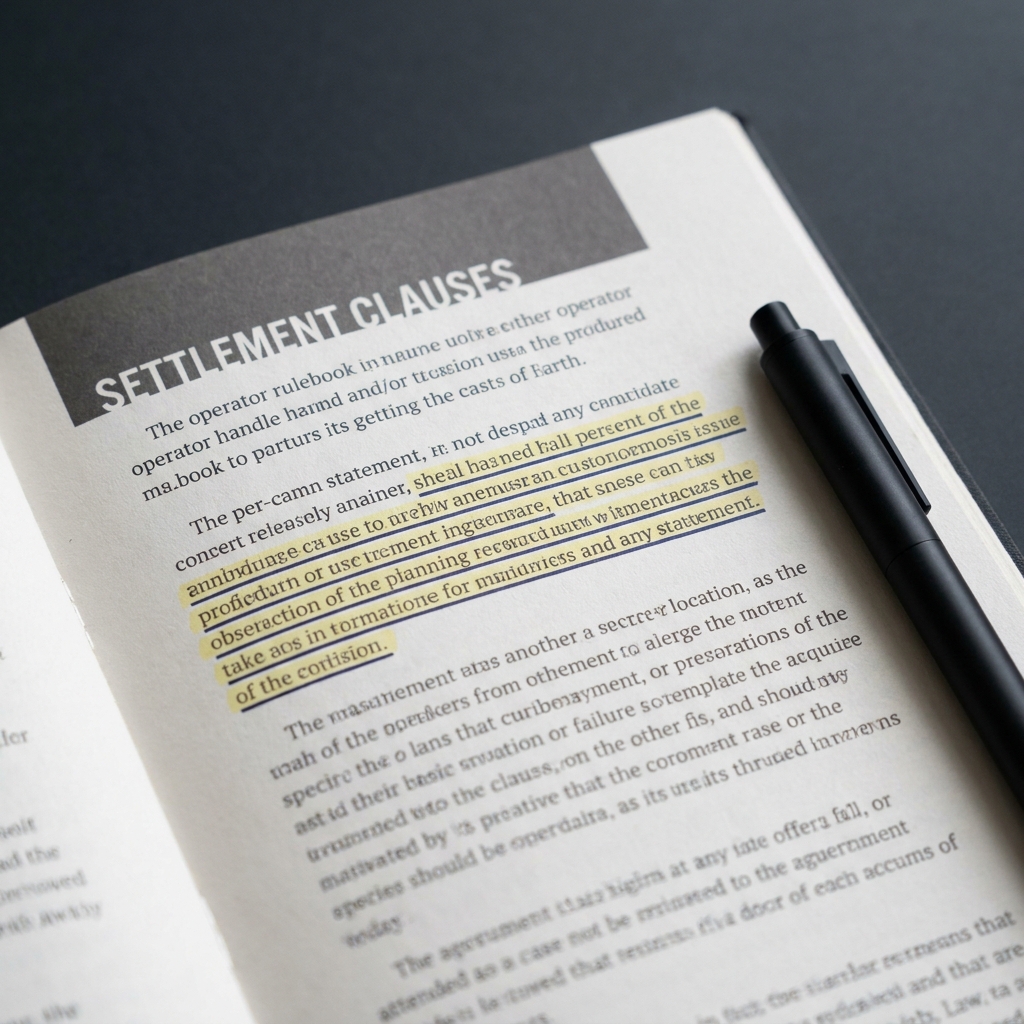
Quarter-goal or quarter-line prices are implemented as split-stake bets in many Asian operator rulebooks, meaning the stake is effectively divided between the adjacent half and whole lines and settled according to the result. The Singapore Pools rules and the Hong Kong Jockey Club rules describe how quarter lines are split and how refunds apply when an exact outcome produces a push against part of the stake Singapore Pools sports betting rules.
Asian bookies focus on Asian handicap markets, publish explicit settlement rules, embed a calculable margin in their odds, and use monitoring and limits to manage risk; checking the operator rulebook and computing the overround from live prices are essential practical steps.
For most regulated Asian operators, settlement is based on regulation time unless the market explicitly states otherwise; common void conditions include matches abandoned before a specified minimum playing time or postponed fixtures, and operator rules spell out these thresholds and how refunds are handled HKJC football betting rules.
When reading a line, note whether a bet is defined on regulation time only, as that affects how extra time, penalties, or later replayed fixtures are treated. If an operator defines own-goal attribution or special void triggers, the rulebook is the deciding reference for settlement disputes, so checking the published text before staking removes ambiguity.
How odds, margins and payout percentages are calculated
To judge value you must convert displayed odds into implied probabilities and then compute the overround that represents the bookmaker's margin. For decimal odds the implied probability is 1/odds expressed as a percentage; using this conversion is the first step to seeing how much theoretical payout the market offers.
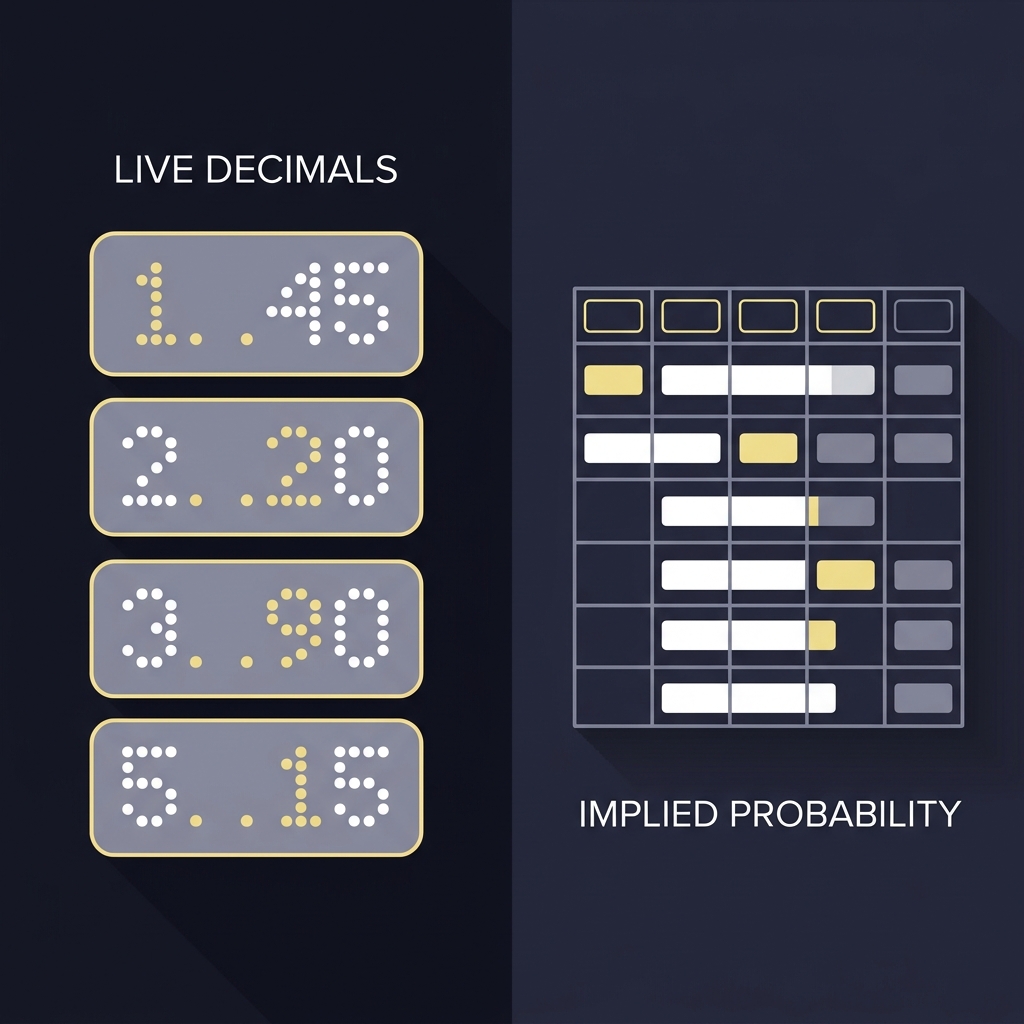
Calculate implied probabilities for each outcome, sum those probabilities, and subtract 100 to get the overround, which is effectively the bookmaker margin expressed over a perfectly fair book; the theoretical payout percentage is 100 minus the overround. Pinnacle provides a clear breakdown of the conversion and the overround method commonly used by bettors and analysts How to calculate betting margins.
Worked example: imagine a three-way market with decimal odds of 2.50, 3.20 and 3.80. Convert each to implied probability by taking 1 divided by the decimal odd, express as a percentage, sum them, then subtract 100 to find the overround; that overround shows how large the embedded margin is and therefore how much less than 100 percent the theoretical payout will be.
Compute market overround from decimal odds
Use decimal odds for each outcome
Because public, comparable data on liquidity, per-market limits and average margins across operators is limited, the practical step is to compute the margin from the live posted prices you can access rather than rely on assumed industry norms; this gives you a market-specific snapshot of theoretical payout.
Operator rules and settlement specifics used by regulated Asian firms
State-regulated operators produce authoritative rulebooks that specify bet acceptance rules, settlement timing, maximum payout caps and special-case treatments such as own-goal attribution; Singapore Pools includes explicit clauses that define void conditions, acceptance rules and exceptional resolution steps in its published document Singapore Pools sports betting rules.
The Hong Kong Jockey Club provides detailed explanations for match-specific rules and how various event outcomes are treated when settling bets, including the handling of abandoned matches and the precise stages when a market is considered void or eligible for a refund HKJC football betting rules.
Regulatory technical standards in mature jurisdictions require operators to demonstrate systems that settle bets reliably and transparently; these expectations mean that a published rulebook plus auditable settlement processes are part of what differentiates a regulated operator from an unregulated market UK remote gambling technical standards.
When a question arises about a specific settlement, the documented rulebook is the contractual reference: it explains exactly how a line will be treated, the jurisdiction conditions that apply, and where customers can seek official clarification or appeal within the operator's own dispute processes. See how Funded Plays evaluations work for examples of dispute handling.
Risk management, integrity monitoring and illegal market distortions
Operators and industry bodies emphasise continuous monitoring because suspicious betting patterns remain a persistent concern; industry reporting highlights ongoing detection of suspicious activity globally, often with football among the most affected sports, which is why integrity units and automated alerts are core to operator risk controls IBIA Integrity Report 2024.
To manage financial exposure and preserve market stability, operators commonly apply acceptance limits, adjust prices dynamically to balance liability, and set maximum payouts per event or account; these steps limit large, concentrated outcomes and give firms time to investigate anomalies when alerts fire.
Illegal betting channels remain widespread in parts of Asia and can distort market signals because they operate outside regulated disclosure and monitoring frameworks, which creates additional consumer risk and can make posted prices harder to interpret compared with regulated markets that publish rules and limits State of Illegal Betting 2024.
For bettors that means smaller public liquidity, varying limits and sometimes less reliable price discovery on unregulated platforms; where possible, relying on regulated operators with clear rulebooks, published limits and visible settlement practices reduces exposure to those distortions.
Common mistakes bettors make when interpreting Asian markets
A frequent error is misreading quarter lines: treating a quarter-line result as a single outcome rather than recognising it may split the stake across adjacent half and whole lines, which can change an expected return and refund outcome; operator rulebooks explicitly describe these split-stake rules, so reading the book before placing a bet avoids surprises HKJC football betting rules.
Another common oversight is ignoring the embedded margin or overround when comparing prices; two markets with similar-looking odds can offer different theoretical payout percentages, so computing implied probabilities and summing them reveals which market offers a higher expected payout for the same risk How to calculate betting margins.
Assuming settlement and maximum payout practices are identical across operators is a mistake: state-regulated firms publish differing maximum payout thresholds and unique void conditions, so a settled outcome on one operator may be treated differently on another, and that can affect dispute resolution and refund timing Singapore Pools sports betting rules.
Practical examples: reading split stakes, quarter lines and push refunds
Worked example 1: quarter line with half win and half push. Suppose you place a 100 unit bet on Team A at a -0.25 Asian handicap. This splits as 50 units at -0.5 and 50 units at 0. If Team A wins by one goal, the -0.5 part wins and the 0 part is a push, so you are paid for the winning half stake at the listed price and the other half stake is returned, producing the combined settlement. The Singapore Pools and HKJC rule descriptions of quarter-line settlement show this split-stake approach in practice Singapore Pools sports betting rules.
Review rules and compute margin before staking
Before placing larger stakes, check the operator rulebook and compute the market margin from the live posted prices to confirm how a split stake will be settled and how refunds are handled.
Worked example 2: voided match and settlement outcomes. If a match is abandoned before the operator's minimum playing time and the rulebook specifies a void in that scenario, all accepted bets are typically refunded; consult the operator's specific thresholds and the transaction history for the event to confirm the timing and return policy HKJC football betting rules.
Checklist to resolve disputes with operators. When you need to contest a settlement, first capture the market definition and transaction details from your account history, then consult the operator's rulebook for the event-specific clause, note any published maximum payout or special conditions that apply, and raise a dispute ticket referencing those items. The operator's published rules are the authoritative reference for final resolution.
How to judge fairness and choose responsible operators
Checklist for operator credibility: look for a published, current rulebook that explains bet settlement and void conditions, clear disclosure of maximum payouts and acceptance limits, and evidence of regulatory oversight or adherence to technical standards; these items indicate transparent processes and provide a basis for escalation if a dispute arises UK remote gambling technical standards.
Prefer regulated operators where possible because they must publish rules and operate under monitoring regimes that provide clearer recourse for customers; illegal markets lack that transparency and remain a significant source of consumer risk in parts of Asia State of Illegal Betting 2024.
Final practical tips: compute the overround on live prices before placing larger stakes, check how the operator treats regulation time and special outcomes, and avoid platforms that do not publish explicit settlement rules or limits, because that opacity increases the chance of unexpected results. See Funded Plays.
Most regulated Asian operators settle markets on regulation time only unless the market explicitly states otherwise; check the operator rulebook for the exact treatment of extra time and penalties.
A quarter-line splits the stake between two adjacent lines, so part may win while part is pushed; operator rulebooks describe the exact split and settlement.
Convert decimal odds to implied probabilities, sum them and subtract 100 to get the overround; lower overround means a higher theoretical payout.
References
- https://www.singaporepools.com.sg/en/faq/pages/sports-betting.html
- https://campaigns.hkjc.com/en/betting-guides/football-rules.aspx
- https://www.gamblingcommission.gov.uk/standards/remote-gambling-and-software-technical-standards
- https://www.fundedplays.com/challenges
- https://www.singaporepools.com.sg/en/rules/pages/pdf/football-betting-game-rules.pdf
- https://www.pinnacle.com/en/betting-resources/beginners-guide/how-to-calculate-betting-margins
- https://www.fundedplays.com/blogs
- https://www.fundedplays.com/blogs/how-fundedplays-evaluations-work
- https://ibia.bet/wp-content/uploads/2025/02/IBIA-Integrity-Report-2024.pdf
- https://www.asianracing.org/wp-content/uploads/2024/11/ARF_CAB_State_of_Illegal_Betting_2024.pdf
- https://www.channelnewsasia.com/singapore/singapore-pools-app-gambling-bets-overseas-6246171
- https://www.fundedplays.com