
What the Asian handicap in soccer means
Short definition
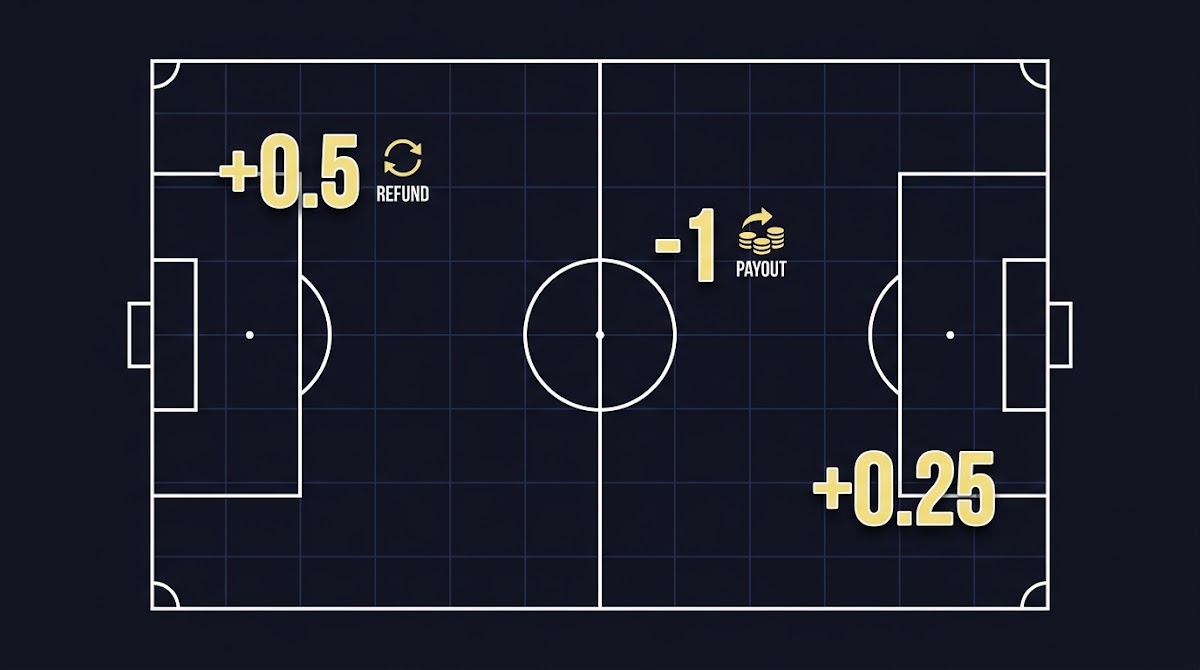
The asian handicap soccer market is a goal-based spread that removes the draw by adding or subtracting goals to each team so bets settle as two-way outcomes rather than three-way results; this makes a match pay out as a win or a loss after the handicap is applied, and it is the fundamental purpose of the market according to established guides Pinnacle guide to Asian handicap.
In practical terms, a handicap line expresses how many goals are added to or removed from a team for settlement. That adjustment aligns perceived team strength and removes the draw, so markets offer clearer two-way prices for trading and staking.
How it turns a three-way market into two outcomes
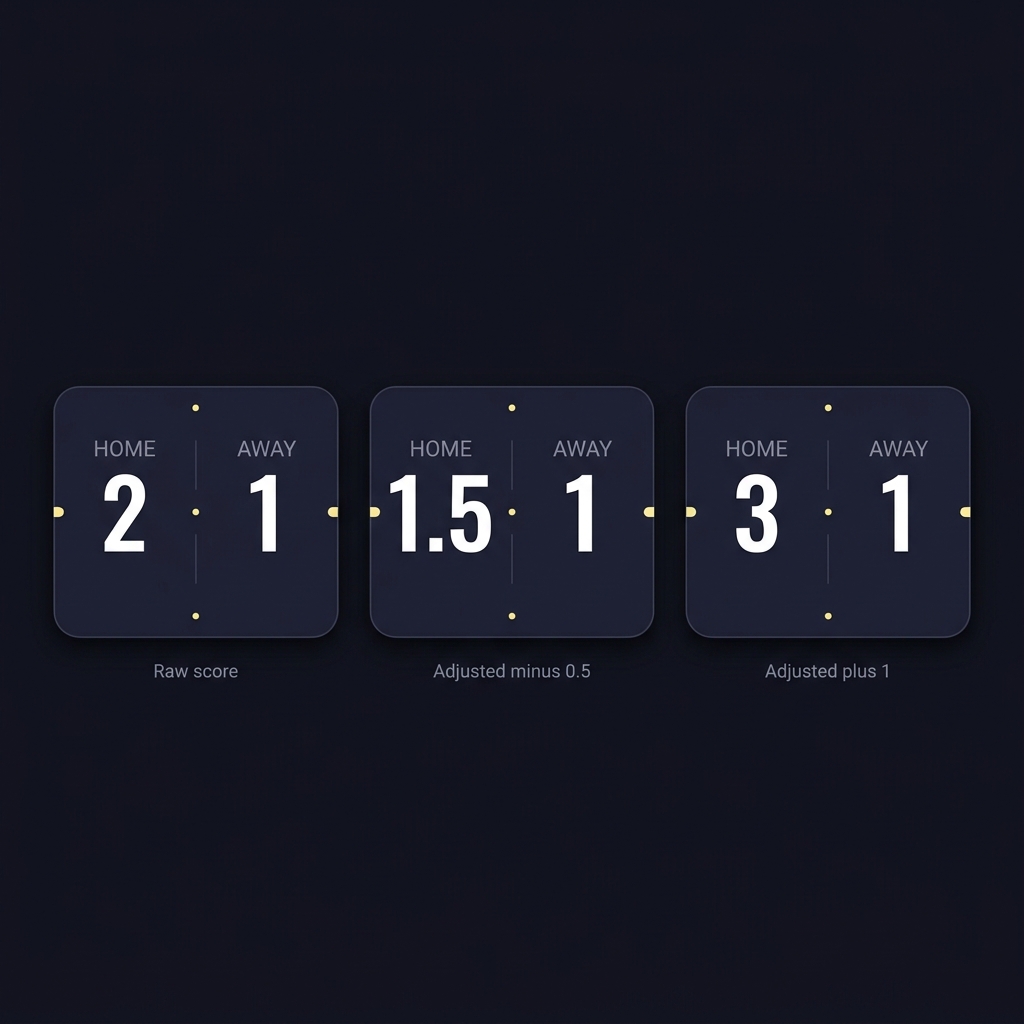
After applying the handicap line, the score is recalculated and only two outcomes remain: the side with the higher adjusted score wins, or the adjusted score produces a push and the stake may be refunded depending on the line conventions noted by operators Smarkets help centre on Asian handicap.
compute split-stake outcomes for quarter handicaps
Use to check half-win calculations
The conventions for settlement are standardized across many operators' help pages and rulebooks, so learning the line types and how they settle reduces surprises when you place a bet. Treat help-centre settlement text as the definitive guide for any specific market.
Why bookmakers and bettors use Asian handicap
Rationale for removing the draw
Bookmakers and exchanges use asian handicap to remove the draw and present a two-outcome market that is simpler to price and trade; removing the draw lowers variance linked to tied matches and allows tighter markets for favourite and underdog pricing Pinnacle guide to Asian handicap.
How lines reflect team strength
Lines are set so the favourite concedes goals and the underdog receives them, which balances the perceived probability that either side will win after the handicap; this practice supports market liquidity and helps traders define value between different books and exchanges Smarkets help centre on Asian handicap.
Because asian handicap markets are widely offered, analysts and professional traders often monitor them to compare implied probabilities across books and to find edges where their models disagree with market prices. See Funded Plays.

Basic handicap lines: 0, half, whole and quarter explained
Zero line (draw-no-bet)
The 0 handicap, commonly called draw-no-bet, refunds the stake if the match ends level after normal time; otherwise the bet wins or loses depending on which side leads after applying the zero line, as described in many operators' rules Smarkets help centre on Asian handicap.
For bettors this means a market with the zero line removes tie risk while keeping the essential win-or-lose decision; many players prefer it when they want protection against a draw without moving to full draw markets.
Half-goal lines and no-push behavior
Half-goal handicaps such as plus or minus 0.5 cannot push because no integer final margin can equal a half-goal line; the favourite must win by more than the half goal to cash while the underdog wins the bet simply by avoiding defeat, which is a core distinction in settlement mechanics Smarkets help centre on Asian handicap.
That no-push property makes half-goal lines decisive: you either win or lose and do not receive a refund when the final margin equals zero, so variance differs from whole-goal options.
Try challenge-style practice with FundedPlays challenges
Continue reading to see worked examples and a practical checklist that will help you practice these lines using challenge-style simulations.
Whole-goal lines and pushes
Whole-goal lines, such as minus or plus 1, can result in a push when the winning margin equals the handicap; in those cases settled stakes are typically refunded under operator rules Singapore Pools Asian handicap rules. For additional operator guidance see bet365 help.
Pushes reduce variance because the stake is returned on exact-margin outcomes. Many bettors trade off that lower variance against the different odds available on half or quarter lines that remove pushes but introduce split results.
How settlement works: refunds, pushes and stake splitting
Operator settlement conventions
Operators define clear settlement steps: apply the handicap to the final score, determine the adjusted margin, then follow the market rule for win, loss, push, or split settlement as set out in help-centre and rule documents Singapore Pools Asian handicap rules.
This process is standard across regulated operators, and the wording in the rulebook is the authoritative reference if you need to confirm how a specific market resolves.
When stakes are refunded
When a whole-goal line is in play and the adjusted final margin equals the handicap, the result is commonly a push and the stake is refunded; by contrast half-goal lines never push because an integer margin cannot equal a half goal under the settled rules Kambi sportsbook rules on handicaps.
How half-win and half-loss results happen
Quarter-goal lines split a single stake across two adjacent handicaps, which creates half-win and half-loss settlements when one half of the split wins and the other half loses; this mechanics is an operator-level convention in help pages and rule sets Smarkets help centre on Asian handicap.
Understanding whether an operator uses stake splitting on quarter lines and exactly how they calculate half returns is essential because stake-split math determines your net result on those lines.
Quarter-goal lines and how stake splitting creates half-wins
What ±0.25 and ±0.75 mean
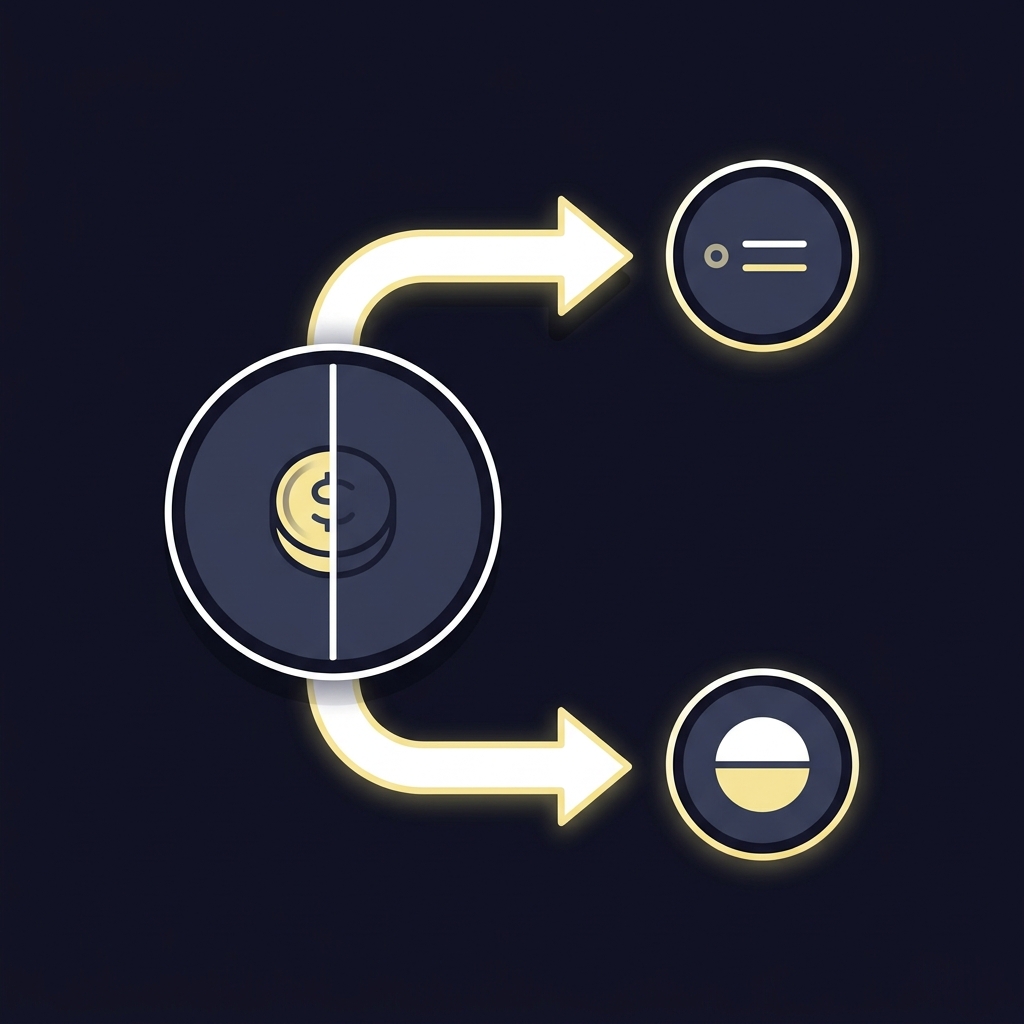
Quarter-goal lines are constructed by splitting your stake between two adjacent handicap lines; for example, a minus 0.25 line is typically resolved as half the stake on 0 and half the stake on minus 0.5, which yields possible half-win or half-loss outcomes depending on the adjusted score Pinnacle guide to Asian handicap.

Because quarter lines split exposure, they are often chosen by bettors who want nuanced risk control: you can capture partial wins while limiting full losses in close matches where a full win seems unlikely.
How a single stake is split across two lines
Practically, when you bet 100 units on minus 0.25, the platform places 50 units at 0 and 50 units at minus 0.5; settlement combines the two halves so outcomes include full win, full loss, half-win and half-loss, or refund depending on the results after the applied handicaps and the operator's rules Smarkets help centre on Asian handicap.
Operators' help pages typically show the arithmetic used to compute those half results, so always check the specific rule wording before assuming how a quarter line will behave.
Examples: step-by-step score scenarios and payouts
Favourite wins by one goal
Example 1, zero line: assume you back the favourite at the 0 handicap and the final score is 2-1. After applying the 0 line, the favourite leads by one and your stake is a full winner. Operator rules clarify that the zero line does not refund here because the adjusted outcome produced a win for the selection Smarkets help centre on Asian handicap.
Stake math in that scenario is straightforward: your stake times the decimal odds equals the return, minus the stake to show profit, or simply the decimal odds payout if the platform shows returns inclusive of stake.
Match drawn
Example 2, zero line: if you back a side on the 0 handicap and the match ends level, the bet is refunded because the zero line treats draws as a push for that stake type under common operator rules Singapore Pools Asian handicap rules.
This refund protects the bettor from draw risk; it is the distinguishing feature of draw-no-bet style markets compared with full 1X2 markets where the draw is a separate outcome and does not return stake.
Underdog covers the line
Example 3, minus 0.5: you back the underdog at plus 0.5 and the match ends 1-1. After adding 0.5 to the underdog, the adjusted score favours the underdog and your full stake wins because half-goal lines do not allow pushes Smarkets help centre on Asian handicap.
For quarter lines, an explicit worked example clarifies split math: if you bet 100 units on minus 0.25 with odds of 2.00, the platform places 50 units at 0 and 50 at minus 0.5. If the match ends 1-1, the 0 part is refunded and the minus 0.5 part loses, so you neither win nor lose on the refunded half and lose the other half; if the match ends 2-1 to the favourite, the minus 0.5 half wins and the 0 half wins, producing a full win across both halves Pinnacle guide to Asian handicap.
These worked examples show why checking the operator's exact settlement language is essential before staking, because small differences in wording can affect whether a half is refunded or deemed a loss.
How to read odds and implied probability for Asian handicap
Odds formats and implied edge
Decimal odds on asian handicap lines work like other markets: convert decimal odds to implied probability by dividing 1 by the decimal odd, then compare that implied chance across lines to identify possible value; public datasets include asian-handicap odds fields used for analysis and model checks football-data notes on odds fields. For a general guide to using asian handicap odds see OddsJam guide.
Apply the handicap to the final score and follow the operator's settlement rules: half-goal lines never push, whole-goal lines can push and refund, and quarter-goal lines split the stake across two adjacent handicaps creating half-win or half-loss outcomes.
Because lines move to reflect information and money, analysts use implied probabilities to compare their model fair value against the market and to decide whether a line offers an edge.
Using odds to choose lines
When comparing lines, note how pushes or split settlements alter effective probability: a whole-goal push returns stake on exact margins which changes expected value calculations compared with half or quarter lines that deliver decisive or split outcomes Pinnacle guide to Asian handicap.
If you use public data to analyse markets, ensure the dataset provides the precise asian-handicap field and that you account for settlement mechanics when converting odds into expected returns.
Choosing the right line: a decision framework
Assess match factors
Start by assessing team strength, goal expectancy, form, injuries, and motivation, then compare your model's fair line to the market line; prefer whole-goal lines when you want push protection, half-goal lines when you want decisive outcomes, and quarter lines when you want partial exposure depending on your risk appetite Pinnacle guide to Asian handicap.
Line selection checklist
Checklist items to take to the market: check the operator's settlement rules, choose the line type that fits your variance tolerance, convert odds to implied probability, and size your stakes consistently with your bankroll plan; public datasets can help you backtest line choices over time football-data notes on odds fields.
Use a repeatable checklist to reduce emotional decisions and to ensure disciplined testing of any new approach you try in live markets or in simulation challenges on our blog.
Bankroll management and handling variance with Asian handicap
Sizing bets vs line type
Pushes on whole-goal lines reduce variance because some outcomes return your stake, while half-goal lines remove pushes and can increase variance; as a result, many disciplined players adjust stake size downward when trading half or quarter lines to maintain consistent drawdown risk Smarkets help centre on Asian handicap.
How pushes and half-results affect variance
Quarter lines create half-win and half-loss results that change the magnitude of wins and losses, so track your realized returns at the split level and consider smaller unit sizes for quarter-line exposure until you are comfortable with the arithmetic and your simulation results indicate stable performance Pinnacle guide to Asian handicap.
Disciplined sizing and consistent record keeping, rather than chasing short-term variance, help maintain long-term evaluation of any approach you test.
Common mistakes and pitfalls to avoid
Misreading quarter lines
A frequent error is treating quarter lines like half or whole lines without doing the split-stake math, which can lead to incorrect expectations about payout size; always check the operator's published examples for clarity Smarkets help centre on Asian handicap.
Ignoring push rules
Another common pitfall is failing to account for push refunds on whole-goal lines; if you model expected returns without the push effect you may misestimate both variance and long-term profitability Kambi sportsbook rules on handicaps.
Also avoid stake arithmetic mistakes when combining halves from quarter-line bets; small mental errors on split stakes quickly add up across many bets.
When to use Asian handicap versus Draw No Bet and 1X2
Practical tradeoffs
Use Draw No Bet when you want protection against a draw since it is effectively the 0 handicap, as operator help pages make clear; choose asian handicap options when you want to express a view about margin and reduce the three-way complexity of 1X2 markets Smarkets help centre on Asian handicap.
Examples where each fits
For a match where your model finds a narrow favourite advantage but you want limited downside, the 0 line may be preferable. If your model expects a clear margin, a whole-goal or half-goal line could offer better odds. Use 1X2 when you specifically expect a draw or when draw probability is a central part of your view Pinnacle guide to Asian handicap.
Market availability and data: where you will see Asian handicap odds
Which operators and data providers list Asian handicap
Major regulated operators and suppliers list asian handicap as a core football market, and you will find it on exchange and sportsbook price feeds in regions where those markets are offered football-data notes on odds fields. For an industry overview see Soccer News guide.
How public datasets include these fields
Public datasets used by analysts commonly include asian-handicap odds columns, enabling modelers to backtest lines and to compare implied probabilities across historical matches for research and validation purposes football-data notes on odds fields.
Operator help and rule pages are usually consistent in settlement language across major providers, so the market conventions described here will match the sources you research.
Quick glossary and cheat sheet
Short definitions of essential terms
Push: stake refunded when adjusted margin equals a whole-goal handicap.
Draw-no-bet: same as the 0 handicap; stake refunded on a draw.
Half-win: result from a split stake where one half wins and the other half is refunded or loses.
Half-loss: the opposite of half-win where one half of a split stake loses and the other half is refunded or wins.
Quarter-goal: a split line such as 0.25 or 0.75 that divides the stake between two adjacent handicaps.
How to spot quarter vs half vs whole lines
Quick guide: numbers with .25 or .75 are quarter lines; .5 values are half lines; integer values are whole-goal lines. Always verify with the operator's settlement page before staking.
One-line reminder: check the operator's settlement rules for precise wording before placing real-money bets or simulation challenges.
Conclusion: is Asian handicap right for you?
Summary of benefits and tradeoffs
Asian handicap offers two-outcome clarity, a way to express margin expectations, and variants that trade off push protection against decisive results; choose lines based on your risk tolerance and how you manage variance in your staking plan Smarkets help centre on Asian handicap.
Next steps
Start by testing lines in a disciplined simulation or challenge environment, keep careful records of split-stake outcomes, and use public datasets to validate any model-based approach before committing larger stakes football-data notes on odds fields. For guidance on how Funded Plays runs evaluations see how Funded Plays evaluations work.
A 0 handicap means draw-no-bet; if the match ends level after the handicap, the stake is refunded and only wins or losses on adjusted outcomes are settled.
A -0.25 line splits your stake between 0 and -0.5; one half may be refunded while the other half wins or loses, producing half-win or half-loss outcomes.
Check the operator's help centre or official rulebook for the market; those pages define pushes, refunds and split-stake mechanics for every handicap type.
References
- https://www.pinnacle.com/en/betting-articles/Betting-Strategy/asian-handicap-explained/2JE2G2ZUJQ44C3X8
- https://help.smarkets.com/hc/en-gb/articles/115000215345-Asian-handicap
- https://www.fundedplays.com/challenges
- https://www.singaporepools.com.sg/en/sports/betting-rules/football/pages/asian-handicap.aspx
- https://rules.kambi.com/football/
- https://www.football-data.co.uk/notes.txt
- https://www.fundedplays.com
- https://www.fundedplays.com/blogs
- https://www.fundedplays.com/blogs/how-fundedplays-evaluations-work
- https://help.bet365.com/s/en/sports/asian-lines
- https://oddsjam.com/betting-education/asian-handicap
- https://www.soccernews.com/asian-handicap-betting/401985/