

Context: why "aqueduct picks cox" shows up when people search Derby mounts
When someone searches for aqueduct picks cox alongside a question about Kentucky Derby 2026 mounts, the result is usually a quirk of how regional picks pages, jockey mentions, and automated cross coverage are indexed and surfaced. The phrase aqueduct picks cox can appear on pages that also carry local pick lists, jockey headlines, or regional card coverage, which creates overlap in search results. That overlap does not mean any particular horse assignment at Churchill Downs.
Search systems often group related keywords and names together based on matching terms and user intent signals. For readers trying to confirm which horses Brad Cox rode, that grouping can be confusing because it creates an implication of a direct connection. This article will not invent which horses Brad Cox rode in the Kentucky Derby 2026. Instead it shows how to confirm mounts using official sources and a short verification checklist. For examples from major outlets, see news coverage.

The steps below are designed to help reporters, handicappers, and fans move from an ambiguous search result to a definitive, verifiable list of mounts in a way that is transparent and timestamped. The approach values official entries, post-time results, and visual confirmation over social posts or tip sheets.
Definition and context: what it means for a jockey to be 'on a mount' in the Derby
In racing terms, a mount is the horse a jockey rides in a specific race on a given day. For major events like the Kentucky Derby, entries, declared riders, and late changes are all part of the vocabulary that determines who is actually on a mount at post time. Understanding these terms helps avoid misreporting.

An entry is the horse listed to run in the race. A declared rider is the jockey who is officially assigned and announced for that horse at the declaration time, which often occurs the day before or the morning of the race. Scratches remove horses from the race and can trigger jockey reassignments. Because declarations and scratches can change up until post time, a declared rider is not the same as the final rider until post-time confirmations and official results are published.
How to verify which horses Brad Cox actually rode in the Kentucky Derby 2026
Start with a prioritized checklist. First, check the official Kentucky Derby entry list and declared riders published by the race organizer. Second, confirm the assignments at post time using the official program or post-time notice. Third, verify with the official race result and chart after the race.
For convenience, bookmark the official entry list page and the official results page before race day so you can access them quickly. If you are publishing on deadline, capture a permalink or screenshot of the official page and note the timestamp. When a claim circulates online about a jockey or a mount, cross-check it against the official result page to confirm whether the jockey actually rode the horse to post.
Practice verification with FundedPlays Challenges
Bookmark this verification checklist and share it with colleagues to keep mount reporting accurate and verifiable.
Core framework: step-by-step approach to sourcing and reporting jockey mounts
Step 1, confirm the official entry list. Obtain the official entry list published by the race organizer and note the declared riders at the formal declaration time. This gives you the authoritative starting point for who was expected to ride each horse.
Step 2, verify the jockey assignment at declaration time and again near post time. Declared riders can change because of injury, illness, or strategic reassignment, so a second check within an hour of post time reduces the chance you repeat an outdated assignment. Always record the source and time of your check.
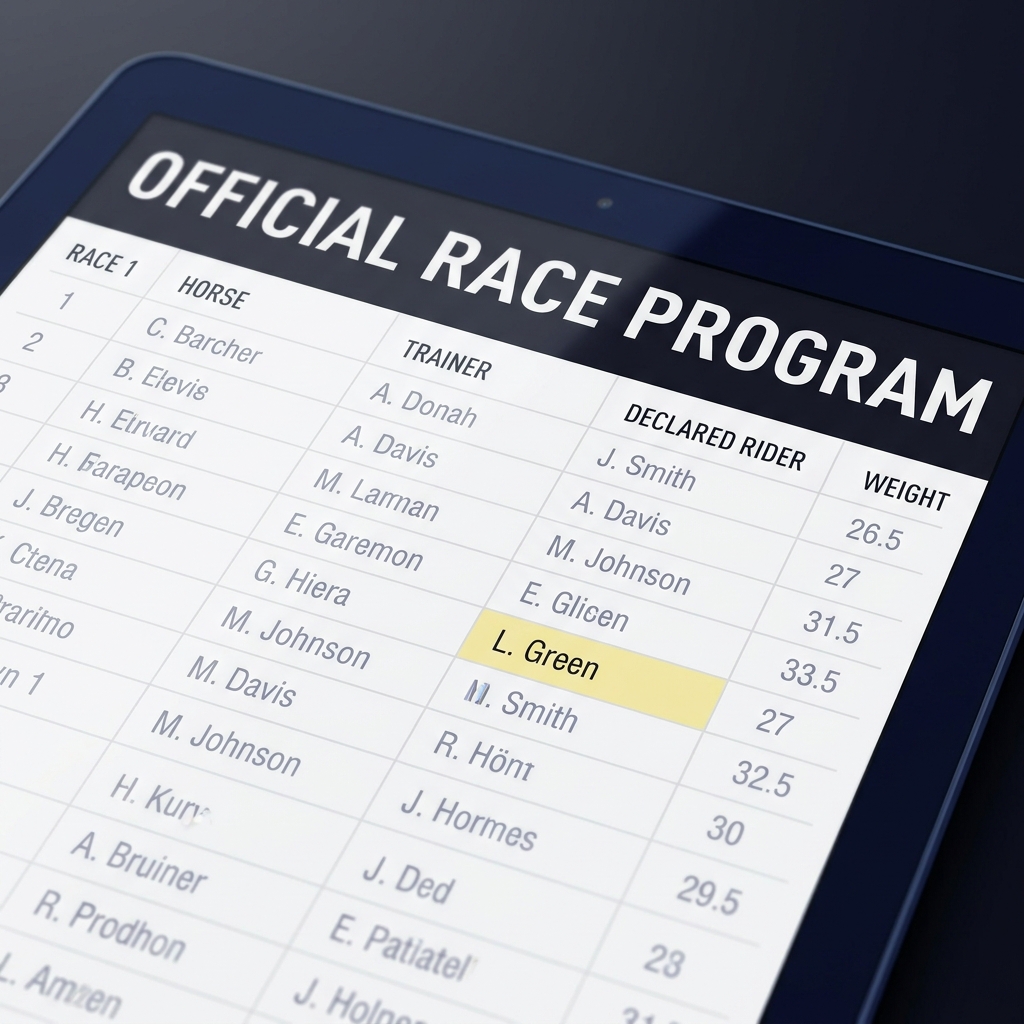
Step 3, confirm at post time and with official results. The final authority is the official result chart and the stewards report, which show who actually rode each horse, finishing positions, and any changes made after the race. When writing, attribute your statement to the official result or chart and include the timestamp you captured.
Practical verification tools and quick references every reporter should use
Race-day dashboards and live result pages provide immediate updates around post time. These resources are useful for on-deadline reporting but they need to be paired with the post-race chart to confirm that the reported rider was the one who actually rode in the race. Use the race replay to visually confirm the mount when possible.
Official charts and replays are the strongest corroboration. A replay shows the rider on the horse, while the chart gives the textual confirmation and finishing order. If a report is contested, the stewards report provides the final ruling on any changes or objections. Keep a consistent sequence: dashboard, chart, replay, stewards report.
Quick verification checklist for race-day mounts
Capture timestamp and permalink
Decision criteria: how to judge if a reported mount is trustworthy enough to publish
Before naming a jockey on a mount in a published piece, ask whether you have at least one primary source and one confirming source. Primary sources include the race organizer's official entry list or the official result chart. A confirming source can be a race replay or an official statement from the track or stewards. Aim to have two independent confirmations when possible.
Balance timeliness and accuracy. If a declared rider is published as a preliminary fact, label it clearly as a declaration and not a final result. When a final result is available, update the article to reflect the official result and attribute the change to the chart or stewards report. Clear attribution language limits liability and preserves trust with readers.

Typical errors and pitfalls when reporting jockey mounts on Derby day
One common error is repeating social posts or early tip sheets as definitive proof of a mount. Those sources can be useful for leads, but they are often premature and may not reflect late scratches or last minute changes. Treat early tips as leads to be verified, not as the final word.
Another frequent mistake is failing to timestamp or archive sources. Once a mistaken mount is published it can spread quickly, so having a captured permalink or screenshot with a timestamp both helps you correct the mistake and documents your verification steps for editors. If you publish an error, issue a concise correction that states the mistake, provides the correct information, and cites the official source for the correction.
Practical examples and scenarios: what to do if Brad Cox was listed but then replaced
Scenario A, a late jockey change before post time. Action steps: 1) Check the track's official last-minute notices or the official program update. 2) Confirm the reassignment in the post-time result or live program. 3) If you already published the initial declaration, update the article with the new information and include a timestamped citation to the official notice.
This article does not guess which horses Brad Cox rode. Confirmed mounts must come from official entry lists, post-time notices, and the official race chart; follow the step-by-step verification process to determine the final, authoritative list.
Scenario B, a horse listed with Brad Cox scratched before the race. Action steps: 1) Verify the scratch on the official scratch list or post-time notice. 2) Note whether the jockey was reassigned to another horse. 3) Update any published content to reflect the scratch and include the official scratch notice as your source. When you make an update, use clear language such as the sample correction templates provided later in this guide.
How to construct the definitive answer: template for reporting which horses Brad Cox rode
Headline template: "Brad Cox listed as rider on [Horse Name] in official Kentucky Derby entry, confirmed in post-time chart." Use the entry name and the citation to the official result in the lede. If several mounts are confirmed, list them in a short sentence with the same attribution.
Body copy: start with a short lede that states the confirmed mounts and the source. Example: "According to the official post-race chart, Brad Cox was the rider of [Horse A] and [Horse B] in the 2026 Kentucky Derby, finishing in positions X and Y." Immediately follow that sentence with the citation timestamp or the chart reference and a brief note that replays confirm the rides when available. If a mount was only a declared rider and later changed, use wording such as "was the declared rider before a late reassignment" and cite the declaration notice.
Typical verification checklist: quick items to run through before publishing
Minimum three-source check: 1) official entry or declaration, 2) post-time result or chart, and 3) visual replay or stewards report. If you cannot secure at least two authoritative sources, label the information as provisional and avoid definitive claims about who rode which horse.
Visual confirmation and timestamping: capture a screenshot of the official result, save the replay link, and note the time you accessed each. When possible, include the time zone in your timestamps. These artifacts make it easier to correct or defend your reporting if questions arise later.
Common reporting templates and short examples for publishable lines
Example 1, confirmed mounts after official results: "Confirmed: Brad Cox rode [Horse A] and [Horse B] in the 2026 Kentucky Derby, according to the official post-race chart." Follow with a sentence that cites the chart and adds finishing positions or any notable steward notes.
Example 2, tentative report with attribution: "Tentative: Brad Cox was listed as the declared rider of [Horse X] at the time of declarations, according to the entry list. This assignment remained provisional until post time, when official results will confirm the final rider." Use the word tentative or declared to signal provisional status and attach the declaration time.
Wrap-up: responsible next steps and where readers can check for final confirmation
Recap the verification framework: start with the official entry, verify declarations, confirm at post time with the chart and replay, and capture timestamps for every step. Do not publish final claims about who rode in the Kentucky Derby 2026 unless you have confirmed evidence from official results or chart services.
For final confirmation after publication, keep a short watchlist of the official result pages, chart services, and the stewards report. If you are a platform publisher or content team, consider building a simple editorial workflow that requires a two-source check before naming a jockey on a mount. That process protects readers and preserves editorial credibility.
Declarations are often made the day before or the morning of the race, but final rider assignments can change up to post time and must be confirmed with post-time notices and official results.
Social posts can provide leads but should not be used as verification. Always confirm with official entry lists, post-time notices, or the official race chart before publishing.
Issue a concise correction, cite the official source, update the article with the correct information, and include the timestamped evidence used for the correction.
References
- https://www.fundedplays.com/challenges
- https://www.fundedplays.com/blogs
- https://www.fundedplays.com
- https://www.fundedplays.com/blogs/how-fundedplays-evaluations-work
- https://www.kentuckyderby.com/derby-horses
- https://www.wsj.com/sports/kentucky-derby-brad-cox-commandment-further-ado-6897f6be
- https://en.wikipedia.org/wiki/2026_Kentucky_Derby