
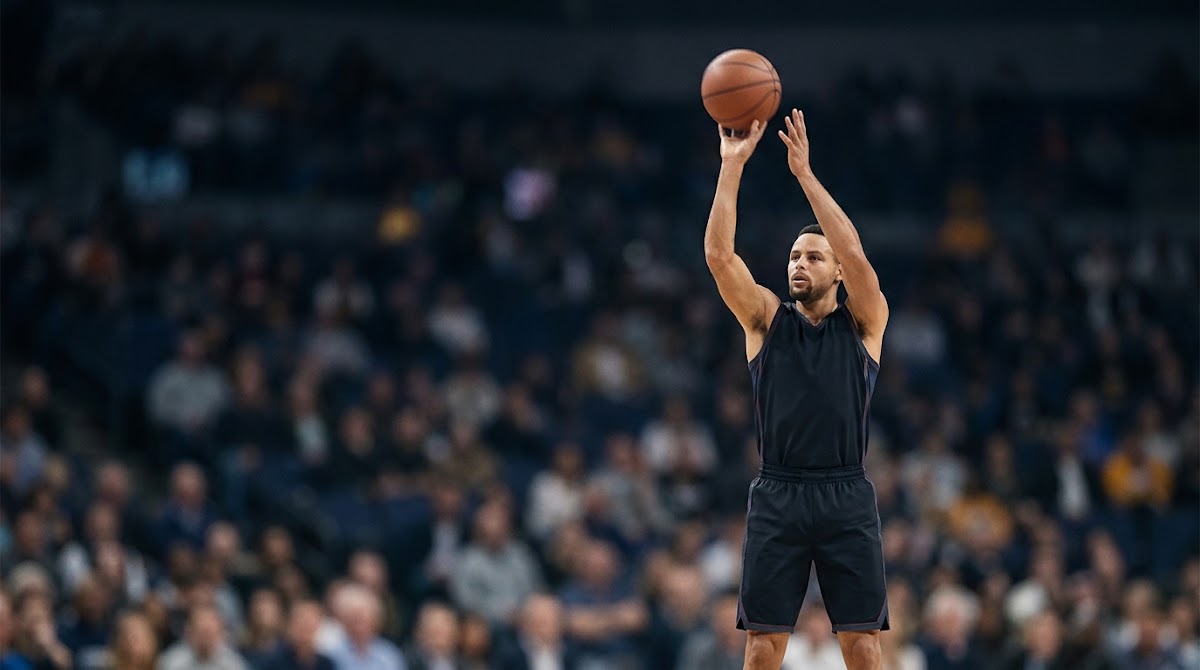
Quick answer: What is Anthony Edwards' main position?
anthony edwards prop: One-sentence bottom line for prop bettors
Anthony Edwards is primarily listed and used as a shooting guard for the Minnesota Timberwolves, and for prop purposes you should treat him as a scoring guard unless pregame lineup notes suggest otherwise. The NBA player page lists his role on the official roster and is a convenient first check for position labeling, roster status, and recent updates NBA player page.
For many games Edwards plays the bulk of his minutes in the backcourt, operating as the primary on-ball scorer, with occasional shifts to small forward in certain rotations. The Basketball-Reference profile provides play-by-play splits that show where he logs most minutes and how lineup context changes his on-court designation Basketball-Reference profile.
He is primarily a shooting guard, though lineup context can move him to small forward in specific rotations; check play-by-play splits and usage to confirm the role for each game.
Want the short takeaway for props? Treat him as a shooting guard by default, focus on points and threes, and confirm minutes and role before staking a bet.
Why position labels matter for props and stat expectations
Position labels are a shorthand for a player's usual role, but they do not capture minute-by-minute responsibilities. A roster label such as shooting guard summarizes where a player typically lines up, while tracking and play-by-play data reveal whether the player is finishing possessions, creating shots, or spacing the floor. Usage percentage is especially relevant because it quantifies how many team plays a player finishes and thus how many scoring opportunities they generate.

For prop bettors the practical effect is simple, a guard label usually implies more scoring and perimeter attempts, while forward labels often imply more post touches and different rebounding profiles. To convert a position label into reliable prop expectations, pair the label with play-type and usage data to see whether the player is acting as a primary scorer or sliding into a more complementary role, information available on advanced stats pages that document play types and usage Usage percentage glossary.
Official listings and depth charts: what primary sources say
Official team and league pages are the baseline for pregame position checks. The Minnesota Timberwolves roster and the NBA player page routinely list Edwards as a guard or shooting guard, and those listings are updated season to season for roster moves and role notes, making them a reliable first reference before placing a prop Timberwolves roster.
Major outlets that publish depth charts and player profiles also slot Edwards at shooting guard in recent seasons, supporting the roster classification and helping bettors see how public depth charts compare to team-designated roles. For an additional perspective, outlets such as ESPN keep player pages and depth charts that mirror the common view of Edwards as a guard ESPN player profile.
Quick pre-bet source check for player role
Use before placing any prop bet
Play-by-play and tracking evidence: minutes, matchups and on-court role
Granular play-by-play splits show where Edwards actually spends his minutes and which actions he performs most often. Those splits indicate he logs the majority of his minutes as a guard, and they reveal rotations where he moves to small forward for matchup or spacing reasons. Basketball-Reference provides minute-by-minute context and lineup splits that clarify when those shifts occur Basketball-Reference profile.
Tracking data from the league also highlights common actions Edwards runs, such as acting as a pick-and-roll ball handler and creating in isolation, which aligns with a scoring-guard profile rather than a traditional forward role. The NBA Advanced Stats player pages are where you can confirm the frequency of those play types and assess how they translate to prop categories NBA Advanced Stats player page.
On-court profile: what Edwards typically does and which prop categories fit
Edwards generally functions as a primary on-ball scorer for the Timberwolves, which manifests in heavy usage on possessions that end with his shot attempts. That scoring-guard role maps directly to prop categories such as points and three-pointers, because he handles many of the team's isolation plays and pick-and-roll finishes. The NBA Advanced Stats pages show his play-type distribution, which helps explain why points and perimeter attempts are core props to consider NBA Advanced Stats player page.

As a practical matter, a typical backing strategy for a scoring guard emphasizes point totals and three-point attempts, while creation stats such as assists or secondary assists depend more on the presence of other creators in the lineup. When evaluating anthony edwards prop lines, use play-type splits to set realistic expectations for which categories are most likely to be productive.
Position variability: when Edwards shifts to small forward and why it matters
Certain lineup constructions push Edwards to small forward, especially when the Timberwolves pair him with a traditional ball-handler or insert a taller wing for defensive matchups. In those instances his role can tilt toward spacing and off-ball shooting, which often reduces the number of direct creation opportunities and changes the expected stat mix for a game.

Those shifts are visible on play-by-play splits and lineup data, so bettors should check recent rotation notes and matchups. A move to small forward does not mean Edwards cannot score, but it can change where and how he gets shots, typically lowering his share of ball-handling plays compared with when he is used as a primary guard.
How Edwards' position and role affect prop bet selection
When Edwards is used as the primary scoring guard, points and three-point props tend to be the most closely aligned to his role. Usage percentage and anticipated minutes remain the two most important inputs when sizing your stake, because they together estimate how many scoring chances he will have and how long he will be on the court to produce them.
Conversely, if the lineup suggests Edwards will play more as a small forward, you should be cautious with assist and heavy-creation props and adjust expectations for shot distribution. Always weigh the roster label against the lineup notes to determine whether to treat a game as guard-centric or wing-centric in your prop model.
Practice prop forecasting with structured challenges
Before placing or sizing a stake, confirm expected minutes, the likely role in the starting lineup, and the recent usage trend to set a realistic confidence level.
Step-by-step checklist for evaluating an anthony edwards prop
Pre-game checks, start with the official roster or player page to confirm listed position and status, then view the published depth chart and injury report to spot last-minute changes. These sources establish the baseline expectation for where Edwards will line up and how many minutes he is likely to see.
Next, consult play-by-play lineup data and play-type splits to confirm whether he will function as the primary on-ball scorer for that matchup. Verify whether his recent usage rate is stable or if it has trended up or down in the last several games, because sudden changes in usage have a direct effect on scoring props.
Finally, factor in the opponent defensive profile for perimeter scoring, and check minutes risk factors such as back-to-back scheduling or rest management. Use these combined checks to decide which prop category to favor and to size your stake according to expected minutes and involvement. Find more resources on the Funded Plays blog.
Key metrics and pages to check for reliable context
Usage percentage is the single most useful aggregate metric for prop projection, because it measures how many team plays end with the player and therefore how many scoring chances he gets. The NBA Advanced Stats glossary explains usage and how it should be interpreted for prop analysis Usage percentage glossary.
For play-type and matchup context, check the NBA Advanced Stats player page for Edwards and the Basketball-Reference play-by-play and lineup splits to see how minutes and responsibilities are distributed. Those two sources together give you both the macro usage picture and the micro-level lineup evidence you need before placing a prop NBA Advanced Stats player page.
Also review the team depth chart and recent rotation notes to confirm whether Edwards is expected to start or slide into a different role for that game. Depth charts and official roster pages are updated pregame and are the quickest way to catch a role change before betting Timberwolves roster.
Common mistakes to avoid when projecting Edwards' props
A common error is to assume the roster label alone guarantees a player will have the same role every game. Roster labels can lag lineup changes and do not reflect minute-by-minute rotations, so always check play-by-play splits or recent lineups before taking a position on a prop.
Another mistake is overreliance on season averages. Season totals smooth over lineup shifts, matchup effects, and usage swings. For a player like Edwards, who can see his shot mix change when moved to small forward, recent play-type trends and usage are better predictors of a single-game outcome than a season mean.
Practical scenarios: applying the approach to common game situations
Scenario A: Edwards as primary ball-handler vs weak perimeter defense
If Edwards is expected to be the primary ball-handler and the opponent defends the perimeter poorly, favor points and three-point props. In that setup his usage will likely be high and he will have more isolation and pick-and-roll finishes, which increases the chance of overs in scoring lines. Confirm the anticipated role with play-type pages and recent lineup data before betting.
Scenario B: Edwards slotted to small forward in a big lineup
When Edwards slides to small forward because the team adds a larger wing or a different ball-handler, expect a shift toward off-ball shooting and fewer direct creation duties. In that case, consider avoiding assist or creation-heavy props and treat point totals with caution, since his scoring may come in the form of catch-and-shoot looks rather than a higher usage scoring load.
Scenario C: Back-to-back or rest concerns
On a back-to-back or when rest is suspected, minutes risk becomes the dominant variable. If the coach limits Edwards minutes, usage per minute might stay high but total scoring opportunities will fall with reduced playing time. For those days, consider smaller stakes or props scaled to per-minute production rather than full-game expectations, and check official injury and rotation notes early on game day.
Quick reference: what to remember about anthony edwards prop bets
Headliner, Edwards is primarily a shooting guard; prioritize points and three-point props when he is in a guard role. Confirm any deviation with pregame rotation and lineup data. See Funded Plays for additional guides.
Check usage rate and likely minutes to set realistic expectations, and be cautious when lineup notes suggest he will play more off-ball as a small forward.
Conclusion and next steps for readers
In 2026 Anthony Edwards should be treated as a primary shooting guard for most prop analysis, but lineup context can shift his role and alter which categories are most actionable. Use the NBA player page, Basketball-Reference, and NBA Advanced Stats to confirm role, usage, and play types before placing a bet NBA player page. Learn more about our evaluation approach on how Funded Plays evaluations work.
Remember that no single source guarantees an outcome, and the best approach is to combine official listings, play-by-play splits, and usage metrics to form a conservative, evidence-based bet size and selection strategy.
He is primarily listed and used as a shooting guard, though certain lineups can move him to small forward for matchup reasons.
Points and three-point props are typically the most aligned with his role when he is used as a scoring guard.
Confirm the official roster, recent play-by-play lineup splits, usage rate trends, and any injury or rest notes before placing a bet.
References
- https://www.nba.com/player/1630162/anthony-edwards
- https://www.basketball-reference.com/players/e/edwaran01.html
- https://www.nba.com/stats/help/glossary/#usage
- https://www.nba.com/team/1610612750/timberwolves/roster
- https://www.espn.com/nba/player/_/id/4433136/anthony-edwards
- https://www.nba.com/stats/player/1630162/
- https://www.fundedplays.com/challenges
- https://www.fundedplays.com
- https://www.fundedplays.com/blogs
- https://www.fundedplays.com/blogs/how-fundedplays-evaluations-work