
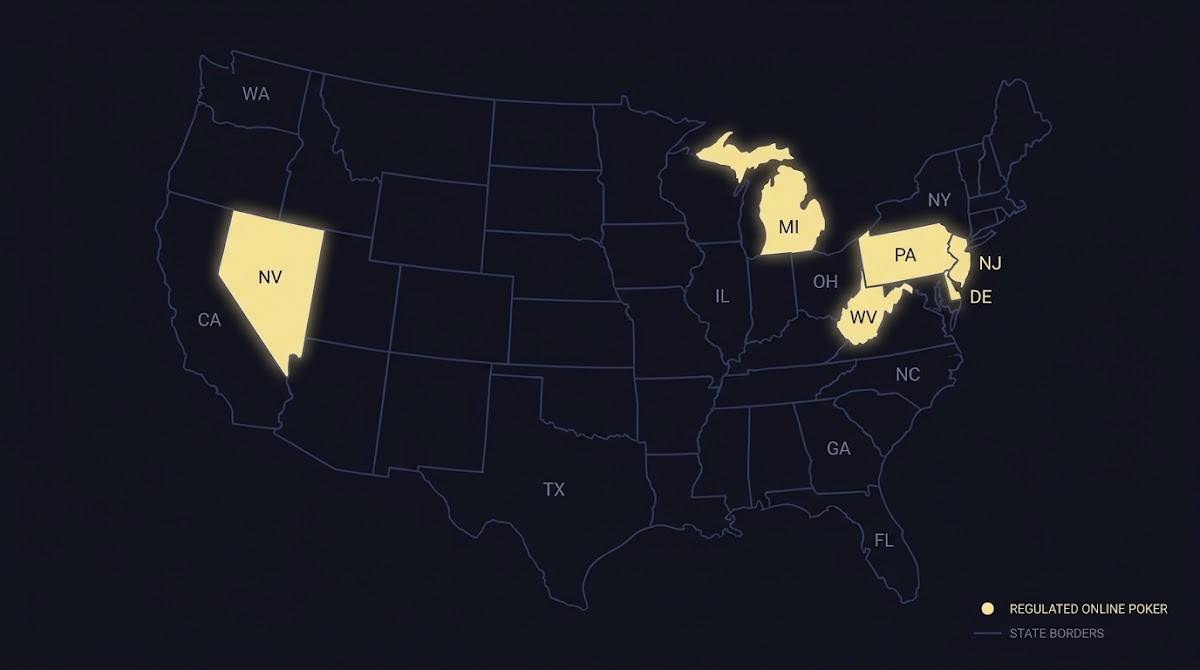
Quick answer: which U.S. states currently offer regulated online poker
As of 2026, regulated online poker is live in New Jersey, Nevada, Delaware, Pennsylvania, and Michigan, while West Virginia is authorized and positioned to join shared liquidity subject to operator approvals and launches. For clarity, these are state-licensed, peer-to-peer poker programs rather than offshore sites, and some states participate in pooled player liquidity while others operate separate player pools. Overview of the Multi-State Internet Gaming Agreement (MSIGA) (see Pokerscout guide)
Players should treat offshore poker platforms that are not licensed by a U.S. state regulator as outside the regulated market and potentially risky for consumer protection and legal certainty. Industry guidance warns about fraud and limited recourse on offshore sites, so using a state-licensed platform reduces those specific risks. Stopping Illegal Offshore Gambling

This short list reflects the regulated market footprint in 2026 and the legal framework that lets some states share player pools while others keep ring-fenced markets. If you need a one-line takeaway: those five states have active, regulated online poker services, West Virginia has legal authorization and membership eligibility, and offshore sites remain outside state regulation.
What regulated online poker means: laws, licenses and MSIGA basics
Regulated online poker refers to peer-to-peer poker games offered through operators licensed by a state regulator, using approved platforms, verified player accounts, and geolocation technology that keeps play within authorized jurisdictions. State licensing requires operators to meet technical, anti-fraud, and consumer-protection standards before offering services to residents.

The Multi-State Internet Gaming Agreement, commonly called MSIGA, is the legal vehicle that allows member states to permit operators to combine player pools across state lines when regulators and operators agree to the terms. MSIGA establishes the interstate framework that makes multi-state poker liquidity possible. Overview of the Multi-State Internet Gaming Agreement (MSIGA) (MSIGA agreement PDF)
Not every regulated state chooses to pool players with others. Some jurisdictions operate ring-fenced markets where player liquidity stays inside state borders, either because regulators prefer it or because operators have not pursued multi-state pooling approvals. The result is that game traffic and prize pools can be smaller in ring-fenced markets compared with pooled markets.

By contrast, offshore poker sites operate outside state licensing and oversight. Those sites do not offer the same regulatory protections, consumer complaint processes, or state-backed controls, which is why regulators and industry groups advise players to use state-licensed options. Stopping Illegal Offshore Gambling
State-by-state snapshot: status, operators and practical notes
New Jersey
New Jersey has one of the most mature regulated online poker markets in the United States, with peer-to-peer poker included among its iGaming offerings and regularly reflected in state revenue reports. Operators licensed in New Jersey run state-approved platforms with geolocation and identity verification in place to ensure legal compliance. January 2025 Gaming Revenue Results (includes internet poker)
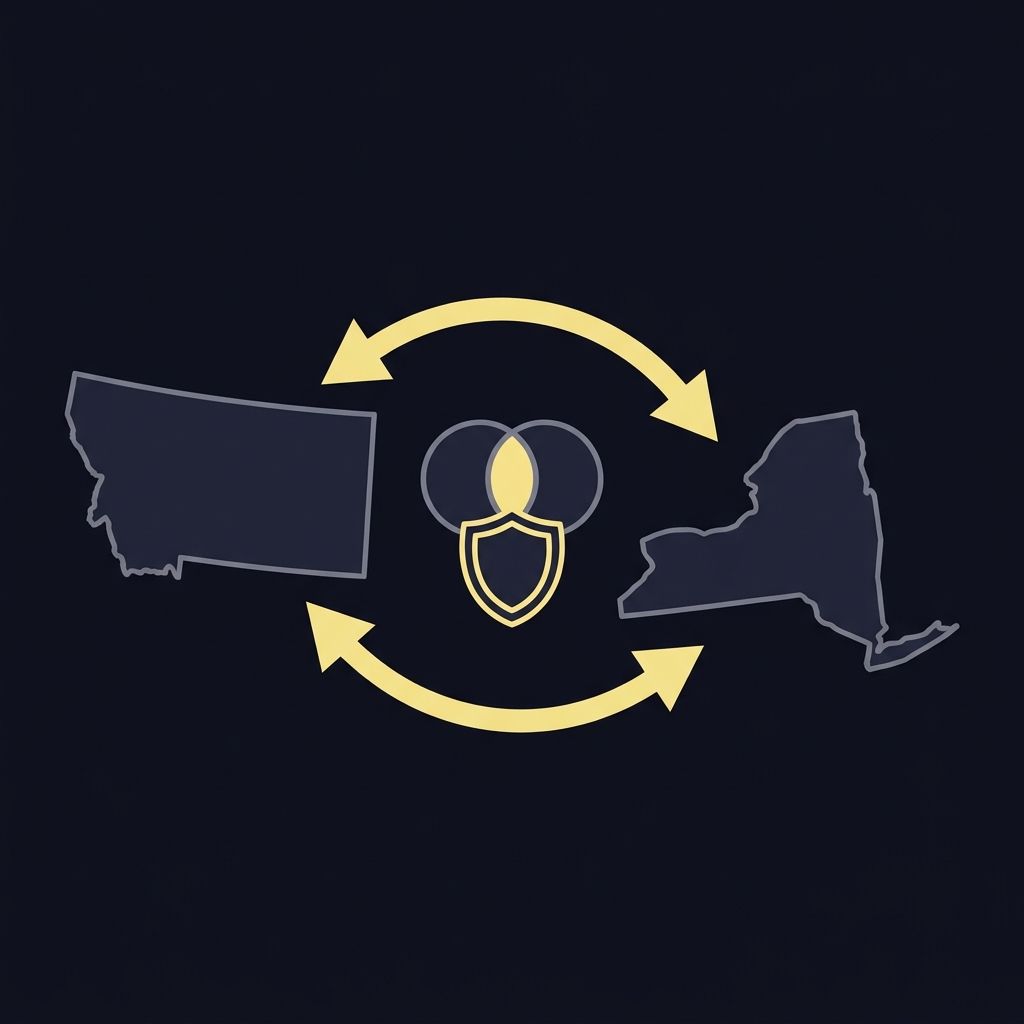
Players in New Jersey can expect a range of cash games and tournaments on licensed platforms managed by operators who meet state technical and consumer protection standards. Because New Jersey is part of the broader MSIGA membership, operators there have the option to pool player liquidity with other MSIGA states when technical and regulatory approvals are in place. Overview of the Multi-State Internet Gaming Agreement (MSIGA)
Nevada
Nevada has a long-standing regulated poker market and participates in MSIGA, providing a framework for operators to join interstate pools. The state regulator continues to oversee licensing and platform compliance for internet poker where authorized. Overview of the Multi-State Internet Gaming Agreement (MSIGA)
Because Nevada was an early adopter of regulated online poker, its operators and regulatory practices are often used as reference points for interstate coordination on technical standards and responsible play safeguards.
Delaware
Delaware offers state-run online poker through a program operated under the state lottery framework, and the market underwent a platform transition in late 2023 while remaining a regulated state-run option for players. That transition kept poker under the lottery's oversight and maintained a regulated environment for peer-to-peer play. Delaware Lottery launches new iGaming platform powered by Rush Street Interactive
Because Delaware uses a state-run model rather than a large commercial operator pool, availability and platform choices can be different compared with larger commercial markets, but regulation and oversight remain in place.
Pennsylvania
Pennsylvania includes online poker activity within its regulated iGaming market and reports internet gaming revenue publicly, confirming that peer-to-peer poker is an active component of the state’s offerings. Licensed operators must follow state rules and provide geolocation and account verification systems. Internet Gaming Revenue Report - January 2025 (Poker)
Players in Pennsylvania should use state-licensed platforms and consult the Pennsylvania Gaming Control Board for the most current operator listings and guidance on account setup and verification.
Michigan
Michigan has a live regulated online poker market and in May 2024 regulators authorized WSOP to offer multi-state internet poker with New Jersey, a concrete step toward broader interstate pooling and increased player liquidity for games that include both states. MGCB authorizes WSOP to offer multi-state internet poker with New Jersey
That authorization demonstrates how regulators and operators coordinate technical integration and approvals to expand player pools, and Michigan players may see larger game traffic and tournament fields when approved operators enable pooled play.
New Jersey, Nevada, Delaware, Pennsylvania, and Michigan have regulated online poker in 2026; West Virginia is authorized and eligible for MSIGA pooling subject to operator approvals.
West Virginia
West Virginia law authorizes online poker and the state is eligible to participate in MSIGA member pooling, but concrete multi-state launches depend on operator approvals and technical integration. The state’s membership eligibility means operators can pursue pooling when both regulators and operators complete the required approvals. Overview of the Multi-State Internet Gaming Agreement (MSIGA)
In practice, West Virginia players should watch for operator announcements and regulator notices that confirm when multi-state pools go live, since authorization and usable player pools are separate steps in the rollout process.
How interstate pooling actually works and why it matters for players
MSIGA permits member state regulators to authorize operators to combine player liquidity across state lines, creating larger pooled player bases for cash games and tournaments and improving game traffic and prize pools. The agreement provides the legal basis for those transfers of play across jurisdictions. Overview of the Multi-State Internet Gaming Agreement (MSIGA)
Operationally, interstate pooling usually follows a predictable sequence: regulators confirm the legal framework, operators seek state approvals, technical integration tests are completed, and then the operator turns on pooled play for the authorized jurisdictions. Each step requires regulator sign-off because licensing, geolocation, and anti-fraud systems must work across state lines.
A recent, concrete example is Michigan’s May 2024 approval for WSOP to pool players with New Jersey; that shows how a state regulator can authorize a specific operator to join a multi-state pool after reviewing compliance and technical readiness. MGCB authorizes WSOP to offer multi-state internet poker with New Jersey
For players, the practical effect of pooling is straightforward: pooled markets mean more opponents, deeper tournament fields, and generally stronger liquidity, which can make higher-stakes games and more frequent tournament guarantees viable in regulated online poker.
How to check whether online poker is legal where you live
Start with your state gaming regulator website. Official regulator pages, revenue reports, and program pages list licensed operators, permitted game types, and regulatory notices that confirm whether online poker is offered to residents. Those regulator pages are the definitive source for current legal status. January 2025 Gaming Revenue Results (includes internet poker)
Other useful official pages include the Pennsylvania Gaming Control Board internet gaming reports and regulator press releases. These documents often show how online poker fits within a state’s broader iGaming activity and provide operator lists and compliance notices. Internet Gaming Revenue Report - January 2025 (Poker)
Quick regulator and operator verification lookup
Check the regulator for the latest operator approvals
When you review an operator website, look for clear statements about state licensing, a list of jurisdictions where the operator is authorized to offer services, and technical notes on geolocation. Terms of service and help center pages usually explain age verification, location checks, and withdrawal requirements. See the Funded Plays homepage and our evaluation guide for more on verification checks.
Finally, avoid offshore platforms that are not state licensed. Industry groups highlight the consumer protection risks from unregulated offshore sites, which lack state oversight and formal complaint mechanisms. Stopping Illegal Offshore Gambling
Common mistakes and legal pitfalls players make
One frequent error is assuming that because a site is available online from your device it is legal to use. Availability does not equal legality; only state-licensed operators that verify location and identity offer regulated play in authorized jurisdictions. Offshore availability is not a legal safe harbor. Stopping Illegal Offshore Gambling
Another mistake is assuming MSIGA pooling automatically applies across member states for every operator. MSIGA provides the legal framework, but each operator must receive regulatory approvals and complete technical integration before pooling can begin for that operator. Players should check operator notices and regulator approvals rather than assuming pooled play is universal. Overview of the Multi-State Internet Gaming Agreement (MSIGA)
Failing to read platform rules is a common source of frustration. Withdrawal conditions, verification timelines, and account residency rules vary by operator and state, so check terms of service and help center FAQs before depositing real funds on any licensed platform.
Practical scenarios: what players in specific states can and cannot do
americas cardroom sportsbook
If you live in New Jersey or Pennsylvania, you can use state-licensed online poker platforms that operate under regulator oversight, subject to standard identity and geolocation checks. State reports and regulator pages confirm that peer-to-peer poker is included in the iGaming mix for both states. January 2025 Gaming Revenue Results (includes internet poker)
Confirm state licensing and platform availability
Check official state regulator pages and an operator’s help center for the current list of licensed platforms and specific account setup steps before you register.
If you live in Michigan or Nevada, regulators have enabled regulated online poker and some operators are authorized to join multi-state pools, which can increase liquidity and tournament fields when activated. Michigan’s WSOP approval to pool with New Jersey is a recent example of how those approvals work. MGCB authorizes WSOP to offer multi-state internet poker with New Jersey
If you live in a non-authorized state, you cannot legally use state-licensed online poker from your residence. Safe options include waiting for legislation, traveling to a regulated jurisdiction, or using legal alternatives that do not require state-licensed poker access. Always confirm local law and avoid offshore alternatives that operate without state licensing.
For West Virginia residents, the state has legal authorization and MSIGA membership eligibility in place, but players should wait for operator announcements and regulator confirmation that a specific operator has completed approvals and technical integration before assuming pooled play is available. Overview of the Multi-State Internet Gaming Agreement (MSIGA)
Key takeaways: New Jersey, Nevada, Delaware, Pennsylvania, and Michigan have regulated online poker in 2026, West Virginia is authorized and MSIGA-eligible pending operator launches, and MSIGA is the legal path that enables interstate pooling when operators and regulators complete approvals. Overview of the Multi-State Internet Gaming Agreement (MSIGA)
Action list: check your state gaming regulator page for current operator lists and program notices, confirm state licensing on operator sites, avoid offshore platforms that lack state oversight, and monitor regulator press releases or legislative trackers for changes in availability. Regularly reviewing official regulator pages helps you stay current with operator approvals and pooling announcements. Stopping Illegal Offshore Gambling Also see our blog for related coverage.
Remember that regulated platforms provide consumer protections and dispute channels but do not guarantee winnings. Responsible play and reading platform rules remain essential for any player.
No. Regulated online poker is available only in specific states that license operators; other states may not authorize internet poker and offshore sites remain outside state regulation.
MSIGA is the agreement that enables member states to authorize operators to pool player liquidity across state lines, which can increase game traffic and prize pools when operators complete approvals.
Offshore poker sites that are not licensed by a U.S. state regulator are considered unregulated and risky; players should prefer state-licensed platforms for consumer protections.
References
- https://gaming.nv.gov/index.aspx?page=288
- https://www.pokerscout.com/guides/is-online-poker-legal-in-us/
- https://www.americangaming.org/advocacy/illegal-gambling/offshore-gaming/
- https://www.fundedplays.com/challenges
- https://www.fundedplays.com
- https://www.fundedplays.com/blogs
- https://www.fundedplays.com/blogs/how-fundedplays-evaluations-work
- https://www.nj.gov/oag/ge/pressreleases/2025/jan/revenue-0125.html
- https://www.delottery.com/Media/Press-Releases/delaware-lottery-launches-igaming-with-rsi
- https://gamingcontrolboard.pa.gov/?pr=2025-01-17-igaming
- https://www.michigan.gov/mgcb/news/press-releases/2024/05/24/mgcb-authorizes-wsop-to-offer-multi-state-internet-poker
- https://compacts.csg.org/wp-content/uploads/2024/03/Multistate-Internet-Gaming-Agreement.pdf