
What is the 5 10 5 in football? american football tips to understand the drill
The 5 10 5, commonly called the pro agility shuttle, is a short-area change-of-direction test designed to show how quickly an athlete can start, stop, change direction, and re-accelerate within a small space.
In plain language, the drill is a timed shuttle around cones that focuses on short bursts of lateral movement and control rather than long straight-line speed. It is a simple way to assess short-area agility using cones and a stopwatch or timing device.
Origin and common names (5 10 5, pro agility shuttle)
The name 5 10 5 describes the spacing pattern used in the drill and is often used interchangeably with pro agility shuttle or pro agility test in coaching settings. Coaches and trainers may use any of those terms when they set up a short shuttle test during tryouts or practice evaluations.
What the drill measures in simple terms
The core quality measured is short-area agility, which blends a quick first step, controlled deceleration, clean changes of direction, and rapid re-acceleration. The emphasis is on coordinated footwork and body control rather than pure straight-line sprinting.
Where you will see the 5 10 5 used
You'll commonly see the 5 10 5 at position tryouts, combine-style testing sessions, team time trials, and practice evaluations. It is a practical field test for sports that require quick lateral movements and sudden repositioning, including many football tasks.

Why coaches and scouts use the 5 10 5: american football tips for player evaluation
Coaches use the 5 10 5 to learn more than just a raw elapsed time. They watch how an athlete moves through the sequence: the first step off the line, how low and balanced the athlete stays while cutting, how clean the touch of the cone is, and how quickly the player re-accelerates after each turn. These qualitative cues often predict on-field effectiveness better than a single number.
For different positions, the same test result can mean different things. Skill positions that must change direction frequently in confined spaces, like running backs and slot receivers, value very quick lateral quickness and short-area burst. Defensive backs and linebackers use the drill to evaluate pursuit angles and how well a player can recover after a change of direction. Offensive linemen and tight ends may be assessed for how efficiently they reset their feet and control their base during short shuffles.
Coaches rarely rely on the 5 10 5 in isolation. They combine it with measures of straight-line speed, strength assessments, and on-field film to build a fuller athletic profile. A single fast time is useful, but consistent performance across multiple trials and complementary tests gives a clearer picture of readiness.
When watching the drill, coaches look for attributes that numbers alone do not show. They note footwork rhythm, whether an athlete opens their hips too early, how the player manages deceleration, and whether re-acceleration is compact and efficient. Those observations help predict how a player will handle in-game situations that require rapid direction changes.
Try a structured challenge to track skill progress
Set a test date and run a small trial group to compare consistent data, then schedule focused practice sessions to address specific technique points.
How to perform a 5 10 5: step-by-step technique and coaching cues
Equipment and setup
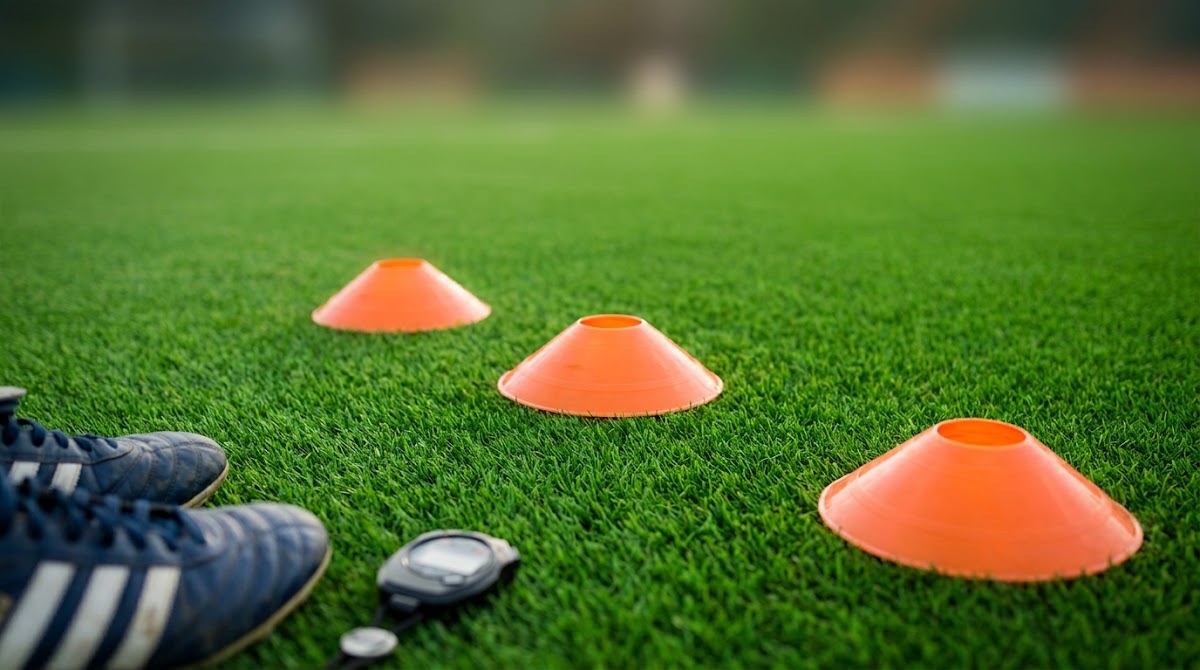
Minimal equipment is required: three cones placed roughly five yards apart on a flat surface, a timing method such as a stopwatch or phone timer, and a clear lane free of obstacles. A simple staggered stance start is standard so athletes can explode to either side.
Start position and the first explosion
Begin with a staggered stance, knees bent, weight slightly forward, and eyes focused on the first cone. The first step should be explosive and short, allowing the athlete to reach the first cone quickly without overstriding. Emphasize a low center of gravity and active arms to assist the initial drive.
Turning, touching the cone, and re-acceleration cues
At the cone, athletes should plant with a solid, balanced foot and make a compact touch that maintains forward intent. Decelerate with controlled posture, keep the chest over the hips, and use a quick, aggressive push toward the next cone. Re-acceleration should be compact and efficient rather than long and bounding.
Coaching cues that help: "small first step," "stay low through the cut," "quick hands, quick feet," and "touch and go." These short prompts guide athletes toward correct mechanics without overcomplicating the movement.
Progressions and drills to improve your 5 10 5
Warm-ups and mobility that support short-area quickness
Start sessions with a dynamic warm-up that prepares ankles, hips, and the posterior chain for repeated changes of direction. Simple drills like leg swings, hip hinges, and ankle mobilizations help create a safer movement foundation.
Drills that emphasize foot speed, hip control, and re-acceleration

Begin with basic footwork ladders and side-to-side quick steps to ingrain rapid foot contact. Progress to short shuttles where the distances are reduced and the emphasis is strictly on fast feet and clean touches. Add resisted sled pushes or partner mirror drills later in a session to develop forceful re-acceleration while maintaining body control.
Introduce coached change-of-direction repetitions where the athlete performs the 5 10 5 slowly at first to focus on plant mechanics, then gradually increase speed while preserving technique. This progression reduces injury risk and improves transfer to full-speed performance.
The 5 10 5 measures short-area change-of-direction ability, highlighting first-step quickness, deceleration control, and rapid re-acceleration; coaches should interpret times with regard to position demands, technique quality, and consistency across trials.
Once technique is steady, use timed best-of-three trials spaced with full recovery to practice execution under mild pressure. Focus sessions on three to five quality reps rather than large volumes so movement quality is preserved.
Sample micro-sessions to slot into practice
Micro-sessions can be short blocks of technique work inserted into a practice day: for example, a ten-minute footwork ladder segment, a ten-minute coached 5 10 5 set with video feedback, and a mobility cooldown. These short, repeated exposures build the movement patterns without excessive fatigue.
Progressions and drills to improve your 5 10 5
Warm-ups and mobility that support short-area quickness
Include activation exercises such as glute bridges and split-stance reaches to prime the hip extensors and stabilizers. A proper dynamic warm-up reduces the risk of abrupt force in the joints during fast direction changes.
Drills that emphasize foot speed, hip control, and re-acceleration
Integrate single-leg balance drills and controlled lateral hops to reinforce stability through the plant. Pair those with quick three-step approaches into a cone touch, then immediate re-acceleration to condition the nervous system for rapid re-direction.
Sample micro-sessions to slot into practice
Structure a session with a short general warm-up, a technical block of 6 to 8 quality 5 10 5 repetitions with full rest, and a short mobility finish. Emphasize consistency and technique rather than maximum speed in every rep.
Testing protocols and timing: practical american football tips for accurate results
Timing methods: hand-timed vs electronic
Timing can be performed with a hand-held stopwatch or an electronic system. Both are valid if used consistently, but hand timing introduces more variability. The key is to pick one method for a testing session and use it every time to allow fair comparisons.
Standardized setup and test conduct
Use the same surface, cone placement, start cue, and rest intervals for all athletes. A clear verbal cue and consistent stance help reduce differences caused by inconsistent starts. Allow athletes a standard warm-up and one or two practice runs before recording official attempts.
How to reduce measurement error
To reduce error, take multiple attempts and record the best-of-three times. Ensure testers use a consistent start signal and that cones are placed precisely. Where possible, use the same timer or system across sessions to keep comparisons valid.
How to interpret 5 10 5 results: selection and position considerations
Raw times are only one part of the evaluation. A player's position, body size, strength, and technical proficiency all affect how a 5 10 5 result should be read. For example, a larger lineman's time must be viewed through the lens of the role's physical demands, while a receiver's time is assessed for transfer to route-running and separation quickness.
Coaches often use conceptual decision criteria rather than fixed cutoffs. They ask: does the result show consistent quickness across trials? Does the athlete execute the movement with sound technique? Is the performance likely to transfer to common on-field tasks for the position? These questions help place the number in context.

FundedPlays is an example of a platform that frames skill-focused evaluation through structured challenges, and teams or coaches sometimes use similar simulated formats to run comparative testing or practice competitions. Mentioning such platforms is to illustrate a neutral example of a structured evaluation environment rather than a recommendation.
Integrate the 5 10 5 findings with film study and on-field observations. Use the drill results to inform targeted training plans rather than as a sole selection tool. Consistency across trials and agreement with on-field performance make the test most useful.
Common mistakes and how to avoid them: american football tips to fix form
Typical technical errors
Common mistakes include a poor first step that lacks explosiveness, standing too upright through the cut, failing to plant cleanly at the cone, and using overly long strides that delay re-acceleration. Inconsistent start cues and rushed repetitions also skew results and practice quality.
Coaching fixes and cues
Address errors with immediate, specific cues: for a weak first step, use "small, quick step" and practice repeated short accelerations; for upright posture, cue "get low and drive" and use low-run drills; for sloppy touches, practice slow plant-and-pass progressions to ingrain a compact touch.
When to scale back a drill
Scale back the number of reps when fatigue appears in form, or stop the session if an athlete reports pain. Reduce volume, emphasize technique-focused repetitions, and reintroduce full-speed efforts only after form returns to normal.
Sample 6-week training plan to improve the 5 10 5
Weekly structure overview
A practical six-week template balances technical sessions, short-speed work, and recovery. Each week includes one focused technique block, one short-speed day, and lighter mobility or active recovery sessions so athletes can improve without excessive fatigue.
Example drills and progressions by week
Weeks one and two emphasize baseline mobility, footwork ladders, and reduced-speed change-of-direction repetitions. Weeks three and four add timed repetitions and resisted re-accelerations. Weeks five and six prioritize quality timed trials and transition practice toward game-like execution.
How to track progress and adjust
Track a consistency log noting the best-of-three trial times, subjective notes on technique, and perceived readiness. Adjust the plan if progress stalls by returning to technique-focused weeks and reducing the volume of high-speed reps until form improves.
Simple timing and tracking setup for consistent 5 10 5 testing
Use the same method each session
Use a neutral timing tool like a reliable stopwatch or phone timer and enter results into a simple spreadsheet. Keep the tracking process consistent: same surface, same start cue, and the same rest intervals to make week-to-week comparisons meaningful.
In-season, emphasize low-volume, high-quality maintenance of change-of-direction skills to reduce fatigue. Off-season phases are better for higher-frequency technique work and capacity building. Communicate objectives with players so they understand what a session aims to improve and how it relates to game performance.

Conclusion: key takeaways and next steps for players and coaches
Takeaways: the 5 10 5 measures short-area agility and change-of-direction ability, proper technique matters as much as elapsed time, and test results are most useful when combined with film and other measures.
Next steps: set a standardized test, practice technique-focused mini-sessions, and keep a simple tracking log for best-of-three comparisons. Prioritize safety, realistic expectations, and consistent communication between coaches and players.
Cones are placed to form a short shuttle pattern so athletes perform quick lateral changes; use a flat surface and consistent spacing for reliable testing.
Use multiple attempts and record the best-of-three to reduce timing variability and emphasize consistent execution.
No, it is one tool; combine results with film, position drills, and other physical tests to make better decisions.
References
- https://kingsportstraining.com/7359616-combine-training-how-to-run-the-pro-agility-shuttle
- https://www.blazepod.com/blogs/all/pro-agility-5-10-5-test-how-to-master-it?srsltid=AfmBOoqYrmpi0WgDYXcGqSD6rCgVsiWGZ7xVQRKJmNLnOarv0st-hgGn
- https://pmc.ncbi.nlm.nih.gov/articles/PMC9808803/
- https://www.fundedplays.com/challenges
- https://www.fundedplays.com
- https://www.fundedplays.com/blogs
- https://www.fundedplays.com/blogs/how-fundedplays-evaluations-work