
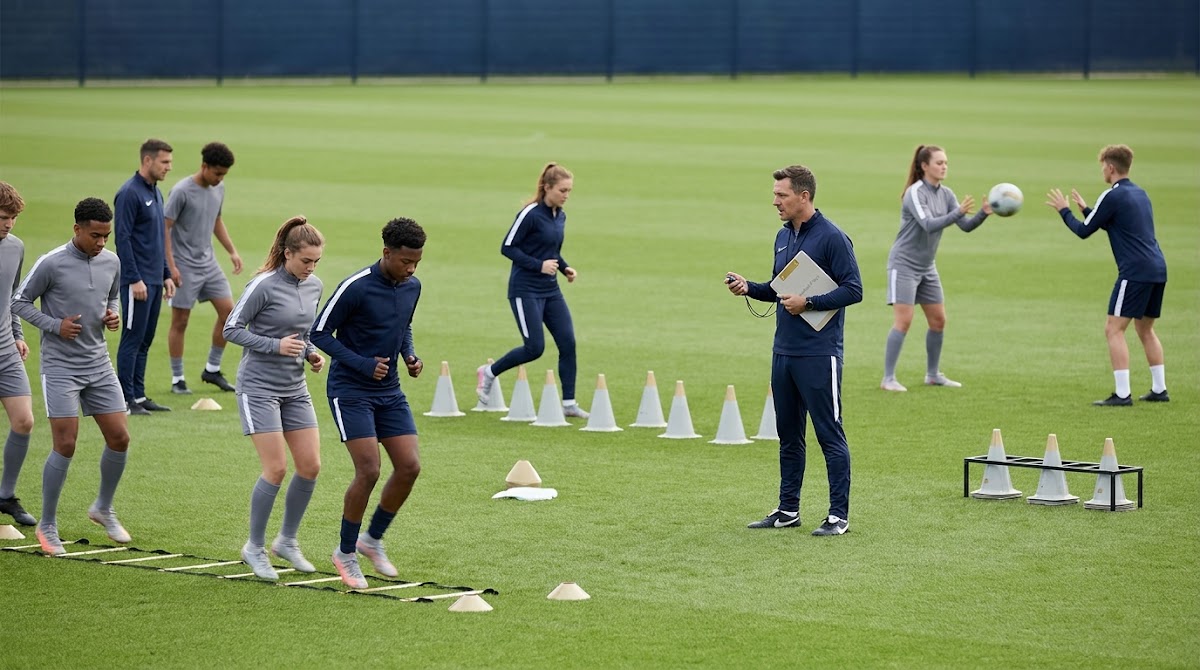
What 'american football tips' covers: definition and context
When players and coaches search for american football tips they usually want practical guidance they can use on the field, not gambling or betting information. In this article, american football tips refers to rule-aligned technique, progressions, and conditioning advice designed to improve play while prioritizing safety and compliance.
Start by understanding which rules and safety frameworks shape acceptable practice and game behavior. The baseline for college-level legal mechanics, timing, and formations is set by the NCAA rules and interpretations, which readers should consult directly for precise language and situations NCAA rules document.
Combine up-to-date rule knowledge with progressive, shoulder-led contact drills and objective testing so every session reinforces legal, repeatable technique and measurable fitness gains.
High-school players and coaches also need to track state and NFHS-level changes because scholastic rules can alter contact allowances and clock management; knowing those differences prevents practicing obsolete techniques NFHS football rules changes.
Safety guidance underpins modern tackling and contact instruction. For concussion prevention and neck safety, following head-up, shoulder-led tackling practices is essential and should be taught before full contact is allowed in drills CDC HEADS UP to Sports: Football.
Why tips focus on rules, technique, and conditioning: american football tips
Practical american football tips knit three things together: current rules that define legal play, repeatable technique that transfers to games, and conditioning that sustains performance. When these elements align, practice time becomes more productive and less risky.
How updated rules change what to practice
Rule updates can shift what is legal or safe to do in a game and in practice. When governing bodies update timing, contact definitions, or formation allowances, coaching priorities should adjust accordingly, focusing on compliant technique first and only then on higher-intensity work.
Learn the rules and safety basics before you train
Before drilling position-specific moves, consult primary rule sources so that practice emphasizes legal mechanics. For college players and coaches, the current NCAA 2024 and 2025 rules and interpretations set the baseline for what counts as legal formations, timing, and player responsibilities NCAA rules document.
For high-school contexts, review the NFHS 2024 changes because scholastic adjustments can alter contact allowances and clock management; those differences affect how and when to rehearse plays and contact progressions NFHS football rules changes.
Some rule areas commonly affect practice technique. Examples include blocking windows and what defines a legal block, contact definitions that change tackling cues, and clock rules that affect situational practice. Break practice planning into rule-driven segments so every drill maps back to a specific game rule.
Concussion and contact precautions should be part of any practice plan. CDC HEADS UP guidance emphasizes head-up, shoulder-led contact and avoiding head-first contact, which has direct implications for when to introduce body contact and how to regress drills if a player cannot maintain safe alignment CDC HEADS UP to Sports: Football.
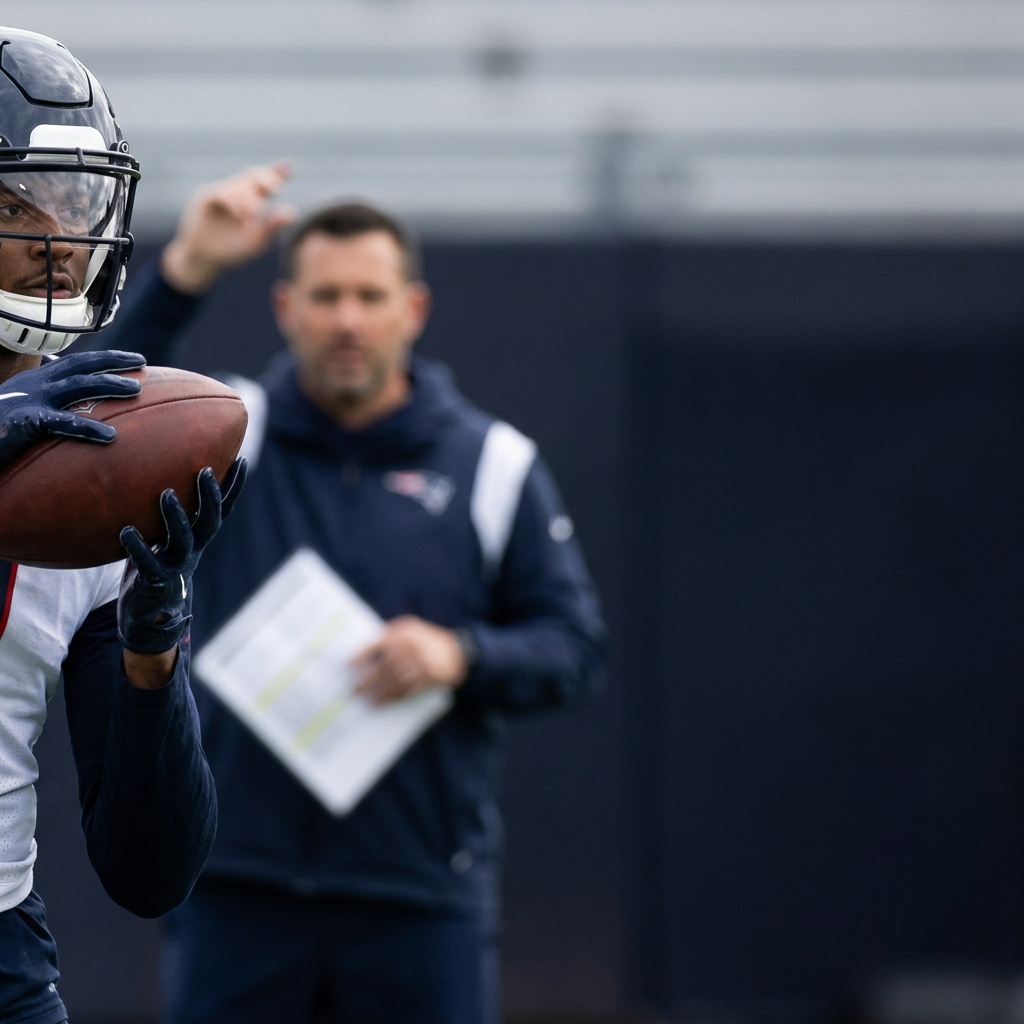
Practical step: build a short rules checklist for each practice that names the specific rules the session will reinforce. Use that checklist to design warm-ups, non-contact first-build sequence, and only then graduated contact phases.

A simple framework to practice better: Learn, Drill, Test, Track
Use a four-step weekly cycle to make practice measurable and safe. Learn focuses on rules and position responsibilities so athletes rehearse decisions as well as movements. Drill uses progressive technique ladders with safety controls. Test means structured, objective challenges that mirror game demands. Track is a short review log that records outcomes and guides the next cycle.
In the Learn phase, incorporate short rule checks and role responsibilities so every player can explain the key rules that affect their position. Tying a rule check directly to a drill helps bridge rule knowledge and muscle memory NCAA rules document.
During the Drill phase, use progressive contact ladders that start with shadowing and move to controlled contact. This progression aligns with contemporary safety instruction that emphasizes gradual exposure to impact and shoulder-led contact before higher-intensity collisions CDC HEADS UP to Sports: Football.

When you Test, set objective metrics: timed sprints for speed, accuracy percentages for quarterbacks and receivers, completion rates for blocking and tackling drills. Testing under controlled pressure helps identify what to repeat and what to regress.
Track progress in a simple session log that records the drill, the metric, and any safety notes. Over weeks this log shows trends that tell you when to increase intensity and when to step back. For an example of session logging and evaluation, see session log.
Core technique drills and safe progressions (passing, catching, blocking, tackling)
Passing and catching progressions start with footwork and rhythm before adding reactive elements. For receivers, practice the split step and early acceleration toward the catch point; pair footwork drills with target-focused catching repetitions to build consistent hand-eye coordination.
Coaching cues for catching include soft hands, eyes on the ball through the catch, and finishing the catch into the body. Begin inside a stationary drill to build the catch pattern, then add movement and defensive reads as consistency grows.
Blocking fundamentals rely on leverage and hand placement. Teach linemen how to set a base, get inside hand position, and create drive with the legs. Use progressive partner drills that emphasize hand placement at low speed before increasing resistance and adding live pursuit elements.
For tackling, follow a step-by-step progression that prioritizes head-up, shoulder-led contact. Start with body alignment drills, move to contact dummies and bags, then to cooperative partner drills where the tackler practices shoulder contact and finishing, and only after consistent technique allow limited live contact CDC HEADS UP to Sports: Football.
USA Football's advanced tackling guidance expands on progression-based contact drills and practical coaching cues that reinforce shoulder-first contact and proper head placement; integrate those cues into every tackling ladder and pause or regress a drill when technique breaks down USA Football advanced tackling program. See related research study.
Practice conditions for contact drills should be controlled: certified coaches or experienced supervisors, clear intensity limits, and written regression steps. Keep contact reps limited and purposeful so each rep reinforces correct technique and complies with local competition rules NCAA rules document. Also follow practice guidelines such as those published by USA Football practice guidelines.
Conditioning and warm-ups that transfer: speed, strength, and mobility
Choose warm-ups that activate the nervous system and prepare athletes for high-intensity work. Recent evidence shows that heavy-load back-squat PAPE warm-ups can acutely improve sprint performance compared with a traditional warm-up, which suggests a role for brief, heavy activation protocols before speed sessions for athletes who are well prepared and supervised Journal of Strength and Conditioning Research study. For additional context on warm-up choices, see Funded Plays.
That said, PAPE protocols require appropriate baseline strength, careful load selection, and monitoring. For most amateur players, conservative approaches that emphasize dynamic activation, mobility, and progressive sprint build-ups are safer until a strength base is established.
Resisted sprint training is effective for improving initial acceleration when dosed and progressed correctly. The 2024 systematic review found benefits for first-step speed using resisted methods, but it also emphasizes gradual loading and monitoring to avoid excessive fatigue resisted sprint training review.
Practical implementation: begin speed sessions with mobility checks and short dynamic drills, then use either brief PAPE activations for advanced athletes or progressive resisted acceleration drills at low load for younger or less trained players. Monitor fatigue by tracking sprint times and perceived exertion.
Track sprint times and drill success rates in a simple session log
Use before and after high-intensity work
Include basic mobility checks before high-intensity work: ankle and hip range, thoracic rotation, and single-leg balance. If mobility or baseline strength is insufficient, prefer technique and light-speed work until deficits improve.
Position-specific checklists: what to practice by role
Quarterbacks and skill positions should prioritize quick, repeatable mechanics. For quarterbacks, focus on footwork ladders, target-based throwing sessions, and reads drills that force rapid decision-making under light pressure. For receivers and running backs, prioritize release footwork, catching under traffic, and secure handoffs.
Recommended drills for QBs and skill positions include short-area accuracy routines, progressive coverage recognition drills, and timed route competitions that reward consistent execution. Pair these drills with short recovery windows and objective accuracy logging.
Offensive and defensive linemen should emphasize hand placement, leverage, and sustained drive. Practice mirror drills, hand-strike accuracy work, and sled or partner-resistance sets that build short-area power and technique under load.
Linemen conditioning should include short burst strength and recovery sets rather than long-distance tempo. Link back to the conditioning section for warm-up choices before heavy lift or sprint work that aims to improve initial push and response.
Running backs, linebackers, and defensive backs need focused change-of-direction and contact-read drills. Work on footwork patterns that support deceleration and re-acceleration, progressive tackling ladders, and recognition drills that train reads off blocks or receiver routes.
Remember that scholastic rule differences can change responsibilities, especially in timing and contact allowances, so adapt positional practice priorities to the rules your team will play under NFHS football rules changes. Additional training resources include a Football Tackling course found at NFHS Learn Football Tackling Course.
Decision criteria: when to push intensity, when to back off
Establish clear red flags for scaling a session. If multiple players show rising technique breakdown in contact, persistent soreness across sessions, or declining sprint times, these are objective signs to reduce intensity and address recovery or regression.
Use simple metrics to guide progression: timed sprints, drill success rates, and a short subjective readiness score. When these metrics move in the wrong direction, prioritize technique work and rest over increased contact or load Journal of Strength and Conditioning Research study.
Try a structured challenge to test your progress
Adopt the Learn-Drill-Test-Track framework and use short logs to guide safe, measurable progression in practice.
Progress contact intensity only after stable technique across repeated, low-intensity rehearsals. In contact ladders, move to higher intensity when technique success rates exceed a predefined threshold and certified coaches approve. If concussion or head-position concerns appear, stop and regress to shoulder-led drills immediately CDC HEADS UP to Sports: Football.
Common mistakes and how to troubleshoot them
One frequent error is rushing contact progressions. When athletes skip steps to reach live contact faster, technique often breaks down and risk rises. The corrective step is to return to partner-based, shoulder-led drills and require a measurable success rate before advancing.
Another mistake is ignoring updated rule interpretations. Coaches and players should schedule brief rule reviews at the start of each season or pre-season week to prevent practicing obsolete or illegal techniques NCAA rules document.
Overloading conditioning without monitoring is common. Advanced methods like PAPE and resisted sprints have value but should not be applied without baseline strength, supervision, and simple monitoring like sprint-time logs and perceived exertion checks Journal of Strength and Conditioning Research study.
Troubleshooting pattern: identify the error, assign a corrective drill with measurable checkpoints, and regress intensity until the checkpoint is met. Keep records in the session log so decisions are data-driven.
A practical weekly plan and how to track progress
Sample 4-week microcycle for a skill-focused player: Week 1 emphasizes Learn and light Drill, Week 2 increases Drill complexity and adds measurable Test elements, Week 3 includes controlled contact days with lower volume, Week 4 is a deload and re-test week. This pattern balances learning, loading, and recovery.
Simple metrics to log each session include short sprint times, drill success percent, and a brief contact-technique note. Retest key metrics every two weeks to detect trends and guide scaling. For a place to review trends and posts, see the blogs.
Re-evaluate goals and scale the plan when metrics show consistent improvement, a certified coach signs off, and there are no safety incidents. If progress stalls or safety issues appear, return to Learn and low-intensity Drill until stability returns CDC HEADS UP to Sports: Football.
Beginners should master head-up alignment, shoulder-led contact mechanics, and controlled partner drills before progressing to live contact. Progress only after consistent technique and coach approval.
PAPE protocols can help sprint performance acutely but require a strength base and supervision. Use them selectively for high-intensity sessions and monitor results and fatigue.
Yes. NFHS updates can change contact allowances and timing compared with NCAA rules, so adapt drills and situational practice to the rules you will play under.
References
- https://www.ncaapublications.com/productdownloads/FR24.pdf
- https://www.nfhs.org/articles/football-rules-changes-2024/
- https://www.cdc.gov/heads-up/sports-activities/football.html
- https://www.nfhslearn.com/courses/football-tackling
- https://pmc.ncbi.nlm.nih.gov/articles/PMC5400210/
- https://usafootball.com/programs/advanced-tackling/
- https://usafootball.com/media-center/usa-football-and-039-s-practice-guidelines-for-youth-tackle-football-define-and-set-limits-on-full-contact
- https://journals.lww.com/nsca-jscr
- https://link.springer.com/journal/40279
- https://www.fundedplays.com/challenges
- https://www.fundedplays.com/blogs/how-fundedplays-evaluations-work
- https://www.fundedplays.com
- https://www.fundedplays.com/blogs