
Quick answer: what the '5 S's' are and why they matter
Short definition of each S
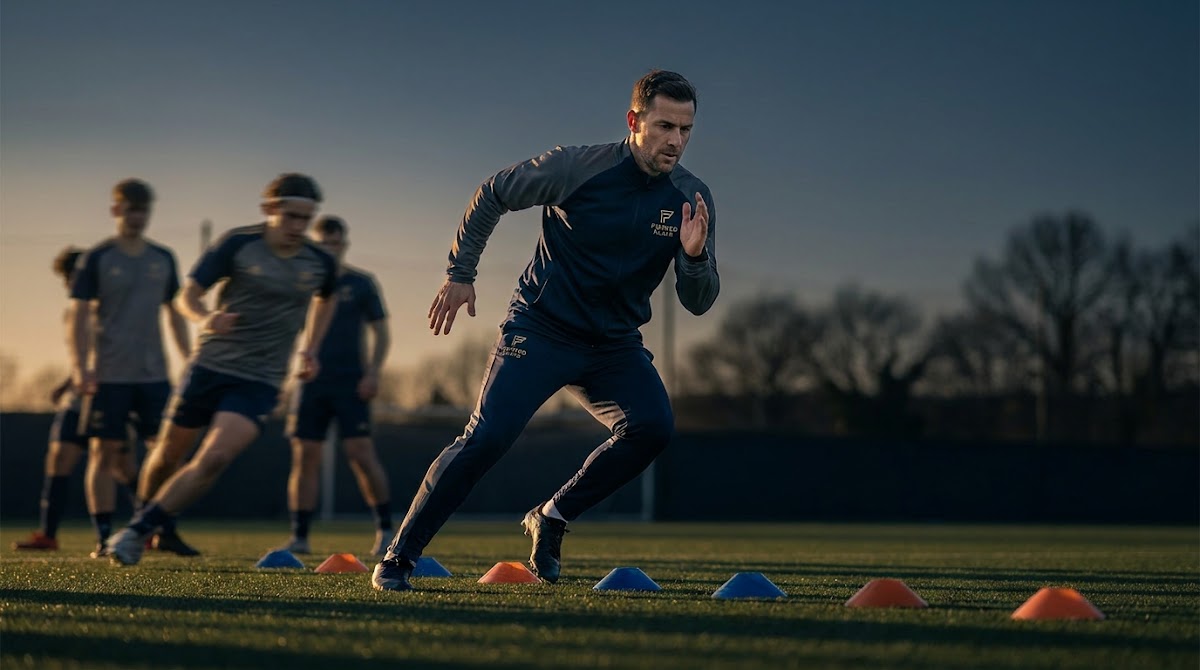
The five S's in football are Speed, Strength, Stamina, Skill, and Smarts. In practice design these domains map to sprinting and first-step quickness, contact power and finishing, the ability to repeat high-intensity efforts across plays, technical execution like routes or blocking, and perceptual decision-making such as reads and pattern recognition. For coaches and players focused on american football tips, treating these five areas as a combined development plan helps prioritize training so practice time transfers to game actions.
These five domains are commonly used in coach development frameworks such as USA Football's Football Development Model, which recommends integrated, age-appropriate progressions to improve on-field transfer and player safety USA Football coach resources.
How the five S's map to on-field actions
Speed links to the first step and short sprints that win separation or close gaps, Strength to blocking, tackling, and finishing runs, Stamina to sustaining effort across drives and quarters, Skill to technically clean execution under pressure, and Smarts to making faster, more accurate decisions. The relative emphasis on each S changes by position and age, and integrating them across a microcycle is key to effective training.
Download the five S's practice checklist
Sign up for occasional practice checklists and training notes to get concise templates you can try with your team or on your own.
How to think about Speed in football: training and testing
Why short-distance acceleration matters (first step, 10 to 40 yards)
In football, acceleration and short-distance speed are often more important than top-end running economy because many plays are decided in the first 10 to 40 yards. Coaches should prioritize drills and testing that reflect those demands, focusing on the first step and rapid 10 yard splits rather than only long sprints.
Evidence-based sprint training methods
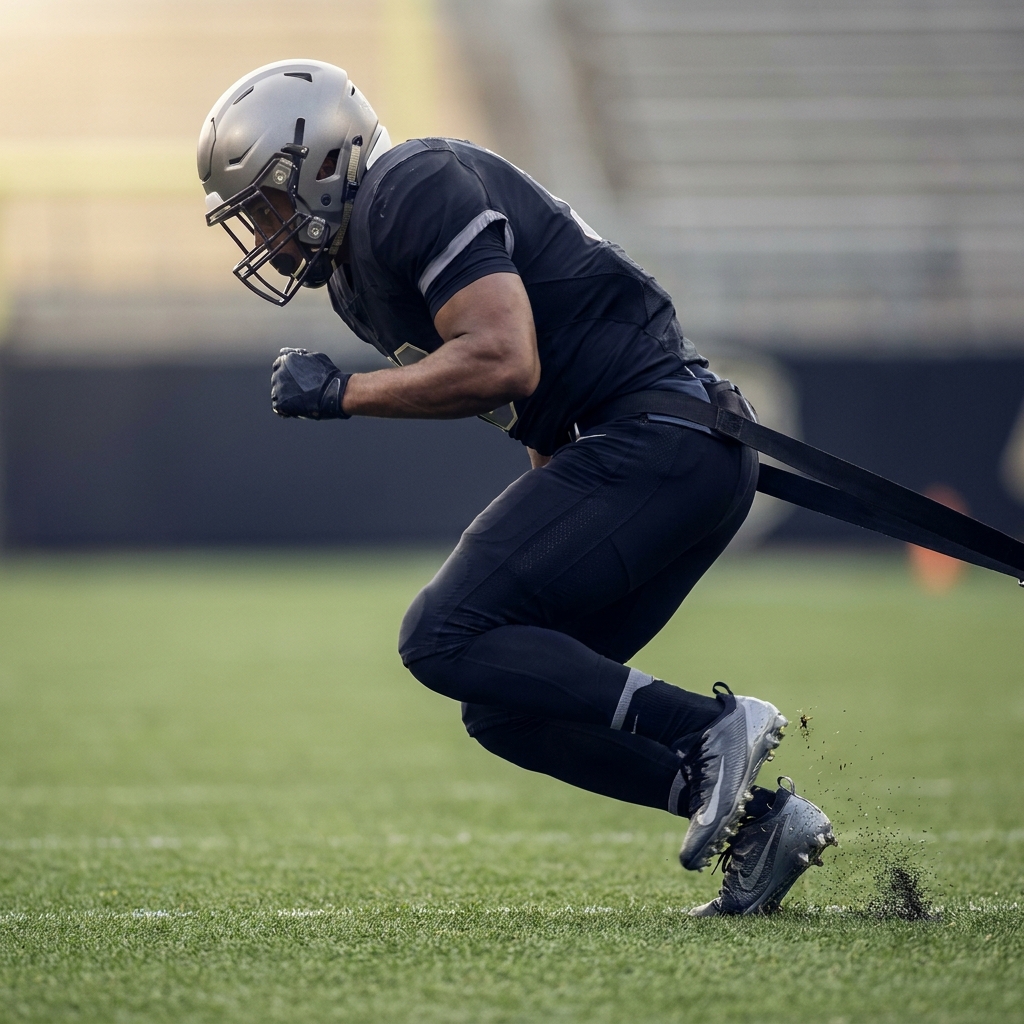
Recent systematic reviews found that resisted and strength-oriented sprint training improved short-sprint and acceleration performance in team-sport athletes, supporting targeted work on explosive starts and short-distance speed systematic review in Sports Medicine - Open (PubMed, Springer, Frontiers Physiology). Practical implementations include short resisted sprints with sleds or bands, contrast sessions that pair heavy strength sets with short sprints, and technical blocks that emphasize posture and drive off the front foot.
How to test and track speed
Practical testing combines a 10 yd split, a 40-yard dash, and reactive start drills. The 40-yard dash remains a widely used standardized metric in elite evaluations and can serve as a referent for position-specific expectations NFL Football Operations overview of the 40-yard dash. Track progress with consistent setups, electronic timing if available, and by recording trends rather than single runs.
Coaching cues for first-step drills include "chest over front knee," "quick hip drive," and "short, aggressive steps." When implementing resisted sprints, keep sets short and high quality so mechanics and acceleration remain the focus rather than fatigue.
Strength and power: what helps players win the line and finish plays
Why strength and power matter by position
Strength and power underpin the physical outcomes that decide contact exchanges, blocks, and finishes on runs. Heavier players who can express force quickly will manage leverage better at the line, while perimeter players need relative strength to translate into explosive cuts and finishes.
Training methods that improve change-of-direction and contact outcomes
Combined heavy resistance and plyometric training has been associated with improvements in change-of-direction and power relevant to football cuts and contact situations, making a blended strength and jump program a practical choice for many players Journal of Strength and Conditioning Research synthesis. Programs that cycle heavy squats, deadlifts, and single-leg strength with short, high-quality plyometric sets can improve the rate of force development needed for both contact and directional changes.
Sample exercises include heavy trap bar or back squats for general force capacity, Romanian deadlifts for hip strength, loaded split squats for single-leg force, and depth jumps or broad jumps for reactive power. For linemen, pair lower-rep, heavier sets with sled pushes and contact-specific sled drags. For perimeter players, combine strength lifts with short bounding sequences and single-leg hops that mirror cutting mechanics.
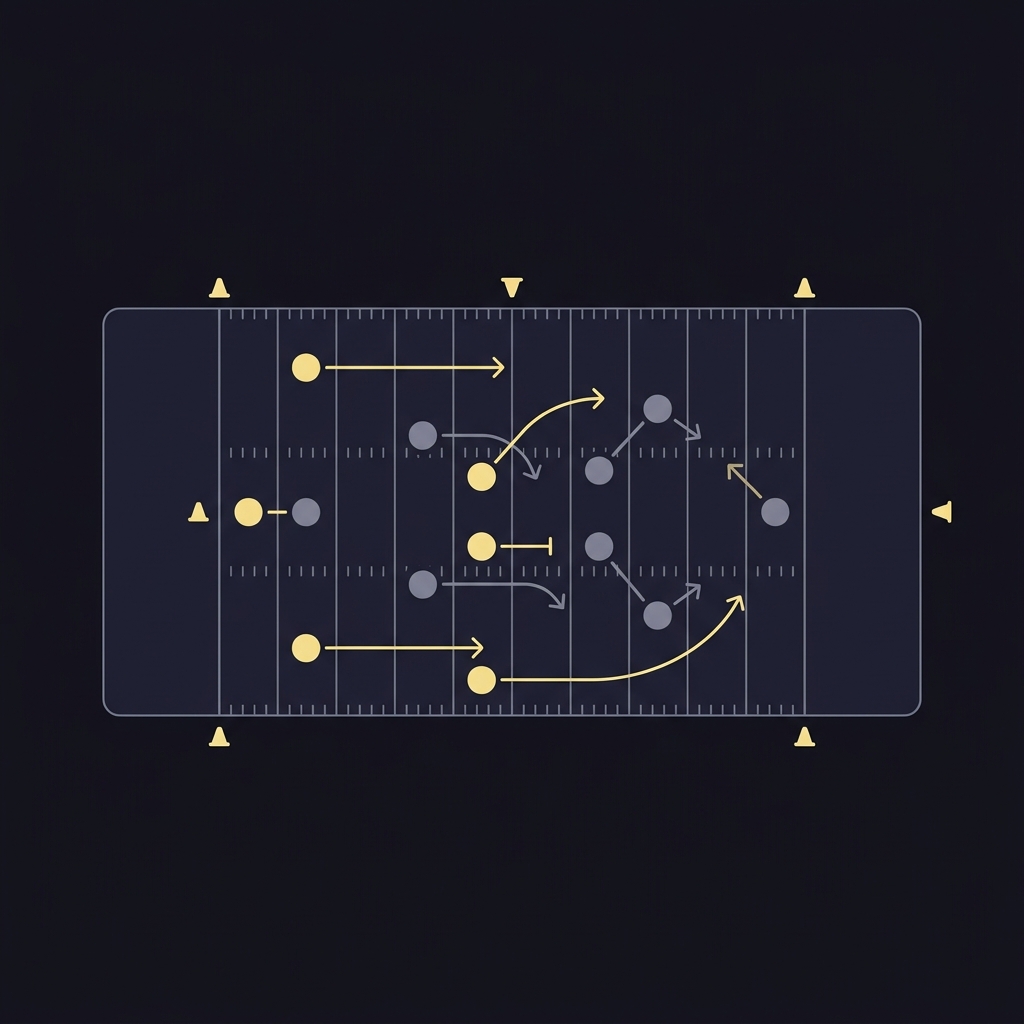
The five S's are Speed, Strength, Stamina, Skill, and Smarts. Train them through targeted, evidence-based methods: resisted sprints and acceleration work for Speed, combined heavy resistance and plyometrics for Strength and power, HIIT and sport-specific conditioning for Stamina, constraints-led skill progressions for Skill, and film-based and pattern-recognition drills for Smarts. Sequence sessions so heavy strength is early in the microcycle and high-skill and decision work are done when players are freshest.
When sequencing sessions, put the highest-force strength work early in the week when players are freshest and schedule high-skill or high-speed work later to protect movement quality. Managing fatigue across sprint, strength, and conditioning sessions is critical; avoid stacking heavy strength and exhaustive conditioning on the same day when possible.
Practical programming tips
Keep strength sessions focused on 2 to 4 compound strength movements plus 1 to 2 plyometric or power exercises, tailored by position. Monitor movement quality and use conservative progressions for youth athletes. Load management and adequate recovery windows between maximal strength efforts and high-skill sessions help preserve technique and reduce injury risk.

Stamina: conditioning the football athlete for repeated high-intensity efforts
The mixed aerobic-anaerobic demands of football
Football requires repeated high-intensity efforts interspersed with low-intensity recovery. That mix calls for conditioning that develops both anaerobic power for short bursts and an aerobic base to speed recovery between efforts. Effective sessions reproduce the stop-start nature of play and the repeated sprint demands of drives.
High-intensity interval training and sport-specific conditioning formats
Umbrella reviews of team sports support high-intensity interval training and sport-specific conditioning formats as effective ways to build the mixed aerobic and anaerobic stamina needed for repeated efforts umbrella review in British Journal of Sports Medicine. On-field conditioning that combines short sprint bouts with decision-making elements helps transfer fitness to game situations.

How to structure conditioning without sacrificing skills or strength
Structure conditioning so that high-skill sessions remain when players are fresh. For example, schedule heavy strength early in the microcycle, technical and speed work mid-week, and targeted conditioning later if it will not erode technical quality. Short HIIT formats, repeat sprint sets with controlled rest, and small-sided decision drills offer scalable intensity while preserving learning objectives.
Recovery guidance includes planned low-intensity days, prioritized sleep and nutrition strategies, and simple monitoring like session-RPE and jump or wellness scores to flag accumulating load. These practical controls help coaches balance conditioning with strength and skill training demands.
Skill: drills and practice design that transfer to games
Constraints-led practice and small-sided formats
Constraints-led practice, where coaches manipulate task, environment, or player constraints, helps players adapt skills to game contexts by encouraging exploration and decision-making under representative pressure. Small-sided formats and position-specific drills compress typical game cues and increase the number of relevant action opportunities per unit time, promoting transfer to match performance. This approach is consistent with coach development recommendations for progressive, age-appropriate practice design USA Football coach resources.
Position-specific technical progressions
Design progressions that move from isolated technical rehearsal to more complex, game-like variations. For a receiver, begin with footwork and release drills, add route-running at game speeds with a defender, then integrate catch and decision tasks with constrained windows. For linemen, progress from hand placement and base work to opposed two-on-two drills that require live adjustments and finishing under load.
Measuring skill transfer and progression
Track skill progression with drill-specific metrics such as route timing windows, contact efficiency rates, or successful technique percentages in live rep blocks. Use small-sided games to observe whether technical changes persist under fatigue and pressure; consistent improvements in representative tasks are a stronger sign of transfer than isolated drill success.
Smarts: perceptual and decision-making training for better reads and faster choices
What perceptual-cognitive training covers
Perceptual-cognitive or "Smarts" training targets the recognition of patterns, situational reads, and rapid decision execution. Exercises include film-based decision tasks, pattern recognition drills, and situational read simulations that speed accurate choices under pressure.
Effective drills and film work
Systematic reviews report small-to-moderate improvements in decision accuracy and response time from perceptual-cognitive training, with film-based decision tasks and pattern-recognition drills among the commonly used methods systematic review in Frontiers in Psychology. Practical work includes structured watch-logs, timed read tasks, and short on-field drills that require rapid identification of route combinations or blocking calls.
structured two-column watch-log for film decision tasks
Use consistent timing when reviewing clips
Balancing cognitive load with physical training
Integrate cognitive tasks into low-fatigue sessions or pair short film tasks with small-sided drills so decision training occurs in context. Individualize the cognitive load by increasing decision complexity gradually and monitoring whether accuracy or physical quality drops, adjusting accordingly to avoid undermining technique work.
Putting the five S's together: a sample weekly microcycle
Example microcycle for a skill-position player
Below is a 5-day microcycle template for a perimeter skill player that balances the five S's while sequencing heavier work early in the week and skill and decision work when fresh.
Day 1: Heavy strength focus plus short technical warm-up. Day 2: Speed and first-step work, resisted short sprints, and route-technique drills. Day 3: Active recovery and film session focused on reads. Day 4: Mixed conditioning with short HIIT sets and small-sided decision drills. Day 5: Power and plyometric session with position-specific reactive drills. Reserve at least one low-intensity day before competition.
Example microcycle for a lineman
Linemen can shift the balance toward heavier force work while keeping speed and decision tasks specific and brief.
Day 1: Maximum strength and sled contact sets. Day 2: Technical hand placement and short power outputs, plus low-volume plyometrics. Day 3: Operative walk-through and film review. Day 4: Position-specific conditioning and short repeat-power sets. Day 5: Speed off the line and quickness circuits, emphasizing first-step power. Again, allow recovery before games and monitor volume carefully.
How to prioritize and sequence sessions
Sequence the highest-force strength work early when players are freshest, schedule high-skill and cognitive sessions when mental acuity is highest, and place exhaustive conditioning later but not so late that it degrades technical quality. Open questions remain about the ideal weekly sequencing for each position, and coaches should individualize based on athlete response and competition density.
Position priorities: how the five S's shift across roles
Linemen: strength and short-range power
Linemen should prioritize Strength and short-range power to control contact and sustain blocks. Measures like short acceleration 10 yd splits, sled metrics, and contact efficiency are practical indicators for these players.
Running backs and receivers: speed, agility, and skill
Running backs and receivers emphasize Speed and Skill, with agility and change-of-direction drills to couple straight-line speed with effective cutting. The 40-yard dash remains a useful standard for straight-line testing alongside repeat sprint and agility measures to assess game-readiness NFL Football Operations overview of the 40-yard dash.
Defensive backs and linebackers: mixed demands
Defensive backs and linebackers require a balanced mix of Speed, Stamina, Skill, and Smarts. Training should blend short-sprint work, change-of-direction drills, repeated high-intensity conditioning, and read-based practice so that players can cover space, make tackles, and process offensive patterns effectively.
Typical mistakes coaches and players make
Overloading one S at the expense of others
A common error is overemphasizing one domain such as conditioning while neglecting strength or decision training, which limits transfer and can increase injury risk. Balanced programming that cycles emphasis across a microcycle reduces that risk and improves practical outcomes.
Using non-specific drills that do not transfer
Drills that isolate movement without preserving game cues often fail to transfer. Converting repetitive technical drills into constraints-led variations or small-sided formats increases representativeness and decision pressure, improving real-game carryover USA Football coach resources.
Neglecting cognitive training or recovery
Failing to integrate perceptual-cognitive training means missed opportunities to speed reads, while under-prioritizing recovery can blunt adaptations and raise injury risk. Short, structured cognitive sessions and basic monitoring of workload help prevent these mistakes and support long-term progress.
Sample sessions and drills you can use this week
Two speed-focused session plans
Speed session A: Warm-up with dynamic mobility, 6 x 10 yd explosive starts, 4 x 20 yd resisted sled sprints, technical sled-free 3 x 40 yd with full recovery, cool-down and mobility. Scale by reducing sets for younger athletes.
Speed session B: Dynamic warm-up, 8 repeated reactive starts from partner or light cue, 6 x fly 30s for top speed work, 3 x bounding sets, finish with short acceleration ladders. Emphasize quality over volume and use full rest between maximal efforts.
Two strength/power sessions
Strength session A: Heavy lifts - 3 sets of 3 to 5 reps squat or trap bar, Romanian deadlift 3 x 5, loaded split squats 3 x 6 per leg, plyometric finish 3 x 5 broad jumps. Keep tempo controlled and prioritize depth and technique.
Strength session B: Upper-lower pairing with pressing and hinge patterns, sled pushes for contact simulation, single-leg hops or depth jumps for power, core stability circuits. Adjust load and impact for younger players to follow age-appropriate progressions.
A combined small-sided skill and conditioning circuit
Circuit: 5 stations, 3 rounds, 90 seconds per station with 60 seconds rest between rounds. Stations include 1) 1v1 route and catch with short recovery, 2) 3x10 yd reactive sprints, 3) angled tackle-tech on pads at game speed, 4) 2v2 blocking finish, 5) short decision-making film task or call-and-execute. This format trains skill, stamina, and decision-making in a single session while remaining scalable.
Testing, tracking, and using data to guide progress
Key metrics to track for each S
Speed: 10 yd split and 40-yard dash. Strength and power: barbell lifts and vertical or broad jump. Stamina: repeat sprint test or short HIIT benchmarks. Skill: drill-specific success rates. Smarts: decision accuracy and response time in timed film drills. Use practical, repeatable tests so trends are meaningful.
Practical testing frequency and protocols
Test major metrics 4 to 8 times per season depending on competition density. Short checks like 10 yd splits or decision tasks can be done weekly or biweekly. Keep protocols consistent and ensure athletes are rested for maximal tests.
Interpreting results and adjusting training
Rely on trend analysis rather than single tests. Small improvements in acceleration or decision accuracy over several weeks justify continued emphasis, while plateaus suggest a need to change stimulus. Use results to shift microcycle priorities, reduce or increase volume, and individualize sessions.
Safety and age-appropriate progressions
Adapting load and complexity by age
Follow structured, age-appropriate progressions that increase technical complexity and load gradually. Younger athletes benefit from movement literacy, simple resisted sprints, and bodyweight strength before adding heavy loads or high-impact plyometrics.
When to introduce heavy resistance and plyometrics
Introduce heavier resistance and higher-impact plyometrics once athletes demonstrate consistent technique, appropriate maturity, and adequate baseline strength. Coach development frameworks recommend staged progressions to reduce injury risk and improve long-term outcomes USA Football coach resources.
Protecting athletes through recovery and monitoring
Use simple monitoring tools like session RPE, wellness questionnaires, and jump tests to detect fatigue. Plan deload weeks and prioritize sleep and nutrition education; these practical controls reduce injury risk and support consistent adaptation.
Wrapping up: a checklist to build your next practice
Quick checklist for the five S's
Speed: include short resisted sprints and first-step work. Strength: one heavy compound and one power movement. Stamina: a short HIIT or repeat-sprint block. Skill: constraints-led drill or small-sided reps. Smarts: short film task or pattern-recognition drill. Make at least one item from each S part of the next practice. Find additional templates at Funded Plays.
Next steps for self-directed improvement
Start with simple tests, pick one priority per week, and keep progress measurable. Visit our blog for session ideas. Balance load across the microcycle, integrate perceptual training in context, and use the evidence-backed methods summarized here to guide session choices.
Further reading and evidence pointers
For development frameworks and practice progressions consult coach resources, and for specific training methods refer to systematic reviews on resisted sprint training, strength plus plyometric programs, and perceptual-cognitive training as summarized in this guide. You can also read about how our evaluations work on the Funded Plays site here.
They are Speed, Strength, Stamina, Skill, and Smarts, a framework to organize training and practice for better on-field performance.
Major tests are useful 4 to 8 times per season, with shorter checks like 10 yd splits or decision tasks done weekly or biweekly depending on schedule.
Younger athletes should build movement literacy and bodyweight strength first; introduce heavy resistance and higher-impact plyometrics only after consistent technique and adequate baseline strength.