

What makes TPC Sawgrass a different test
The TPC Sawgrass Stadium Course is a precision-first Pete Dye layout that rewards accurate approach play and a dependable short game, especially when players face tight landing zones and water hazards around many greens. Official hole guides highlight the need for positional tee shots and careful angles into greens, making course management an early priority for anyone studying who plays well at TPC Sawgrass TPC Sawgrass hole guide
Use recent SG: Approach splits to prioritize candidates for Sawgrass
Simple weightings speed decision making
Putting and short-game touch are not optional at Sawgrass. The course frequently magnifies small misses into bogeys when recovery space is limited, and players who can scramble from tight lies or firm rough keep themselves in contention more often than pure bombers.
Scottie Scheffler's back-to-back success at THE PLAYERS in 2024 underlines how elite tee-to-green control translates to repeatable outcomes on this course, showing that a balanced game with strong approach play is a reliable path to contend at Sawgrass PGA TOUR report on Scheffler

When you read previews or odds, remember that the layout squeezes the margin for error. Narrow landing areas, significant water lines, and a testing finishing sequence combine to reduce the raw advantage of length and elevate accuracy, positioning, and short-game control in the decision process.
How american express odds can reflect course fit at Sawgrass
American express odds are a market summary: they blend recent form, public sentiment, and book adjustments into a single implied probability. When you compare those prices to course-fit indicators, you want to treat the market as a starting point rather than a final verdict. See PGA TOUR course stats here.
At Sawgrass, odds that move after a run of strong approach performances should get additional respect because Strokes Gained: Approach and Around-the-Green carry extra weight here compared with raw driving distance, so shifts aligned with those signals are often informative PGA TOUR primer on Strokes Gained at Sawgrass
That said, markets can lag or overreact. Volatility tied to the island-green 17 and the closing holes can push implied probabilities around late in the week. When odds swing sharply, check whether the move is driven by durable stat signals or by a transient leaderboard event before updating your model.
Limitations of odds include their aggregation of non-course factors like popularity and recent headlines. Use american express odds as a probability anchor, then nudge that anchor with course-fit weights based on approach and short-game metrics rather than letting headline-driven moves dominate your view.
Key stats that predict success at Sawgrass
Prioritize these metrics when you assess contenders: Strokes Gained: Approach, SG: Around-the-Green or scrambling, and course-specific history. Recent analyses show SG: Approach and around-the-green metrics correlate more closely with high finishes at Sawgrass than raw distance, so they should carry heavier weight in your evaluation DataGolf course-fit summary including the Course Fit Tool Course Fit Tool
Get course-fit updates and model notes
Sign up for concise course-fit notes and model updates to get timely reminders when key approach and scrambling trends change.
Strokes Gained: Approach captures how often a player hits approach shots to positions that make scoring easier, and on a course with narrow targets and tough recovery angles that skill maps directly to lower scores.
Around-the-green numbers and scrambling rates matter because many misses at Sawgrass must be salvaged from tight or sandy lies; players who recover efficiently convert potential bogeys into pars and keep momentum through tough conditions.
Off-the-Tee should not be ignored. It contributes to position and angle into greens, but its predictive power is typically secondary to approach proficiency on this layout.
Course features that swing outcomes: the 17th and finishing stretch
The island-green 17 is a high-volatility feature that produces dramatic leaderboard movement and pressure-sensitive scoring swings; ShotLink-driven analyses document how single holes can change finishing order quickly at Sawgrass PGA TOUR breakdown of the 17th
Because the 17th exposes players to water and a tight target, wind and mental pressure amplify mistakes more than at many other holes, so models and bettors should expect episodic jumps in short-term variance around that green.
The closing stretch, holes 16 to 18, raises the cost of errors. Angles into greens, forced carries, and waterlines make late-round conservatism a sensible choice for contenders who want to protect position rather than gamble for par every time.
Weather and wind interact with these features to increase unpredictability. A breezy afternoon can turn comfortable leads into precarious positions within a few holes, and that makes late-week odds more sensitive to small changes in player form or conditions.
How to evaluate players: a simple course-fit checklist using american express odds
Start by listing contenders from the market, then apply a stat-based checklist to adjust implied probabilities. The checklist below turns course-fit factors into concrete weights you can apply quickly when odds look interesting. See our blog.

Checklist step 1: Weight recent SG: Approach over the last 12 rounds, then check SG: Around-the-Green and scrambling on Bermuda surfaces or similar turf. Prioritize players who show both approach proximity and reliable up-and-down conversion when they miss.
Checklist step 2: Downgrade bomber profiles whose approach metrics lag. If american express odds overvalue length alone, reduce implied probability in proportion to the approach deficit, especially for players who struggle to find fairways or leave long approaches into small targets.
Checklist step 3: Add experience and course-history as a modifier. Past success or consistent top finishes on similar Pete Dye or tight-target layouts is a plus but should not outweigh current approach and short-game form.
When markets and data disagree, decide whether the discrepancy is due to short-term noise or a sustained shift in performance. Trust the market when moves are supported by recent SG trends; prefer the stat adjustment when the market reflects popularity or transient headlines rather than durable skill evidence DataGolf course-fit suggestions Learn about our evaluation process here.
Common mistakes bettors and predictors make at THE PLAYERS
Overvaluing driving distance is a frequent error. Course-fit analyses show that raw length can be misleading at Sawgrass, because tight targets and recovery demands mute the advantage of sheer distance DataGolf course-fit summary. See correlation analyses such as SharpSideGolf's study SharpSideGolf.
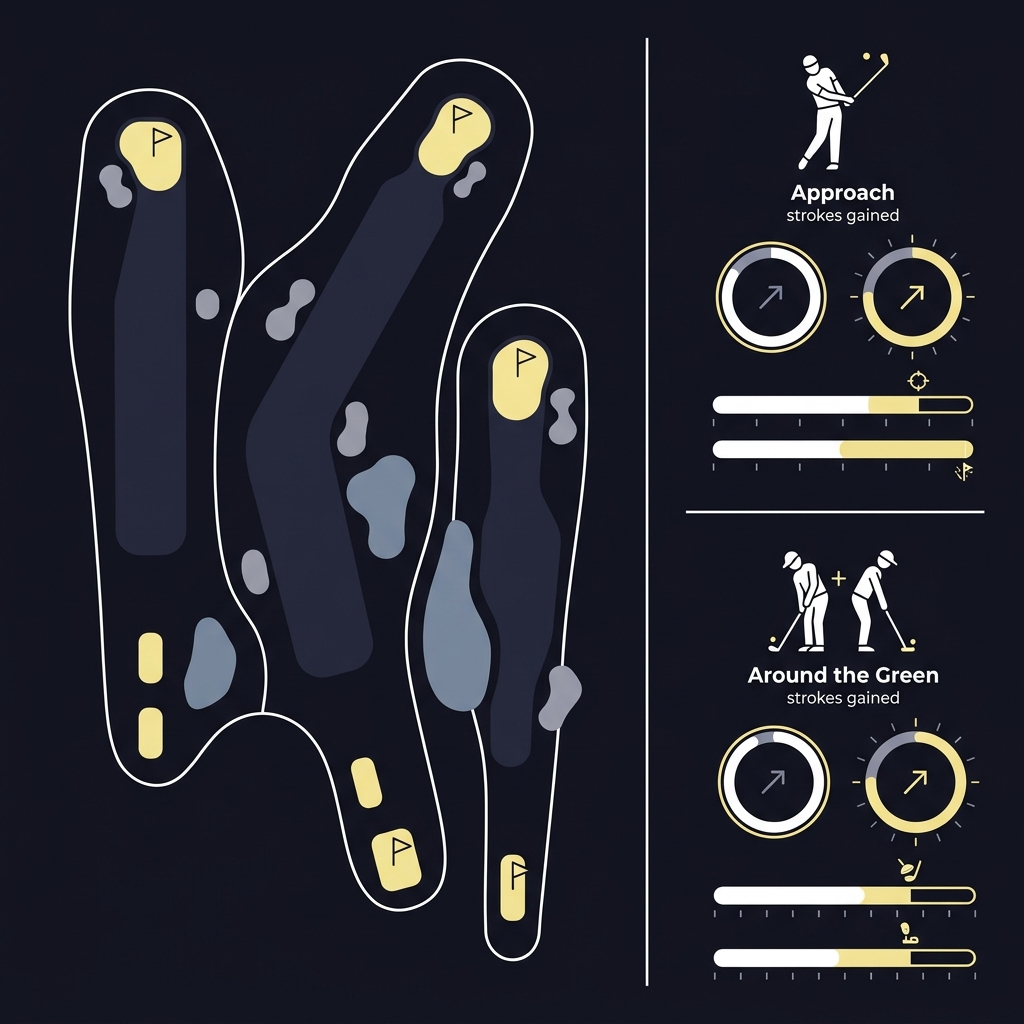
Ignoring around-the-green proficiency or turf-specific scrambling is another costly oversight. Players who can escape trouble on Bermuda-like surfaces convert more pars and limit swingy holes that otherwise inflate variance.
Emotional overreactions to volatile holes such as the 17th can lead to poor decisions. Reacting to a single dramatic round without checking whether approach and short-game form support that performance often creates false confidence in predictions.
Practical scenarios: three player profiles and how american express odds should be read
Profile A, the balanced contender: Elite tee-to-green play with moderate length. Favor this profile at Sawgrass because balanced skills reduce exposure to the course's penalty holes and support steady scoring through the closing stretch. If american express odds are fair, a small positive adjustment for course fit is often justified Example of balanced tee-to-green success
Profile B, the bomber with weaker approach numbers: This player can reach many long par 4s but leaves themselves with longer or narrower approaches. Markets that overpay for length alone should be checked against SG: Approach and around-the-green metrics before backing a bomber at Sawgrass.
Balanced tee-to-green players with strong Strokes Gained: Approach and reliable scrambling perform best at TPC Sawgrass; american express odds are a useful market signal but should be adjusted for these course-fit metrics before making predictions.
Profile C, the short-game specialist and scrambler: A player who routinely saves par from poor positions and shows strong Bermuda scrambling can outperform market expectations at Sawgrass, particularly when wind or course setup tightens fairways. In many cases, american express odds that ignore scrambler value understate these players' chances Course-fit patterns for scramblers
Across these scenarios remember that outcomes are probabilistic. Even the best course-fit candidate can incur a high finish variance because of the 17th and late-round pressure, so apply sensible stake sizing and avoid overconfidence in single-event wagers.

Strategy checklist: putting it together before you back a price
Quick pre-wager checklist: confirm recent SG: Approach form, verify SG: Around-the-Green and scrambling from Bermuda-like turf, check prior Sawgrass or similar course results, examine weather and wind, and factor in late-round volatility risk from holes 16 to 18.
When to pass: decline if course-fit metrics are weak despite tempting american express odds, or if odds appear driven by fleeting headlines rather than steady SG trends. Conserving stake is often the better play than chasing attractive prices unsupported by the data PGA TOUR guidance on relevant stats
Stake sizing guidance: scale positions to reflect model conviction and course-fit alignment, and treat Sawgrass-specific edges as incremental improvements to implied probability rather than guarantees of success. See Funded Plays homepage.
Conclusion: who plays well at TPC Sawgrass and how to use that insight
The evidence-backed profile for success at TPC Sawgrass is a balanced tee-to-green performer with strong Strokes Gained: Approach numbers and reliable scrambling around the greens. Those traits reduce exposure to the course's most punishing features and support consistent scoring under pressure DataGolf course-fit synthesis
When you read american express odds, interpret them through a course-fit lens that favors approach precision and short-game resilience. Keep in mind the island-green 17 and the finishing stretch add volatility, so use odds as an anchor and apply stat-based adjustments before placing confident wagers.
Primary stats are Strokes Gained: Approach and SG: Around-the-Green or scrambling, with Off-the-Tee as a supporting factor.
Adjust implied probability downward if approach and around-the-green numbers lag; length alone often underperforms on this layout.
No, but they increase short-term variance; models should account for higher variance and avoid overreacting to single-hole events.