
Quick verdict: a realistic short answer and what matters most
Short answer, in plain terms: reaching 700 career home runs is possible only if Aaron Judge maintains elite power and, crucially, exceptional playing time over many more seasons; historically the milestone is rare and requires extraordinary longevity, not just peak seasons, so any assessment must center on durability and plate appearances as much as per-plate-appearance power, a point emphasized in aging research and long-run leaderboards MLB coverage on the 700 Home Run Club.
Practice consistent forecasting with FundedPlays challenges
Read the scenario math below and then use the season checklist to track the specific metrics that will move Judge closer to or farther from 700 career homers.
That verdict rests on three linked ideas: the 700 mark is historically rare and usually demands late-career volume, Judge has demonstrated top-tier, recent power as shown by his 2024 AL MVP season, and aging curves plus playing-time risk mean any projection must be conditional on future health and role. The historical rarity follows from career leaderboards and the small size of the 700 group, which is why longevity matters more than a single peak season Career home run leaders on Baseball-Reference.
What to watch first is simple: plate appearances, HR per plate appearance, and sustained Statcast batted-ball metrics. If those stay high across seasons, Judge can keep accumulating counting stats; if they fall, his path narrows quickly. Aging research explains why declines in playing time or per-PA power compound into much lower long-term totals research on peak athletic performance and age.
What the 700-home run club looks like and why the milestone is rare
Who is in the 700 club
The 700 home run milestone is a very small group in MLB history, with only a handful of players ever reaching it; that scarcity makes the target a structural outlier in career leaderboards, not a routine benchmark for even Hall of Fame sluggers MLB coverage on the 700 Home Run Club.
Why longevity and era matter
Career totals are the product of per-plate-appearance production and opportunity, and both elements are shaped by the era a player spent his prime in, along with season length and how late-career roles change. Baseball-Reference leaderboards illustrate that many all-time great power hitters fell short of 700 because they did not sustain late-career volume at the necessary rate Career home run leaders on Baseball-Reference.
When evaluating any long-run milestone, remember that modern counting stats benefit from longer seasons and different run environments than earlier eras. That makes raw comparisons across eras imperfect, and it elevates the importance of a player's ability to stay on the field and produce into their mid- and late-30s.
Aaron Judge's current profile: power, plate discipline, and recent seasons
2024 MVP season highlights
Aaron Judge's 2024 AL MVP season confirms he remained a top-tier run and power producer entering his mid-30s, giving him the necessary baseline of skill to be in any long-term home-run conversation; that season is a recent, observable high-point that projection systems use when forecasting future output 2024 AL MVP documentation.
The main drivers are sustained plate appearances, preserved per-plate-appearance power as shown in Statcast metrics, and the absence of major injuries; projections update these inputs annually to produce a conditional long-term outlook.
Statcast batted-ball measures and trends
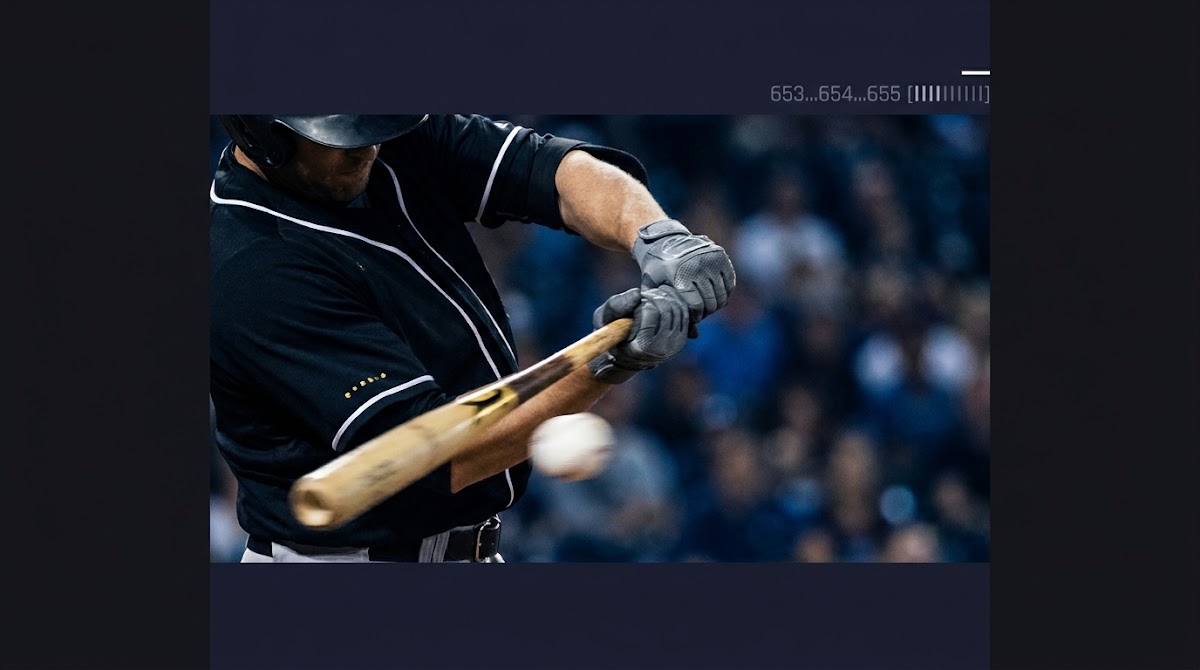
Under the hood, Statcast metrics show Judge's batted-ball quality remains elite in exit velocity and barrel rate, which are key indicators of sustained raw power; those skills are necessary for long-term home-run accumulation because they underpin a player's per-plate-appearance home-run rate Aaron Judge Statcast player page and are illustrated in MLB's Statcast video analysis MLB Statcast video.
It is important to distinguish per-PA power from counting totals. A high HR per plate appearance is only valuable to career totals if the plate appearances arrive consistently. Judge's profile combines rare batted-ball skill with the usual uncertainty about playing time as he moves through his 30s.

How projection systems like ZiPS model Judge's future home-run totals
Age regression and playing-time assumptions, aaron judge home run odds
Projection systems such as ZiPS treat current performance and skill measures as the starting point, then apply aging curves and playing-time assumptions to produce multi-year forecasts; for Judge, recent published ZiPS output still rates him as an elite hitter while folding in expected age-related regression from a peak season 2025 ZiPS projections on FanGraphs and FanGraphs player stats for context FanGraphs player page.
Turning season projections into career outlooks
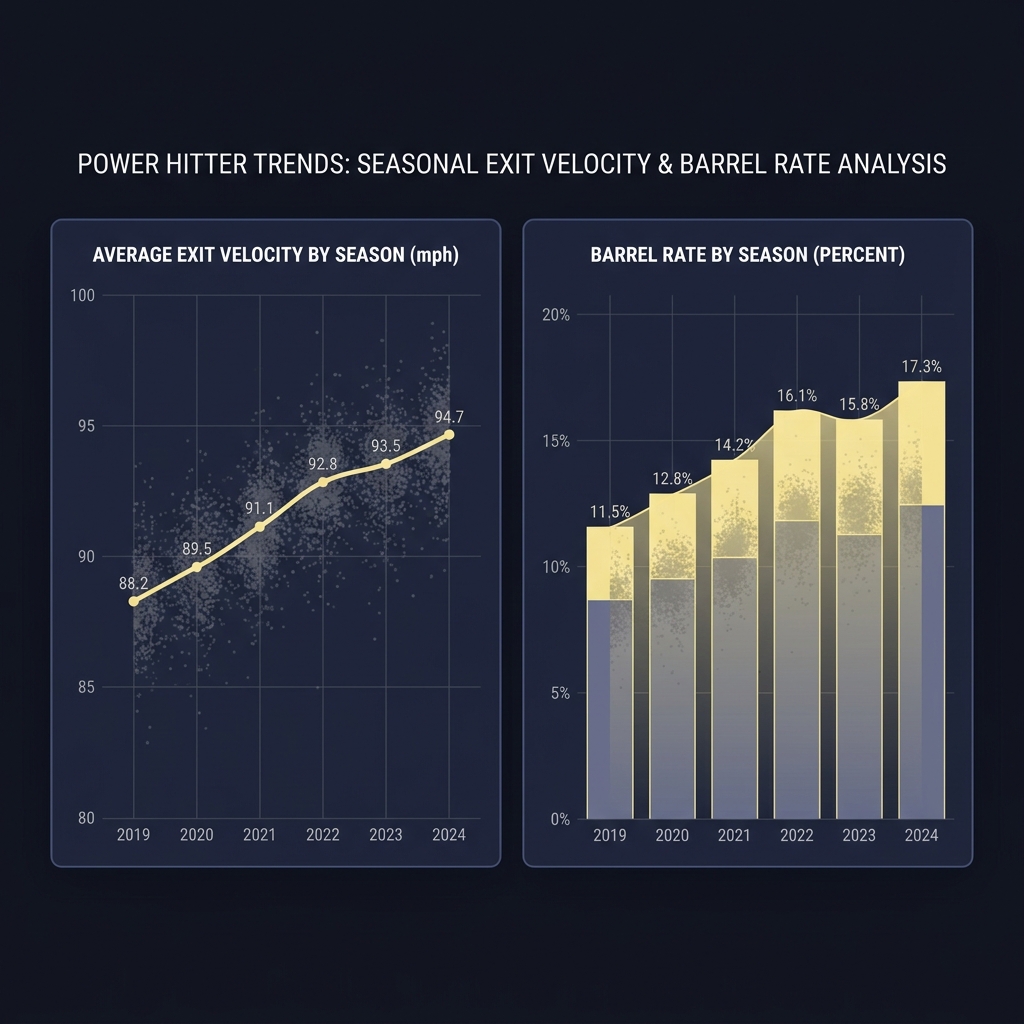
To move from a season forecast to a career outlook, analysts combine per-season projected home runs with assumptions about the number of remaining seasons and expected plate appearances. That is why a forecast that looks bullish for a single season can still leave a player far from a counting milestone if longevity or playing time is uncertain.
Public projection pages and Statcast pages to refresh Judge estimates
Refresh yearly and after major injuries
Aging curves, durability, and what they mean for long-term power
Typical decline patterns after the early 30s
Research into athletic aging shows that hitter performance tends to decline after the early 30s, with decreases in both power and durability that make long-horizon milestones much less likely unless a player enjoys aboveaverage longevity and opportunity study on peak athletic performance and age.
Why plate appearances matter as much as raw power
Even when batted-ball skills remain strong, a drop in plate appearances amplifies the effect of any per-PA decline. That combinatorial effect is why counting milestones like 700 homers are sensitive to both the HR per plate appearance rate and the number of opportunities across seasons Aaron Judge Statcast player page.

Using a skill-focused evaluation framework helps separate transient streaks from sustained ability, and that is why season-to-season projection updates, public metrics, and careful tracking of playing time are the right way to judge long-term claims about career totals. Learn more about our evaluation approach how-fundedplays-evaluations-work.
Crunching the math: how many seasons and home runs per season Judge would need
How to build simple scenario math with authoritative sources
Start from Judge's current career total, which is public on Baseball-Reference, and then set transparent assumptions for remaining seasons and expected home runs per season; labeling each assumption clearly is essential so readers can see how outcomes change when you alter playing-time or per-season output Career home run leaders on Baseball-Reference.

Caveats on using current career totals and projection outputs
Do not treat projection outputs as deterministic. Systems such as ZiPS provide season-level estimates that reflect expected decline and opportunity, and combining those season estimates with remainingseason assumptions gives a clearer, conditional view of whether a player can reach a milestone 2025 ZiPS projections on FanGraphs and related projection writeups such as a Yahoo piece on 2026 projections 2026 Yankees ZiPS projections on Yahoo.
Practical formula: Required seasons remaining equals remaining home runs divided by plausible HR per season. Do the arithmetic with ranges for HR per season, not single-point guesses, and always label where you sourced season projections or baseline career totals.
Key decision factors that will determine whether Judge can reach 700
Health and playing time as primary drivers
Health and sustained plate appearances are the dominant variables. Aging studies show that availability declines with age and that reduced opportunity compounds declines in counting stats, making the long-term outcome depend primarily on how many quality plate appearances Judge can accumulate each season research on peak athletic performance and age.
Approach, role, and team context
Changes in approach, lineup role, or position can materially affect opportunity and per-PA power. A move to a parttime role or different spot in the lineup can reduce plate appearances, while preserved approach and protection in the lineup support a higher HR per PA if underlying batted-ball metrics hold steady Aaron Judge Statcast player page.
For readers tracking the odds, the clearest signals are year-over-year plate appearance totals and any persistent decline in HR per plate appearance. Those two series tell more about the likely career outcome than one-off seasonal peaks.
Common misreads and pitfalls when estimating career milestones
Extrapolating single-season peaks
A common mistake is to take a single, unusually productive season and project it forward without adjusting for age and playing time. Projection systems explicitly avoid this by blending past seasons with aging curves and opportunity assumptions for good reason 2025 ZiPS projections on FanGraphs.
Misusing per-plate-appearance metrics
Per-PA rates are useful but can mislead if they are not paired with stable opportunity. A player can keep a high HR per PA but still fall well short of a counting milestone if plate appearances drop by a third over the remaining career span.
Another pitfall is confusing raw exit-velocity or barrel rate spikes for sustainable skill. Those metrics should be evaluated across full seasons and multiple years to distinguish persistent ability from shortterm variance Aaron Judge Statcast player page.
Practical scenarios: optimistic, base-case, and pessimistic paths
Optimistic: high durability and steady output
Optimistic narrative: Judge preserves batted-ball quality, avoids major injuries, and remains a fulltime middleoforder presence for multiple seasons. In that case, sustained plate appearances plus aboveaverage HR per plate appearance would allow meaningful counting accumulation and keep the 700 goal within theoretical reach; Statcast evidence of elite batted-ball skill supports this path if volume holds up Aaron Judge Statcast player page.
Base-case: gradual regression but meaningful power
Base-case narrative: Judge experiences normal age-related regression in per-PA power and a modest decline in plate appearances, consistent with general aging research. Projection outputs such as ZiPS incorporate these effects and would typically lower single-season HR totals gradually, producing a conditional, mediumterm outlook where 700 is unlikely but not impossible with several aboveaverage seasons mixed in 2025 ZiPS projections on FanGraphs.
Pessimistic: injuries and reduced opportunity
Pessimistic narrative: a major injury or repeated time lost reduces plate appearances significantly while per-PA power also declines. That combination is the most common historical reason top sluggers fall short of extreme counting milestones, which is why the health and opportunity signals are the most actionable ones to monitor Career home run leaders on Baseball-Reference.
How to monitor progress season by season: metrics and check-points
Core stats to update your view
Track these each season: plate appearances, home runs per plate appearance, exit velocity, barrel rate, and the number of missed games or injury list stints. Those items, refreshed against projection updates, give the best immediate signal about whether to revise a longterm outlook Aaron Judge Statcast player page.
When to materially change the long-term outlook
Change your longterm estimate if you observe any of these triggers: a seasonlong drop in plate appearances below expected levels, two consecutive seasons of falling HR per PA, a major injury that reduces availability, or projection updates that lower season expectations materially. Projection systems and leaderboards should be checked each offseason for formal updates 2025 ZiPS projections on FanGraphs.
Doing this exercise quantitatively each offseason, using Baseball-Reference for career totals and ZiPS for season forecasts, gives a transparent way to update a conditional path to 700 homers (see our blog Funded Plays blog) Career home run leaders on Baseball-Reference.
What history teaches: players who closed the gap late in their careers
Examples of late-career volume accumulation
Historical cases show that late-career accumulation is possible, but it is the exception. Some players added substantial late-career volume because of role or era changes, and leaderboards document those paths; they remain rare relative to the full population of high-quality hitters Career home run leaders on Baseball-Reference.
Why era and role changes matter
Season length, designated hitter rules, team role, and lineup protection can all affect late-career counting totals. These contextual changes explain part of why some hitters were able to add large final-career totals while others could not, and they underline why simply comparing raw career totals without context can mislead.
Use leaderboards and eraaware analysis to judge whether a late-career accumulation is plausible, and remember that historical exceptions do not change the structural rarity of the 700 milestone MLB coverage on the 700 Home Run Club.
How betting markets and skill-based platforms think about long-term milestones
Differences between odds markets and projection models
Markets set prices with money and sentiment while projection systems aim to estimate expected performance from data and aging assumptions. That divergence means market odds can deviate from projection outputs, but projection systems are the better public tools for understanding the underlying drivers of longterm outcomes 2025 ZiPS projections on FanGraphs.
Why skill-based challenge platforms emphasize consistency
Skill-based evaluation frameworks emphasize consistent, repeatable performance over time rather than single-event outcomes. That approach is why following yearoveryear metrics and projection updates is a practical way to form a conditional view on a milestone like 700 homers. Learn about Funded Plays and the role of skill-based challenge platforms Funded Plays.
What to watch next: seasons, injuries, and projection updates that would change the view
Trigger events that should shift long-term odds
Priority triggers: a major injury, a sustained decline in plate appearances, a multi-month drop in Statcast exitvelocity or barrel rate, or a shift to a reduced role. Any of these would materially change the conditional path to 700 homers and should prompt an immediate reassessment with updated projections Aaron Judge Statcast player page.
How to read year-to-year projection changes
When systems like ZiPS revise a player's multi-season projection downward, interpret that as a signal about expected perseason decline and opportunity loss. Use those updates as inputs to your scenario math, adjusting remaining seasons or perseason HR assumptions as appropriate 2025 ZiPS projections on FanGraphs.
Conclusion: conditional odds and the practical takeaway
Reaching 700 career home runs is historically rare and requires a specific combination of preserved power and exceptional latecareer volume. Judge's 2024 AL MVP season and Statcast profile provide the necessary skills foundation, but those elements alone do not guarantee the counting accumulation required by 700 homers 2024 AL MVP documentation.
The practical takeaway is this: judge the longterm claim conditionally, monitor plate appearances and HR per plate appearance as your primary signals, consult yearly projection updates such as ZiPS, and use Statcast to watch whether underlying battedball quality persists. With those tools and a clear scenario framework you can update your view objectively as seasons unfold Aaron Judge Statcast player page.
It is very rare; only a handful of players have reached 700 or more career home runs, making it an exceptional career achievement.
Plate appearances combined with home runs per plate appearance are the most informative singlepair signal to track across seasons.
No, projection systems provide probabilistic season estimates that must be combined with assumptions about future opportunity and health.