

A Responsible Sports Trading Checklist: definition and context
What we mean by responsible sports trading
In this article, A Responsible Sports Trading Checklist describes a practical, harm-aware approach to taking part in skill-based sports prediction challenges and funded account evaluations. The phrase frames participation as structured practice rather than traditional wagering, and it focuses on planning and safeguards that reduce impulsive decision-making and protect personal finances.
Use pre-commitment, conservative bankroll rules, scheduled breaks with emotion checks, and consistent record keeping to reduce impulsive decisions and support compliance.
Responsible sports trading here means pre-defining how much time and money you will use, following clear staking rules, taking planned breaks, and keeping concise session logs so you can review performance and stay within your limits. These steps are especially relevant when simulated bankrolls and funded account challenges let you test strategies over repeated sessions, because the structure can create momentum that leads to drift without deliberate controls.
Why a checklist matters for skill-based sports prediction platforms
A checklist turns broad guidance into repeatable actions: it helps you pre-commit to session rules, reduces the chance of chasing losses, and makes it easier to comply with record-keeping expectations for tax and self-review. Public health guidance and lower-risk gambling frameworks recommend advance limits on money and time to reduce harm, and a checklist is a simple way to embed those recommendations into regular practice Lower-Risk Gambling Guidelines Responsible Gaming Regulations and Statutes Guide
For users of funded account challenge models, a checklist also clarifies how to treat simulated stakes and drawdown limits so you approach each evaluation as a disciplined exercise. That discipline supports learning and makes performance easier to interpret, rather than treating each session as an emotional response to recent outcomes. See how Funded Plays evaluations work.

Core checklist framework: pre-commitment, bankroll rules, breaks, and record keeping
Pre-commitment: setting money and time limits before play
Begin every session by writing down two clear limits, one for money and one for time. The money limit is the maximum you will risk for that session. The time limit caps how long you will actively make predictions. Setting both in advance reduces the chance of impulsive escalation and aligns with core safer gambling advice NHS guidance on problem gambling
Ready to set your limits and practice responsibly?
Copy or download a one-page checklist before your next session and set your money and time limits now, then commit to following them during play.
Record these pre-commitment choices in a visible place, such as a short note on your device, a printed sheet, or the top lines of your session log. Make the limits specific and actionable, for example: planned stake, planned number of predictions, and session duration. Being concrete makes it easier to stop when limits are reached.
Bankroll rules: staking size, max-loss limits and drawdown rules
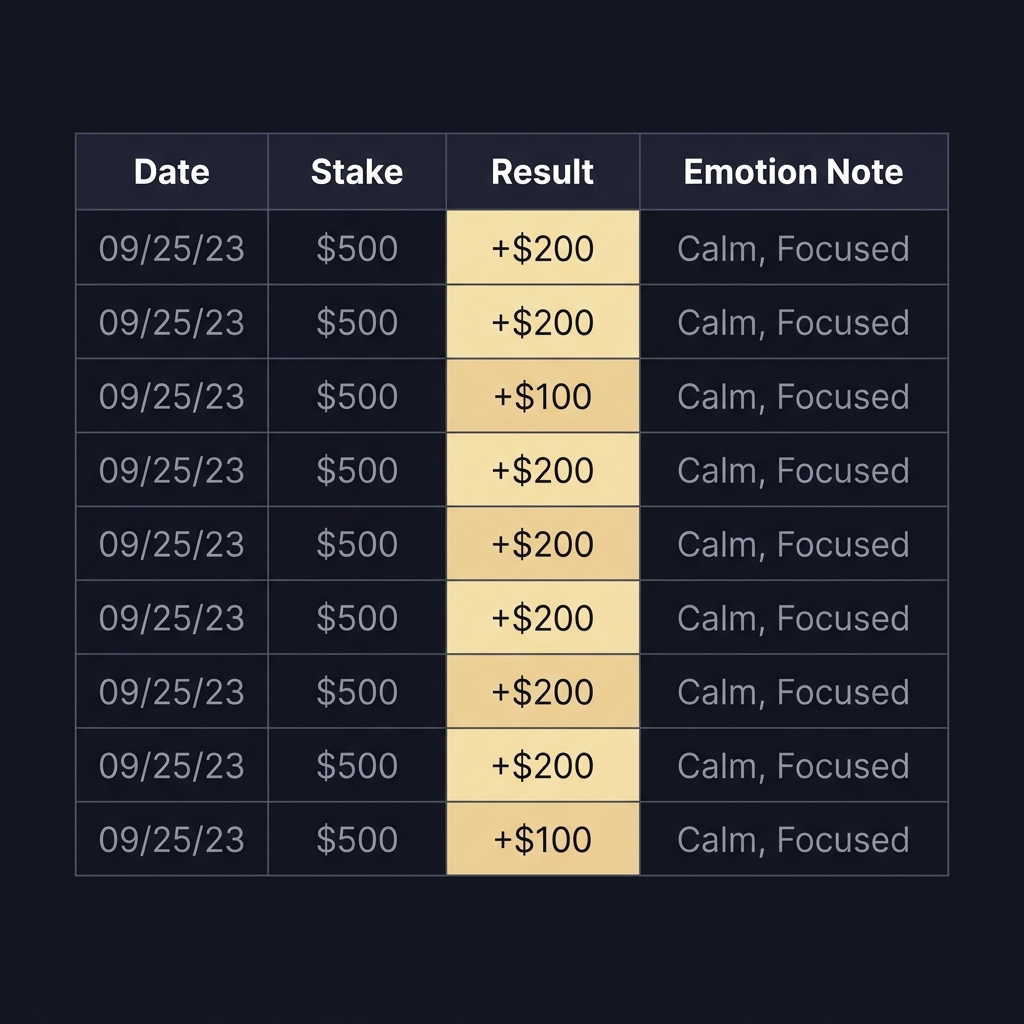
Put the rules in simple language so you can follow them under pressure. Example rules: stake no more than 1 to 2 percent of your session bankroll on any single selection, stop for the day if you hit a 5 percent drawdown of your session bankroll, and limit the number of active short-session picks to a preset count. These rules are not universal prescriptions; they provide a controlled framework you can adjust to your budget and comfort.
Adopt a clear bankroll rule that determines how much to stake on any single prediction and what constitutes a session drawdown. A practical principle is to use only a small, predefined fraction of your discretionary budget for each stake and to set a max daily and weekly loss that you will not exceed. This approach follows bankroll management principles aligned with lower-risk guidance Lower-Risk Gambling Guidelines
Behavioural safeguards: planned breaks, emotional checks, and avoiding loss chasing
Design explicit behavioural safeguards before you start. Schedule short breaks at fixed intervals and add an emotion check prompt during each break to assess confidence, stress, and focus. Avoiding loss-chasing and taking planned breaks are standard public-health recommendations to reduce risk and maintain control during gambling-like activities UK Gambling Commission safer gambling advice
Make your emotion check a few simple questions you can answer in under a minute, for example: Am I chasing a loss? Am I distracted by other obligations? Do I feel unusually stressed? If any answer is yes, pause and take a longer break or stop the session entirely. A planned pause is often enough to prevent a short-term emotional state from shaping ongoing decisions.
Record keeping: what to log and why it matters

Store logs in a durable format, such as a spreadsheet or a dated file, and back them up if you rely on them for compliance or tax reporting. Reviewing logs weekly helps you decide whether to tighten limits, change staking fractions, or pause participation if negative patterns appear.
Choosing the right limits: decision criteria and personalisation
Assessing your budget and risk tolerance
Start by determining your nonessential discretionary budget for the month, then set aside a small percentage of that amount for sports prediction practice. This approach ensures the funds you use are affordable and do not compete with essential expenses. The decision flow begins with discretionary budget, moves to an allotted practice pool, and ends with derived session and stake levels.
When choosing a fraction of your practice pool for single stakes, err on the conservative side. Using a small fraction helps protect the overall pool from sharp volatility and gives you space to test strategy without severe drawdowns.
Using frequency and time horizon to set daily and weekly limits
Select limits that match how often you plan to participate. For low-frequency players, longer session windows with smaller staking per pick can be appropriate. For daily players, tighter daily and weekly loss caps help prevent cumulative overspend. Thinking in frequency terms makes limits practical and aligned with your schedule rather than ad hoc impulses.
Document your chosen daily and weekly caps and set reminders to enforce them. If you find you regularly reach your caps, consider reducing stake fractions or the number of active selections per session.
When to tighten or loosen limits based on performance and wellbeing
Make tightening or loosening rules explicit. Signals to tighten include repeated overspending, frequent emotional distress, or missed obligations. Signals to consider loosening are sustained, measured improvements in discipline and the absence of negative personal effects over a review period. Keep the review process simple and time-boxed so decisions are based on evidence rather than short-term emotions Lower-Risk Gambling Guidelines

Where platform options exist to enforce limits, use them. Look for features that let you set timeouts, session reminders, or spending caps and pair those with your personal rules. The combination of personal pre-commitment and platform safeguards creates a stronger safety net than either alone. See examples on the Funded Plays homepage and regulator resources such as Voluntary Self-Exclusion - Gaming Commission - NY.gov.
Common mistakes and how to avoid them
Loss chasing and escalation traps
Loss chasing is a common behavioral trap: after a loss, people may increase stakes or frequency to try to recover. That pattern increases risk and undermines long-term discipline. To avoid it, revert immediately to your baseline staking rule after any loss and enforce a mandatory break if you consider increasing a stake.
When you spot the urge to chase, use a pre-set cooling-off step such as leaving the session for a fixed period or switching to a nonrelated activity. These small, enforced interruptions reduce the probability that an emotional reaction will translate into a risky decision UK Gambling Commission safer gambling advice
independent session log and break enforcement
Use this to record every session
Ignoring time tracking and session drift
Session drift happens when a short planned session extends into a much longer one, increasing exposure to emotional volatility. Use timers and scheduled breaks to stop session drift and make the session duration an enforceable rule rather than a suggestion. Time tracking also supports honest review of how much time you spend on prediction activity.
Small habits prevent drift: set a visible timer, list the number of planned predictions before you start, and log the end time immediately when you stop. These steps are simple to follow and make it easier to detect creeping behavior before it becomes a pattern.
Overcomplicating staking rules or abandoning them after wins or losses
Complex staking systems can be hard to follow under stress. Prefer simple, conservative rules that are easy to apply consistently. If you do deviate after an unusual win or loss, have a rule to revert to baseline staking after the next completed session to avoid persistent rule erosion.
Consistency matters more than theoretical optimality for most players. Stick to a plainly stated baseline staking rule and treat deviations as exceptions that trigger a post-session review rather than a new strategy.
Practical examples and scenarios: applying the checklist
A beginner scenario: low-frequency challenge
Scenario: A beginner uses a small monthly discretionary practice pool and plans to make one or two focused predictions per week. The checklist for this user calls for a conservative session stake fraction, a one-hour session cap, and a single emotion check at session mid-point.
Example actions: before the session, write down the planned stake and session duration. During the session, enforce the one-hour limit and log stakes and outcomes. After the session, record the net result and a short note on how you felt. Regular weekly review helps detect patterns early and keeps the practice sustainable.
Intermediate scenario: daily short sessions with a fixed bankroll
Scenario: An intermediate player uses a virtual bankroll for daily short sessions and plans several small predictions each day. The checklist sets a max daily loss, a per-pick stake fraction, and scheduled mid-session emotion checks every 30 minutes.
Example actions: allocate a daily stake cap and a weekly cap from your practice pool, use a timer to trigger emotion checks, and log each pick with stake and result. If the daily loss cap is hit, stop for the day and record the reason. This routine balances active practice with disciplined control.
Advanced scenario: stress-testing limits during streaks
Scenario: An advanced participant wants to test how their plan holds up in win or loss streaks. The checklist here includes a formal breach protocol: if a preset drawdown is reached, suspend activity for a cooling-off period, perform a structured review, and only resume after predefined remediation steps are completed.
Example actions: set a drawdown threshold that triggers an immediate suspension, document the session logs that led to the breach, and run a short review checklist to decide whether to tighten limits or pause longer. This structured approach treats large swings as evidence to be analyzed rather than opportunities for impulsive escalation NHS guidance on problem gambling
Compliance and taxes: what you must track and why
Why record keeping supports tax and compliance needs
Accurate logs of stakes and outcomes serve two purposes: they help you monitor personal limits and they support compliance with tax reporting requirements where applicable. Keeping clear records reduces the effort of preparing statements when needed and gives you evidence to review your practice over time.
Maintain a transaction-style log that links to platform account statements where possible. Keeping both a personal log and a copy of platform reports will make later reconciliation easier and more reliable.
US tax basics for gambling-like income reporting
In the United States, gambling winnings are taxable income, so accurate record-keeping and awareness of reporting rules remain necessary compliance steps. Keep a record of wins, stakes, and net results to support any required reporting and to make year-end review straightforward IRS Topic 419 on gambling income and losses
A personal log that records dates, amounts won, amounts staked, and net session results is a practical baseline. Retain platform statements and your logs for the statutory period recommended by tax guidance and consult a tax professional if you need specific advice.
Using logs to prepare for potential reporting or self-review
Use your session logs to generate simple summaries at regular intervals, for example monthly or quarterly. Summaries should show total stakes, total wins, net result, and number of sessions. These reports make it straightforward to prepare for any reporting obligations and to evaluate whether your limits need adjusting.
Regular summarization also turns raw session data into actionable information: if net losses or time investment creep up, the summary flags the need to revisit limits or pause participation.
A step-by-step action plan: a one-page checklist you can print
Pre-session template
Copy this short pre-session template before each session: Session date, Start time, Planned stake, Max loss for the session, Planned breaks and times, Baseline emotion state. Keep the template concise so it is simple to complete before you start.
Filling this template takes under a minute and makes your commitment explicit. Keep a printed copy or a quick digital note that you reuse each session to make the habit automatic.
During-session prompts
During the session, follow these prompts: start a visible timer, note each stake and result immediately, perform scheduled emotion checks, and stop if you hit the max loss or time limit. These prompts turn abstract rules into enforceable actions.
If you feel compelled to change a stake or extend time, enforce a mandatory pause and write down the reason for the deviation before deciding. This extra step reduces the chance that a short-term feeling drives an irreversible pattern.
Post-session review checklist
After each session, complete a quick review: record end time, net result, adherence to pre-commitment limits, any deviations and why they happened, and one action to improve the next session. Store the review in your session log for later summarization.
Weekly or monthly, aggregate these reviews into a simple report that shows total stakes, wins, losses, and any repeated behavioral flags. Use that report to decide if limits should change.
Closing summary, resources, and next steps
Key takeaways
Pre-commitment, conservative bankroll rules, scheduled breaks, and consistent record keeping are the core elements of a practical responsible sports trading routine. These elements reduce impulsive decisions, support learning, and make compliance tasks easier.
Use the checklist approach to make discipline routine: set limits before you start, enforce them during sessions, and review logs regularly to keep your practice aligned with personal goals and wellbeing UK Gambling Commission safer gambling advice
Where to find help and tools
If you need safeguards beyond your personal rules, look for self-exclusion and budgeting tools offered by regulators and platforms. These features are intended as backstops when personal control is difficult, and pairing them with your checklist strengthens protection PlayMyWay budgeting tool overview and information on voluntary self-exclusion from MassGaming. See the Funded Plays blog for related posts.
For additional help, consult trusted safer gambling resources and local services that offer confidential advice and support.
How to adapt this checklist over time
Review your checklist on a regular schedule and update it when your finances, schedule, or wellbeing change. Use objective signals such as repeated limit breaches or sustained improvements in discipline to decide whether to adjust stake fractions or caps.
Keep changes conservative and document them in your log so you can evaluate their impact over a defined review period.
Decide in advance on a maximum you can afford to lose for the session, record it in your pre-session template, and stop if you reach it.
Yes, gambling-like winnings are taxable in the United States; keep clear records of stakes and outcomes and consult official tax guidance for details.
Record date, start and end time, stake amounts, outcomes, net result, and a brief note on emotional state.
References
- https://www.ccsa.ca/lower-risk-gambling-guidelines
- https://www.nhs.uk/live-well/addiction-support/gambling-addiction/
- https://www.americangaming.org/resources/responsible-gaming-regulations-and-statutes-guide/
- https://www.fundedplays.com/blogs/how-fundedplays-evaluations-work
- https://www.fundedplays.com
- https://www.fundedplays.com/blogs
- https://gaming.ny.gov/voluntary-self-exclusion
- https://www.fundedplays.com/challenges
- https://www.gamblingcommission.gov.uk/public-and-players/safer-gambling
- https://www.irs.gov/taxtopics/tc419
- https://massgaming.com/responsible-gaming/playmyway/
- https://massgaming.com/about/voluntary-self-exclusion/