
What sports market movement means: a clear definition and why it matters
Short definition - A Beginner’s Guide to Reading Sports Market Movement
Sports market movement describes how betting lines change from their initial posting through game time and during live play. It covers shifts in point spreads, totals, and moneylines and is useful as a market signal about changing opinions, new information, or betting flow.
Movement matters because it gives a quick, observable indicator that the consensus view has shifted in some way. That shift might come from a large professional wager, new injury information, weather updates, or sustained public interest. Use market movement as a signal to investigate, not as proof of a certain outcome.

For example, market movement can help with decisions such as re-evaluating a planned pick, adjusting position size, or choosing whether to wait for a better price. Reading movement is one skill among many in a disciplined prediction workflow.
Why bettors and predictors pay attention
Practitioners watch movement because it concentrates crowd and professional responses into a simple metric. It helps highlight when new, potentially material information is entering the market and when sentiment is shifting. That makes movement an early signal for further investigation rather than a destination for decision-making.
As a beginner, focus on recognizing movement patterns and what they might suggest for timing or sizing a stake instead of assuming movement equals certainty.
How opening lines are set and what they represent
Internal models and market expectations

Opening lines are an oddsmaker's starting point. They reflect internal power ratings, recent performance, matchup context, and experience-based adjustments. The posting is a combination of model output and practitioner judgment intended to map where the market will balance bets.
An opening line is not an exact prediction. It embeds a margin to manage risk and encourage balanced action across both sides, so think of it as a negotiated starting price rather than a single true probability estimate.
The role of opening lines in market discovery
Opening lines play a discovery role by giving bettors a reference. Observing how the market reacts to the opening helps reveal new information or divergent views. The subsequent movement begins the process of market discovery as stakeholders place capital and adjust positions.
Beginners should treat openings as inputs to their process, checking them against their own model values and preparing to update only when corroborating signals appear.

The main causes of lines moving
Sharp money versus public money
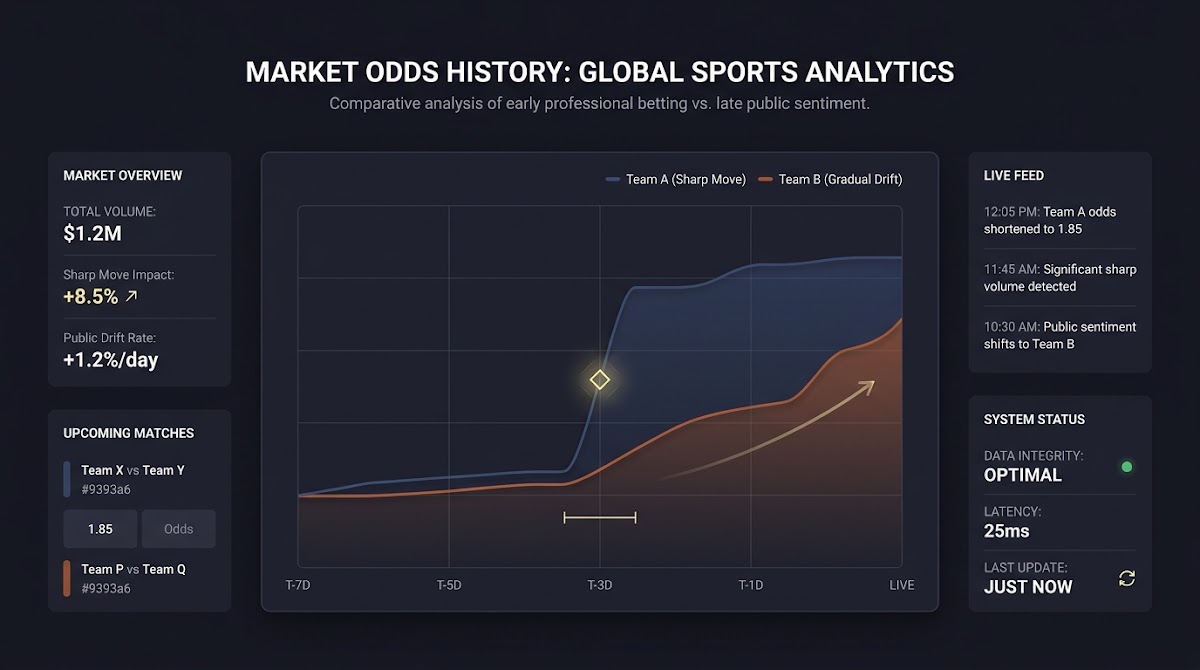
Lines move for a few repeatable reasons. Large wagers from experienced bettors often drive early and directional moves, while heavy retail interest tends to produce later, volume-driven drift. Distinguishing these sources helps interpret the quality of the signal.
Other times, sustained public volume will push a line gradually. That drift can represent liquidity pressure more than new information, so it should be evaluated differently than an early, heavy bet from a professional account.
quick monitoring action to check line history and public percentages
treat outputs as signals to investigate
News and information flow that triggers moves
Injury reports, lineup confirmations, weather updates, and late scratches can all trigger sudden movements. The timing relative to the event and the magnitude of the change help indicate whether the move contains new, actionable information or is merely market noise.
When a line moves sharply after a credible roster update, it often deserves closer scrutiny. If movement aligns with a known, verifiable change, consider updating your model inputs and sizing down or pausing until you confirm the impact.
Types of movement to watch and what each often signals
Spread shifts
Spread movement shows how perceived point differentials evolve. Early, large spread shifts frequently indicate informed money or strong model disagreement, while slow spread drift is often retail-driven. The same numeric change can feel different depending on the context of the matchup and market liquidity.
Watch how quickly the spread moves and whether it happens across several books or just one. Consistent movement across multiple lines is generally a stronger signal than a single outlier posting.
Total (over/under) movement
Total movement often reflects scoring expectations changing due to weather reports, key player availability, or matchup revelations. Because totals are sensitive to a handful of factors, a sudden shift in the total can suggest a concrete piece of information has entered the market.
Beginner players should compare total movement to how their model treats pace and scoring volatility before changing position sizes dramatically.
Moneyline movement and limit changes
Moneyline action and limit changes can reveal how sportsbooks view risk on a team winning outright, especially in low-scoring or evenly matched games. Large moneyline moves, or rapid changes in posted limits, can be a result of heavy single-game exposure or concentrated wagers on one outcome.
Keep in mind that a substantial moneyline shift in a low-liquidity market may be easier to move and thus less informative than a similar move in a highly liquid market.
A simple 3-step framework to interpret market movement
Step 1: Check timing and magnitude
Step one asks you to note when the move happened and how large it was relative to the market's normal ranges. Early and large moves deserve more attention than small late ticks because they are likelier to contain new information or professional interest.
Record the initial line, the current line, and the time stamps so you can compare moves in later review sessions. That practice turns subjective impressions into testable data.
Step 2: Identify the likely source
Step two is about attribution. Decide whether the move looks like sharp action, public drift, or a reaction to verifiable news. Use line history, available volume signals, and timing to form a working hypothesis about why the market shifted.
Conclude this step with a clear next action: investigate a news item, adjust model inputs, or mark the move as probable retail pressure and maintain your original view.
Try FundedPlays Challenges to practice reading market movement in a structured way
Try this 3-step check on your next pick: note timing, find the likely source, then compare to your model before changing size
Step 3: Compare movement to your model value
Step three is the comparison. Measure the moved line against your own model or pregame view. If your valuation differs significantly, decide whether the market provides credible evidence to warrant an adjustment or if you should hold your position and treat the move as a contrarian signal for testing.
Follow conservative rules of thumb: small late moves rarely justify large position changes, while early, corroborated moves may call for modest re-sizing or a temporary pause to gather more confirmation.
Using volume and timing to judge how significant a move is
Why early volume matters
Early volume often indicates informed participation because professionals tend to act when they perceive an edge. An early large handle is a stronger signal than a sequence of small-ticket bets hours later, so weight early volume more heavily when assessing informational value.
That said, not every early large wager is infallible; validate with corroborating line movement across books or compatible news before adopting the new price as truth.
How to read late volume and ticket size
Late volume often consists of many small tickets from public bettors and can move lines when enough participants pick the same side. Watching ticket counts and handle together gives a fuller picture: a large ticket count with small handle suggests retail crowding, while a small number of large tickets with a high handle suggests fewer, larger wagers.
As a rule, pause and investigate when you see late spikes. Avoid mechanically following late crowd movement without checking whether any credible new information explains the shift.
A quick pregame and live checklist you can use
Pregame checklist
Compare the opening line to your model value and note any early divergence from your estimate. Scan injury reports, weather, and roster confirmations before committing size. Check early movement and any sharp indicators such as one-off heavy shifts soon after the line posts.
Verify changes across multiple books where possible and size initial bets conservatively when the market displays uncertainty.
Treat movement as a signal to investigate: check timing and magnitude, identify likely sources, and compare the moved line to your own model before adjusting size or committing to an action.
Live betting checklist
Monitor in-game statistics that feed your model, such as possession, shot quality, or turnovers, and watch how these events affect live lines. Use line drift to find hedging opportunities if a pregame position looks at risk, and keep position sizes smaller in live markets where volatility can be rapid.
Record each live decision with the observed signal and outcome so you can review which in-game cues most reliably predict profitable adjustments.
Common mistakes beginners make when reading market movement
Chasing the biggest move
A common error is chasing the largest or loudest movement without verifying its source. Big moves can be tempting but may reflect temporary liquidity imbalances or correlated exposure rather than true informational edges.
Instead of following the biggest move by default, pause to confirm the underlying cause and consider testing a smaller stake first to validate the signal.
Overinterpreting small or late movement
Another trap is treating every small or last-minute tick as meaningful. Small late moves are often retail-driven and can mislead those who equate movement with certainty. Reserve decisive action for changes that are supported by timing, size, and corroboration.
Keep a log of mistaken responses to movement and the corrective action you implemented so you can reduce repeated errors over time.
How to combine what the market says with your own model or edge
When to adjust your model
Use market movement to flag new information that might merit a model update, such as confirmed injury reports or reliable weather changes. Adjust model inputs conservatively and document why each change was made so you can evaluate its long-term value during reviews.
Frequent arbitrary adjustments erode an edge. Aim for disciplined, evidence-based tweaks and prefer small incremental calibrations over wholesale changes.
How to size positions based on movement
Position sizing should reflect conviction and the quality of the market signal. If movement aligns with strong, early volume or verifiable news, modest increases in size can be reasonable. If a move appears retail-driven or uncorroborated, reduce size or pass.
Maintain clear bankroll rules and treat adjustments as experiments with recorded outcomes so you can refine your sizing rules over time.
Three practical scenarios explained step by step
Scenario A: Early sharp move before public interest
Signals observed: a large early spread shift soon after opening with minimal public chatter. Investigative steps: check line history across multiple books, search for any credible roster or weather updates, and see whether moneyline limits changed. Possible actions: reduce your edge estimate and place a modest, time-sensitive bet or log the case for later review.
Keep the decision conservative and document the reasoning so you can learn whether following similar patterns proves beneficial over time.

Keep the decision conservative and document the reasoning so you can learn whether following similar patterns proves beneficial over time.
Scenario B: Late movement due to an injury report
Signals observed: sudden late total or spread change after an official injury update. Investigative steps: confirm the injury from a primary source, estimate the likely on-field impact, and re-run your model inputs focusing on the specific role of the injured player. Possible actions: adjust size downward if uncertainty remains, or take the new price if your calibrated model shifts enough to justify a wager.
Log every such instance to understand how large the true impact tends to be for similar roster changes.
Scenario C: Heavy public money moving a line by game time
Signals observed: steady drift toward one side with high ticket counts but without large single tickets. Investigative steps: check handle and ticket trends, look for narrative drivers such as popular player props or media focus, and compare to your model value. Possible actions: fade the public with a small, controlled stake if your model consistently outperforms crowd-driven lines in backtesting, or avoid the game if correlated risk is high.
Test fades in simulation before increasing size under live conditions so you can quantify the edge and its volatility.
Tools and data sources beginners can use to monitor movement
Free tools and what they show
Start with free odds aggregators and Public betting percentages and line history charts to see how lines have shifted across books. Public betting percentages are useful for spotting crowd trends, and simple alert systems can notify you when a line moves past a threshold you care about.
Free sources are often sufficient for learning. Use them to build a record of how movement correlated with outcomes before investing in higher-cost services.
Paid or subscription tools and when they are helpful
Paid tools add features such as detailed handle tracking, sharper historical data, and consolidated alerts that save time for frequent users. Consider upgrading only after you have a proven record of using free tools to make disciplined, documented decisions.
No tool can replace careful verification and a recorded process for how market signals change your decisions.
How market movement fits a funded account or challenge mindset
Using movement to refine strategy in simulation
Market-reading skills are well suited to simulated funded-account workflows because they can be practiced without risking real capital. Use challenges and simulated accounts to test how your responses to movement affect your long-term record, and treat each challenge as a repeatable experiment in disciplined decision-making.
When you practice in a simulated environment, keep your rules consistent and compare outcomes week to week to learn which signals are reliable for your process. FundedPlays-style challenges provide structured account setups that make this experiment-minded approach feasible.
Maintaining discipline under evaluation rules
Evaluation challenges reward consistency and rule-following more than one-off wins. When interpreting movement during a challenge, prioritize bankroll rules, drawdown limits, and the evaluation criteria over short-term attempts to chase perceived edges.
Record how market movement influenced each decision during the challenge so you can assess performance objectively at the end of the evaluation period.
When to follow sharp money and when to fade the public
Rules of thumb for following sharps
Before following sharp money, validate timing, magnitude, and corroboration across multiple books. Favor small, controlled tests of sharp signals and increase size only after you see consistent, positive outcomes documented in your decision log.
Remember that even professional bettors are not correct every time, so treat following sharps as a disciplined experiment rather than a guarantee of success.
How to verify whether action is truly sharp
Look for early, large handle changes, consistent movement across several books, and limit adjustments that suggest exposure. If these elements align, the action is more likely to be informed. If not, be skeptical and protect bankroll with smaller sizes.
In addition, watch for reverse line movement patterns that can disguise correlated risks; confirm that the signal is not the result of a single book trying to offload exposure.
Final checklist and next steps to practice reading market movement
A compact checklist to print or save
Check timing, measure magnitude, identify the likely source, compare to your model, and size positions conservatively. Keep a simple decision log with timestamps and reasons for each action so you can review and refine your process weekly.
Practice this checklist in a simulated account environment before applying it to real stakes to build experience without unmanaged risk.
How to practice in simulation before real money
Use structured challenges or simulated accounts to run experiments with predefined rules. Commit to regular reviews, note which signals led to better outcomes, and adjust your checklist only after you have documented evidence supporting the change.
With patience and disciplined record keeping, reading market movement becomes a measurable skill rather than an instinctive reaction.
Pause to note timing and magnitude, verify any supporting news, and compare the moved line to your model before changing size.
Check when the move happened, whether it coincided with large handle or limit changes, and if the shift appears across multiple books; early large-handle moves are likelier to be sharp.
No. Treat sharp signals as hypotheses to test with small, controlled bets and validate them through a documented decision log before increasing size.
References
- https://www.covers.com/guides/what-line-moves-can-tell-us
- https://www.fundedplays.com/challenges
- https://www.sportsbettingdime.com/nfl/public-betting-trends/
- https://oddsindex.com/guides/reverse-line-movement-guide
- https://www.fundedplays.com
- https://www.fundedplays.com/blogs/how-fundedplays-evaluations-work
- https://www.fundedplays.com/blogs