

What an 8 leg parlay means: definition and basic rules
An 8 leg parlay is a single wager that links eight selections, and every leg must win for the parlay to cash, which makes the ticket an all-or-nothing bet; this is the core rule that defines the product and how outcomes are decided according to standard industry explanations Investopedia parlay guide.
Try structured practice before placing multi-leg parlays
Check the platform rules and calculate the potential payout before placing an 8 leg parlay.
Compared with a single bet on one game, a parlay combines multiple markets into a single stake so the payout multiplies if all selections succeed, but the ticket loses if any one selection fails; glossary entries used by industry groups help clarify this distinction for readers getting started American Gaming Association glossary.
Anatomy of an 8 leg parlay ticket
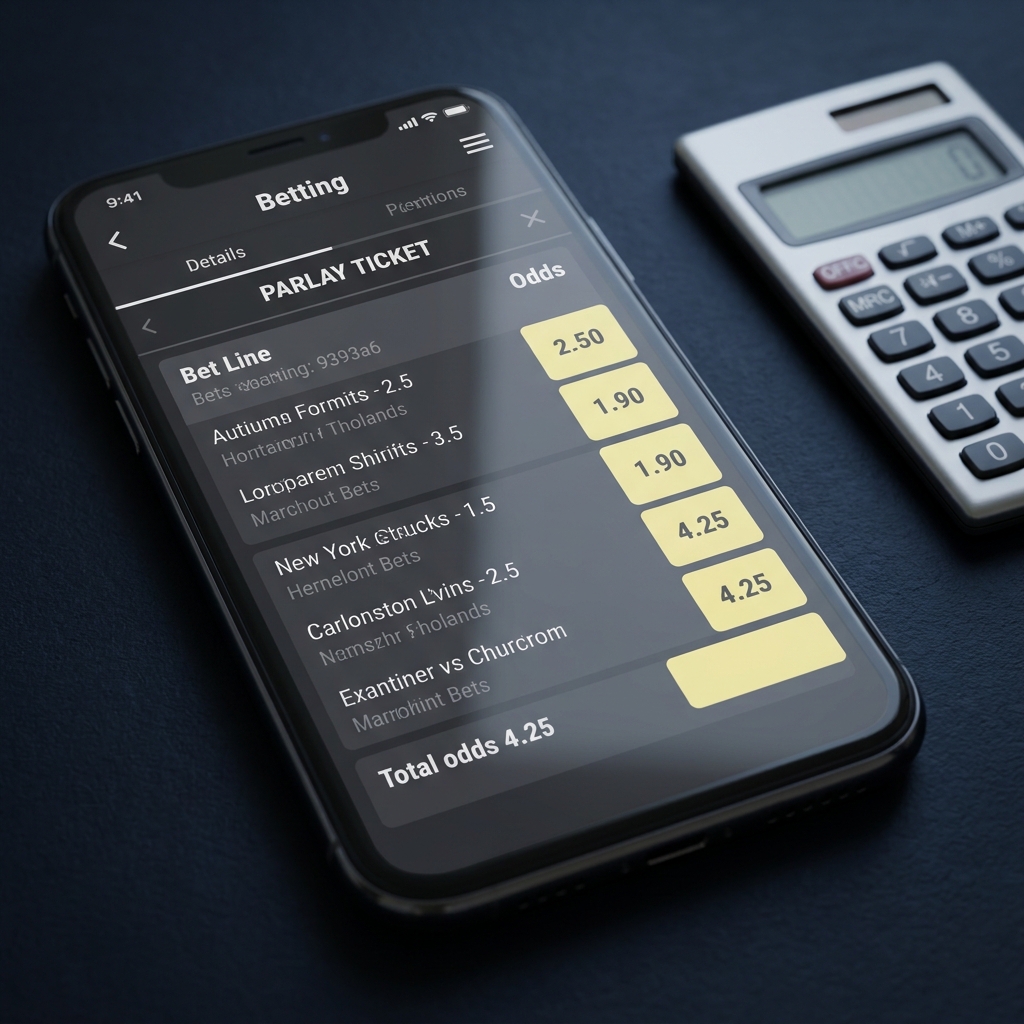
A parlay ticket is made of labeled parts: each selection is a leg, the amount placed is the stake, and the bookmaker or product returns a total return that includes the stake; profit equals the return minus stake, and those terms determine how you read a receipt or confirmation line Investopedia parlay guide.
Typical markets used as legs include moneyline selections, point spreads, totals (over/under), and player props; each leg contributes its odds to the payout calculation, and the ticket outcome remains binary, cash-or-lose, based on whether every leg resolves as predicted.
Use this checklist to enter each leg and avoid format mistakes
Enter odds consistently
When you examine a parlay confirmation, verify that each leg is listed with the correct market and odds format so your payout calculation matches the operator's display; mismatches between American and decimal formats are a common source of confusion.
Step-by-step: how to calculate an 8 leg parlay payout
Start by converting every leg's odds into decimal form, because the standard payout method multiplies decimal odds across legs, then multiplies by the stake to get the total return; this conversion and multiplication approach is the widely explained method for computing parlay payouts Investopedia on American odds. You can also reference a parlay calculator such as OddsJam's parlay calculator to verify the steps.

Step 1: Convert American odds to decimal odds. For positive American odds, decimal = (American / 100) + 1. For negative American odds, decimal = (100 / |American|) + 1. Step 2: Multiply the decimal odds of all eight legs together to get a combined decimal multiplier. Step 3: Multiply that combined decimal by your stake to get total return. Step 4: Subtract your stake from the return to get profit.
Worked example: suppose you place a $10 stake on an 8 leg parlay with these example American odds: +120, -110, +150, -130, +200, -105, +140, -120. Convert each to decimal, multiply the eight decimal numbers, multiply by the $10 stake to get return, and subtract $10 to find profit; the numeric steps let you reproduce the calculation in a calculator or spreadsheet.

When you do the arithmetic yourself or paste converted decimals into an online parlay calculator, follow the same steps and double-check the conversions and the stake entry so your computed result matches the operator's figure.
How combined win probability is calculated for an 8 leg parlay
Under the independence assumption, the combined win probability of a parlay equals the product of the individual legs' probabilities, so the overall chance of success falls multiplicatively as you add legs; this follows the multiplication rule used in basic probability and statistics OpenStax statistics multiplication rule.
To illustrate: if each leg had a 60 percent chance to win, the combined probability for eight independent legs would be 0.6 to the power of 8, producing a much smaller overall chance; that mathematical effect is why multi-leg parlays are harder to hit even when each selection seems moderately likely.
How sportsbooks and lotteries adjust for correlations and special products
Bookmakers commonly restrict or re-price correlated combinations, such as certain same-game pairings where one outcome makes another more or less likely, rather than simply multiplying odds as if every leg were independent; operators note these policies in their rules and product descriptions Investopedia parlay guide.
The single most important rule is that all eight selections must win for the parlay to cash; if any one leg loses, the entire ticket loses.
Some jurisdictional lottery-style parlay cards use fixed payout tables and specific rules that differ from market-multiplied odds, meaning the payout you receive can follow a preset schedule rather than the multiplied decimals method; state lottery documents explain these alternative payout structures Delaware Lottery parlay rules.
Practical takeaway: before you place an 8 leg parlay, check whether the operator forbids the combination, applies correlation adjustments, or uses a payout table; you can also visit Funded Plays for platform notes and examples.
Practical decision criteria: when an 8 leg parlay might make sense
Parlays offer a high variance payoff profile and often a poorer implied value compared with assessing the same markets as single bets, so treat a large parlay like a strategy for a defined payoff rather than a steady growth method; consumer guidance encourages understanding the tradeoff between potential return and the low probability of success UK Gambling Commission guidance.
Factors to consider before placing an 8 leg parlay include your bankroll size, the stake as a percentage of your bankroll, whether legs are correlated, and the operator's house rules; if the parlay fits a specific objective, such as a controlled entertainment stake or a fixed-target payoff, it may be reasonable in the context of disciplined limits (see how Funded Plays evaluations work).
Common mistakes and traps with 8 leg parlays
Chasing losses by increasing stake after a loss is a frequent problem with parlays because the all-or-nothing nature tempts players to recover prior losses in a single ticket; responsible-gambling resources advise setting limits and avoiding escalations that exceed your plan UK Gambling Commission guidance.
Another common trap is ignoring correlation or operator re-pricing; assuming independent probabilities when legs are related can lead to overestimating your real chance to win, and failing to read the terms or the same-game policy can produce unexpected denials or adjusted payouts.
Worked examples: three 8 leg parlay scenarios
Example A - eight similar-probability legs (independent). Suppose each leg converts to a decimal odd of 1.8 (about a 55.6 percent implied single-leg win probability). Multiply 1.8 eight times to get the combined decimal, multiply by the stake to get return, and compute profit as return minus stake; the arithmetic follows the standard conversion and multiplication steps for market odds Investopedia on American odds.
Example B - mixed odds with one correlated pair. If seven legs are independent but two legs are from the same game and influence each other, the operator may adjust the price or reject the parlay; in practice you should consult the operator’s same-game policy because the offered parlay price may not equal the simple decimal multiplication Investopedia parlay guide.
Example C - lottery parlay card with fixed payout. Some lottery-style products use a payout table that maps number of correct selections to a fixed prize rather than calculating return from market odds, so the payout for eight correct picks may be predetermined and not comparable to bookmaker multiplication methods Delaware Lottery parlay rules.
How to check platform rules and calculate using online tools
Start by reading the operator's terms and conditions for parlay rules, same-game policies, and any maximum-leg limits so you're aware of restrictions or special payout methods before you commit a stake Investopedia parlay guide.
Using a parlay payout calculator requires consistent inputs: convert all odds to the same format beforehand, enter decimal odds or convert American odds accurately, and double-check the stake. Remember that calculators reflect your input and assume multiplicative payout; if the operator adjusts for correlation or uses a table, the calculator result may differ from the offered figure. Try a parlay tool like Covers parlay calculator to verify your math.

Responsible-parlay play: limits, record-keeping, and alternative approaches
Practical controls include a fixed stake percentage per parlay, a session loss limit, and logging each ticket and outcome so you can review performance over time; these behaviors align with standard responsible-gambling advice for managing high-variance bets UK Gambling Commission guidance.
Alternatives to large parlays that lower downside include making smaller parlays, placing single bets where you find positive expected value, or using correlated hedges when permissible; choose the approach that matches your objective and risk tolerance rather than chasing a single large payout.
Checklist before placing an 8 leg parlay
Quick verification steps: confirm each leg's market and odds format, ensure you entered the stake correctly, convert odds consistently, and check whether legs are allowed together by the operator; these checks reduce simple input or rules errors before submission Investopedia parlay guide.
Red flags to stop and reassess include unclear terms or same-game rules, rapidly changing odds that affect the posted price, and promotional odds with fine print that limits their application. When in doubt, save or screenshot the ticket and the terms so you can reference them later.
Summary and practical next steps
Key takeaways: an 8 leg parlay is an all-or-nothing ticket whose payout is calculated by converting each leg's odds to decimals and multiplying them together with the stake to get return, while the combined win probability under independence equals the product of the single-leg probabilities; authoritative explanations describe both the payout math and the probability rule Investopedia parlay guide.
Next steps you can take now: practice the conversion and multiplication steps with an online calculator or spreadsheet, read your chosen operator's parlay rules and same-game policy, set sensible stake limits, and track outcomes to see whether parlays meet your objectives over time. For more examples and posts, see the Funded Plays blog.
An 8 leg parlay is a single bet linking eight selections; every leg must win for the ticket to cash. If any leg loses, the entire parlay loses.
Convert each leg's odds to decimal, multiply the eight decimals together, multiply by your stake to get total return, then subtract the stake to find profit.
Yes. Many operators restrict or reprice correlated legs and some lottery-style products use fixed payout tables, so check rules before betting.
References
- https://www.investopedia.com/terms/p/parlay.asp
- https://www.americangaming.org/resource/sports-betting-glossary/
- https://www.investopedia.com/terms/a/americanodds.asp
- https://www.fundedplays.com/challenges
- https://openstax.org/books/statistics/pages/3-3-conditional-probability-and-the-multiplication-rule
- https://www.delottery.com/Sports-Lottery/How-To-Play
- https://www.gamblingcommission.gov.uk/public-and-players/guide/betting
- https://oddsjam.com/betting-calculators/parlay
- https://www.actionnetwork.com/betting-calculators/parlay-calculator
- https://www.covers.com/tools/parlay-calculator
- https://www.fundedplays.com
- https://www.fundedplays.com/blogs
- https://www.fundedplays.com/blogs/how-fundedplays-evaluations-work