
Quick answer: what a minus 8 spread means
A minus 8 point spread means the favorite must win by more than eight points for a spread wager to cash, while the underdog at plus 8 covers by losing by seven or fewer or by winning outright. This settlement rule, including the refund on an exact eight-point margin called a push, is the standard way spread bets are graded in U.S. markets, so bettors placing 8 bets should expect those three outcomes and confirm any local rule differences with their operator Investopedia point spread article
Use this short answer to check a ticket or to explain the outcome quickly: favorite wins by nine or more, favorite wins by exactly eight and the bet is refunded, favorite wins by seven or fewer and the underdog side wins the bet. If you are tracking 8 bets across multiple cards, mark pushes separately so your ledger reflects only settled wins and losses.
Explore FundedPlays Challenges to practice structured prediction
Read the full guide to see worked examples, parlay rules, and how to record pushes before placing any 8 bets.
Why sportsbooks use point spreads and how to read them
Point spreads are created to balance betting action between both sides rather than to predict the exact scoring margin, so oddsmakers move the number to get comparable money on each side and reduce their risk American Gaming Association guide and see William Hill Sports Betting 101
The minus sign on a spread, for example a spread shown as -8, identifies the favorite and signals that the favorite must win by more than that number to cover. Lines change as new information arrives and as money flows, so always verify the current line before placing an 8 bet to avoid surprises.
How a -8 spread settles for straight bets: the math and rules
Settlement is based on the final score margin. If the favorite wins by nine or more, a -8 spread bet on the favorite wins; this is commonly called the favorite covering the spread and is how most straight spread wins are decided Investopedia point spread article
If the favorite wins by exactly eight points the wager is graded as a push and the stake is refunded, while an underdog at +8 covers if it loses by seven or fewer or wins outright Investopedia push definition
quickly determine cover, push, or loss for a spread
enter final margin as favorite points minus underdog points
For record keeping, a simple rule is this: if result > 0 the favorite covers, if result = 0 it is a push, if result < 0 the underdog covers. Use your ticketing tool or the calculator above to reproduce the math for each game when logging 8 bets.
What a -8 spread means for 8 bets
When people say 8 bets they typically mean wagers placed against a -8 point spread, and the practical implication is the same three-way grading: win, push, or loss. Understanding that classification helps you log results correctly and judge how many clean wins you have after excluding pushes.
For bankroll tracking treat pushes as refunded stakes that do not change your bankroll but do affect your sample size when calculating hit rates for 8 bets. If you prefer, track pushes separately and compute win rate only on settled bets to avoid skewing performance numbers.
Settlement examples: football and basketball with a -8 spread
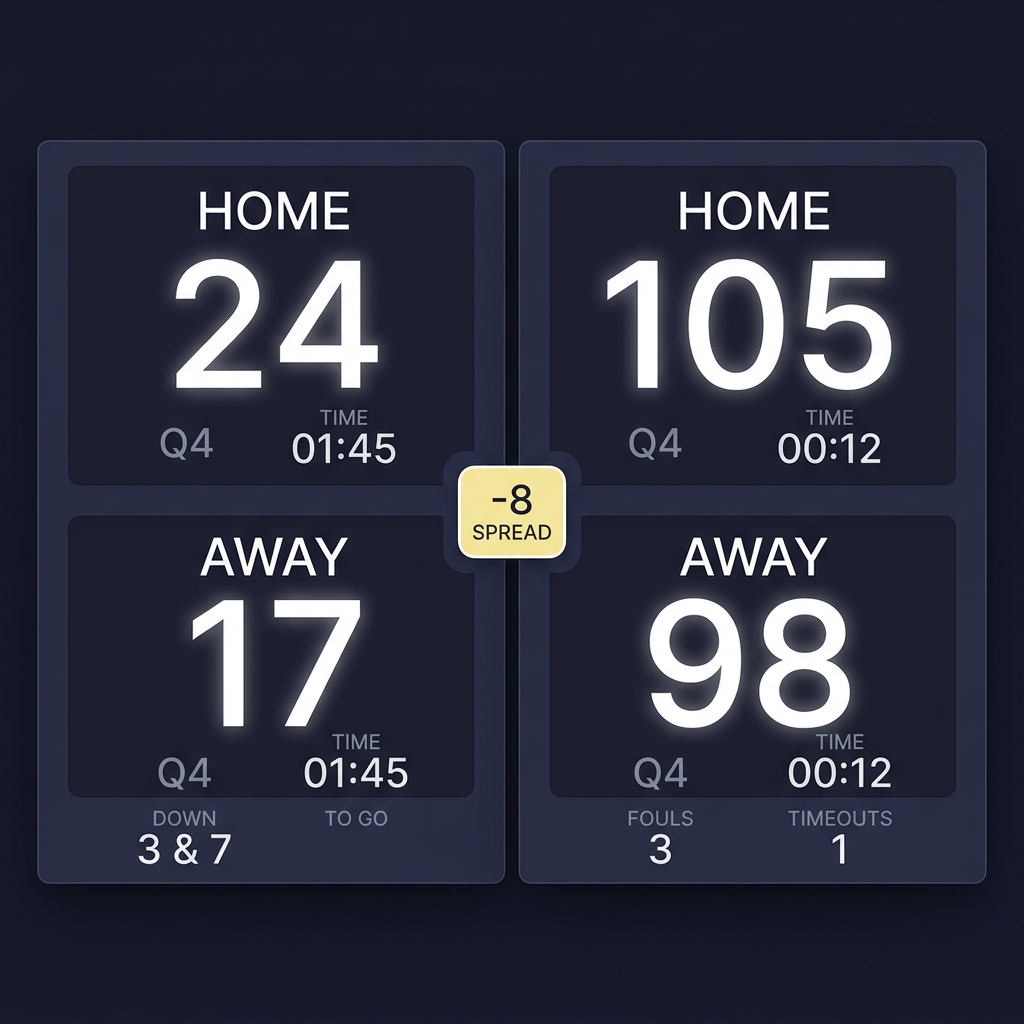
Football example: if the favorite wins 27-18 the margin is nine and the -8 favorite covers; if the final score is 24-16 the margin is eight and the -8 bet pushes and is refunded. The settlement method is the same regardless of sport, but typical score margins differ by sport Investopedia point spread article
Basketball example: a favorite that wins 110-101 covers a -8 spread because the margin is nine, while a 108-100 final is an eight-point margin and results in a push. Basketball games tend to have higher totals and can produce close margins too, so the same cover-push-loss logic applies across football and basketball.
A -8 spread means the favorite must win by nine or more to cover; an exact eight is usually a push and refunded, and if a -8 leg pushes inside a parlay many operators reduce the parlay by one leg and recalculate the payout, though rules can vary so confirm with your operator.
Try these worked scores against your ticket to confirm how your 8 bets would settle before you finalize your ledger.
Parlays and a -8 leg: what happens if the leg pushes
Every leg of a parlay must win for the full ticket to cash, so a single -8 leg pushing changes the structure of the parlay; many operators will remove that leg and recalculate the payout as a reduced-leg parlay rather than voiding the entire ticket, though exact policies vary by operator and you should confirm how your parlay will be handled before placing it Investopedia parlay article and see teaser betting rules
Because operator rules differ, if you include 8 bets in a multi-leg ticket consider the effect of a possible push on expected payout and on your staking plan. Some bettors prefer to avoid mixes that include vulnerable point gaps or to accept lower single-leg risk when building parlays.
Teasers and moving a -8: how you can buy points
A teaser lets bettors move a spread like -8 toward zero in exchange for a lower payout, for example a six-point football teaser could convert -8 to -2, increasing the chance the favorite covers while reducing the ticket return; teaser pricing and push handling are set in the house rules so confirm them before combining teasers with other wagers Investopedia teaser article. See bet365's teaser help.
Using FundedPlays as a place to practice structured prediction challenges can help you test how moving lines affects outcomes without risking actual bankrolls; the platform focuses on skill-based evaluation challenges rather than traditional wagering and can be useful for learning how teasers change outcomes

When you move -8 to -2 in a teaser the win probability for that leg increases, but remember the teaser converts multiple legs at once and pricing compresses the payout across legs, so treat teasers as a tool for lowering variance rather than a free advantage.
Pricing and juice: typical vig for spread bets
Many U.S. spread bets are priced around -110 per side, which means the operator charges a small fee or vig that reduces long-term returns; this common pricing is a simple way for books to earn margin even when they balance action on both sides Investopedia point spread article
When odds differ between operators the effective edge changes, so compare juice across shops if you place many 8 bets, and remember that small differences in vig can have material long-term effects on a bettor who places frequent spread wagers AGA betting guide
How lines move: information that can shift a -8
Lines move because of market information such as injury news, weather, public betting volume, or large wagers from sharp bettors; oddsmakers adjust numbers to balance action and manage risk, so a -8 shown early can change closer to game time for those reasons AGA betting guide
If you routinely bet spreads track line history for the markets you follow; a move from -8 to -7.5 or -9 can signal changing information or groups of heavy action and may affect whether you still see value in an 8 bet.
Decision criteria: when to take a -8 and when to avoid it
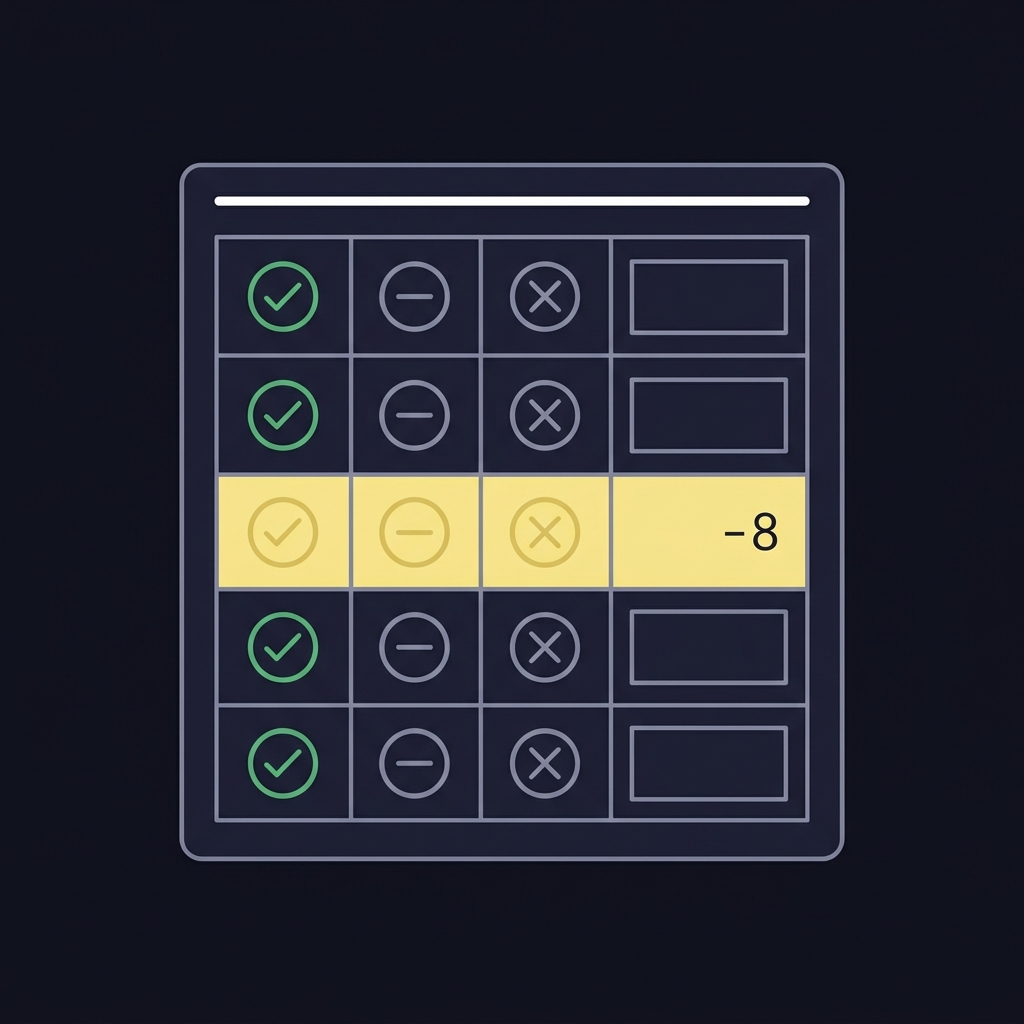
Ask these questions before placing an 8 bet: does the matchup historically produce wide margins, are there injuries or weather factors that widen or narrow the margin, and does the available juice make the expected edge worthwhile relative to your bankroll. Use conservative stake sizing when uncertainty is high
As a simple checklist, consider: matchup pace and tendency to run up or slow down scoring, recent margins of victory and injury status, and whether you can accept a push as a neutral result in your tracking. If a push is likely and you are building parlays, rethink the leg or accept the reduced parlay value.
Common mistakes and how to avoid them
Frequent errors include misreading the spread sign, forgetting how pushes are handled in parlays, and ignoring juice differences between operators, each of which can change outcomes for 8 bets and your long-term performance if unchecked Investopedia push definition
To avoid mistakes, adopt simple habits: always double-check the sign and margin on a posted line, read the operator's help center rules for pushes and parlays before you bet, and track pushes separately so they do not distort your win-rate calculations.

Step-by-step examples: cash, push, and parlay recalculation
Example 1, single bet: you back a -8 favorite and the game ends 30-21. The margin is nine, so your bet wins. The calculation is final margin nine minus spread eight equals one, which means favorite covers and you receive the winning payout per the posted odds Investopedia point spread article
Example 2, parlay: you have a three-leg parlay that includes a -8 leg. If that leg finishes exactly tied to the spread, the leg pushes and many operators remove it and pay the parlay as a two-leg ticket recalculated at current parlay odds. Because rules vary, always verify whether pushes remove legs or are handled differently with your operator Investopedia parlay article
Example 3, teaser: you convert the -8 leg into a -2 using a six-point teaser. If the game finishes with a seven-point favorite margin the teaser leg loses, while a six-point margin would now be a push under some house rules. Teaser payouts compress returns while improving per-leg success probabilities, so compare outcomes before choosing this option Investopedia teaser article
How to verify settlement rules with your operator
Find posted rules in the operator's help center under entries labeled push handling, parlay settlement, and teaser rules; those sections typically explain whether pushes reduce parlays to fewer legs or are treated in other ways, and are the authoritative source for your 8 bets.
If you cannot find a clear rule, ask customer support directly with concise questions such as: 'How do you handle a parlay leg that pushes?' and 'What is your rule for teaser pushes?' Save screenshots of the answer or the rules page to avoid later disputes and to keep a record tied to the event.
Summary and next steps
Key takeaways: a -8 spread requires the favorite to win by nine or more to cover, an exact eight-point margin is usually a push and refunded, and underdog +8 covers by losing by seven or fewer or winning outright. These three settlement outcomes apply across common spread sports and are central to interpreting 8 bets.
Before placing 8 bets, verify juice and push handling with your operator, practice with small or simulated stakes to learn how pushes affect your returns, and keep disciplined records where pushes are tracked separately. Use teasers carefully when you want to buy points and accept lower payouts, and always confirm house rules for parlays and teasers.
An exact eight-point margin is usually a push, which means the bet is refunded and does not change your bankroll.
Many operators remove the pushed leg and recalculate the parlay as a reduced-leg ticket, but policies vary so check the operator's rules first.
Yes, a teaser lets you buy points to move -8 toward zero in exchange for a lower payout; teaser rules and push handling depend on the house rules.
References
- https://www.investopedia.com/terms/p/pointspread.asp
- https://www.investopedia.com/terms/p/push.asp
- https://www.americangaming.org/new-to-gaming/how-to-bet-on-sports/
- https://www.investopedia.com/terms/p/parlay.asp
- https://www.investopedia.com/terms/t/teaser.asp
- https://www.williamhill.us/how-to-bet/sports-betting-101/
- https://help.bet365.com/s/en-us/sports/teaser-bet
- https://oddsindex.com/guides/teaser-betting-rules
- https://www.fundedplays.com/challenges
- https://www.fundedplays.com
- https://www.fundedplays.com/blogs
- https://www.fundedplays.com/blogs/how-fundedplays-evaluations-work