
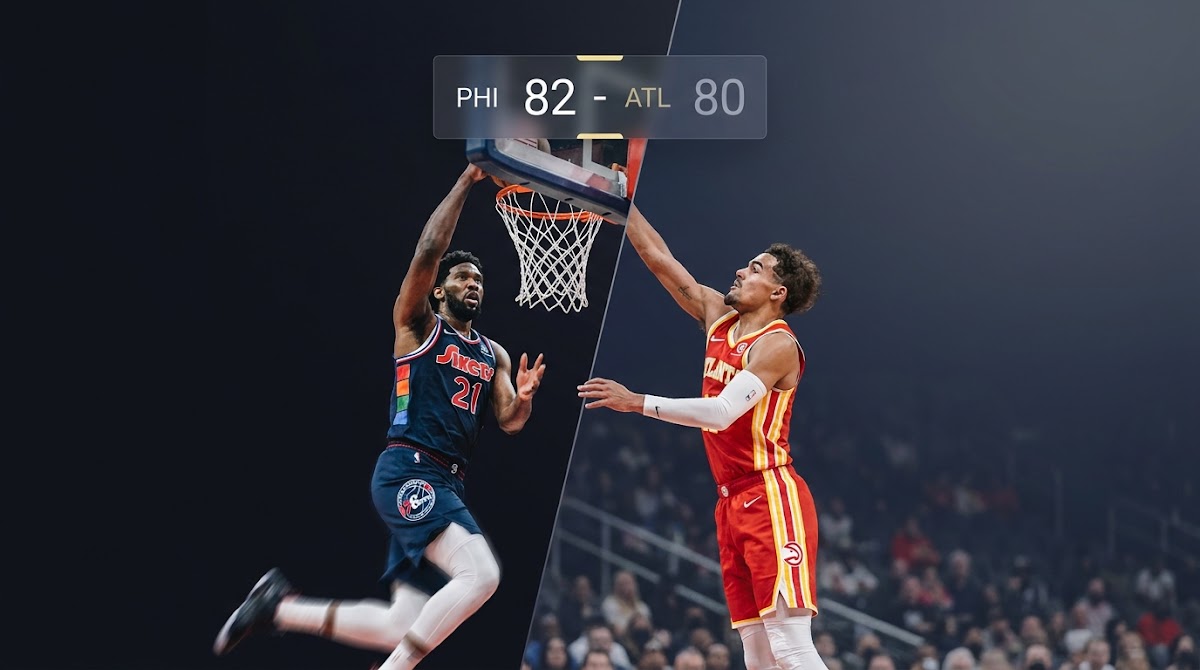
How to read this 76ers prediction guide
This guide walks through an evidence-first way to make a 76ers prediction for a single game, focusing on three measurable inputs that should anchor your read: NBA team ratings for offensive and defensive efficiency, historical head-to-head context, and the NBA same-day injury report. Start with league-standard efficiency metrics as your quantitative baseline and then layer in context that can materially change the matchup on game day. NBA.com team ratings
We treat Basketball-Reference style head-to-head records as useful background, especially for season-series patterns, but not as the primary driver when current-season efficiency measures diverge. Use head-to-head data for context and matchup hints rather than as a substitute for up-to-date ratings or injury information. Basketball-Reference head-to-head ledger
Player availability confirmed on the NBA same-day injury report is the single factor that most often changes a 76ers prediction at the last minute.
Finally, the NBA official injury report is the authoritative daily source for player availability and can change a well-formed projection in minutes; always check it for final decisions. NBA official injury report
Team ratings: the objective baseline for a 76ers prediction
OffRtg, DefRtg and NetRtg are shorthand for points scored and points allowed per 100 possessions and their difference. NetRtg, which combines offensive and defensive efficiency, is the most direct season-long indicator of which team holds an efficiency edge on paper, and it is the logical starting point when forming any 76ers prediction. For quick reference use the official team ratings table as your baseline. NBA.com team ratings See the NBA stat glossary.
To compare Philadelphia and Atlanta, read OffRtg and DefRtg separately before looking at NetRtg. A team with a higher NetRtg is generally more likely to win on a neutral court, all else equal, but you must translate that season aggregate into a game-specific expectation using home court, recent form and availability. NBA.com team ratings
Keep in mind ratings are season aggregates. They capture the average efficiency across many situations and therefore understate extreme short-term swings. When an important starter is missing or a team has a sudden strategic change, manually adjust the ratings differential rather than treating them as immutable. NBA.com team ratings
Current-season form and trends for a 76ers prediction

Short rolling windows and season splits help detect genuine trend shifts. Use the last 10 to 20 games as a practical sample for recent form checks and refer back to overall ratings to avoid overfitting a small sample. Official season pages and split views provide consistent, comparable windows to work from. NBA.com team ratings and check Teams Advanced for additional split views.
Basketball-Reference also offers game logs and season-series context that can highlight matchup tendencies, but remember that a short hot streak or cold stretch usually regresses toward the season average. Treat short-term form as an adjustment factor that can move your projected margin modestly unless reinforced by roster changes or injuries. Basketball-Reference head-to-head ledger
Quick three-step form adjustment you can copy before a game
Use as a rapid sanity check
When to let short-term trends move your read: if a team shows consistent, multi-week divergence in both offensive and defensive efficiency and the change aligns with steady lineup and rotation patterns. If the trend comes without stable lineup continuity, be cautious about large adjustments.
Head-to-head history: what Basketball-Reference reveals for a 76ers prediction
The Atlanta-Philadelphia head-to-head ledger is a useful reference to identify recurring matchup strengths and weaknesses across seasons, and it is especially helpful for spotting season-series anomalies that might reflect stylistic mismatches. Use it to find recurring patterns rather than to predict any single game. Basketball-Reference head-to-head ledger

When weighting head-to-head results, ask whether the teams retain similar rosters and coaching staffs from the referenced games. If both rosters and systems are stable, past head-to-head outcomes gain credibility; if either side has meaningful turnover, rely more on current ratings and injury information. NBA.com team ratings
Head-to-head should be deprioritized when one team displays a clear season-long NetRtg advantage or when player availability shifts the matchup. Historical edges rarely override current efficiency gaps or the absence of a core creator or defender. NBA official injury report
Coaching, systems and matchup edges that shape a 76ers prediction
Coaching continuity matters because stable systems produce predictable rotations and schematic responses on both ends of the floor. Nick Nurse has been Philadelphia's head coach since 2023 and that continuity helps the 76ers maintain consistent defensive and offensive patterns that matter when projecting matchups. ESPN article on Nick Nurse hiring
Quin Snyder has led Atlanta since February 2023 and has had time to shape the Hawks' approach, which affects how roster strengths and weaknesses match up against Philadelphia. Coach tendencies matter for how each team defends ball screens, attacks transition opportunities, and deploys rotation minutes. ESPN article on Quin Snyder hiring

Practical matchup adjustments driven by coaching include late rotation changes, targeted defensive schemes against primary creators, and situational substitutions designed to exploit mismatches. Coaching plans that consistently alter a matchup can justify departures from a pure ratings-based expectation.
Player availability: the daily injury report checklist for a 76ers prediction
The NBA official injury report is the authoritative source for same-day player statuses and should be your first stop in the final decision window. Checking it is non-negotiable because the difference between a full-strength and a rotated lineup often outweighs small efficiency gaps. NBA official injury report
Key swing roles to watch for this matchup are the primary ball-handler, the primary interior defender and starting wings who defend the perimeter. Absences in any of these roles usually require a sizable adjustment to your original 76ers prediction. NBA official injury report
Translate 'questionable' or 'day-to-day' tags into probabilistic adjustments rather than binary outcomes. For example, a questionable primary ball-handler might reduce a team's expected points per 100 possessions and raise the chance you lean toward the opponent, but do not flip your pick purely on a single uncertainty without supporting confirmation. NBA official injury report
Star roles and rotations: why Tyrese Maxey matters in a 76ers prediction
Tyrese Maxey's evolution into Philadelphia's primary on-ball creator is a central factor in most matchup reads because his usage and effectiveness materially shape how the 76ers generate offense. Maxey's recognition as the 2023 24 Most Improved Player underlines that elevated role and its relevance when forecasting game outcomes. NBA report on Tyrese Maxey award
If Maxey is limited or out, expect usage to shift toward other ball-handlers and for Philly's offensive spacing and play creation to adjust accordingly. That cascade often reduces the team's projected scoring efficiency and can move a pick toward Atlanta, depending on who fills his minutes. NBA official injury report
Apply the framework to FundedPlays Challenges
Use the step-by-step framework in this guide to run a quick pregame check and see how Maxey's status changes your expected margin.
On the Hawks side, monitor which perimeter creators and interior defenders are available, as their presence or absence determines how effectively Atlanta can contain Maxey and exploit matchups on the interior. Small rotation shifts on either side can change matchup balance more than single-game form lines imply. Basketball-Reference head-to-head ledger
Projection framework: step-by-step method to form a 76ers prediction
Step 1, start with the team ratings differential. Use NBA.com team ratings as your baseline NetRtg comparison to estimate which team holds the season-long efficiency edge, then treat that differential as your default expected margin. NBA.com team ratings and consult Teams Advanced Leaders.
Step 2, adjust for injuries and recent form. Reduce or increase the baseline margin based on confirmed absences from the NBA injury report and modestly tilt for sustained short-term trends only when the trend aligns with stable rotations. NBA official injury report
Step 3, factor coaching and matchup micro-advantages. Consider how Nurse and Snyder deploy lineups, defensive schemes and late-game substitutions when making final adjustments, then convert your final read into a pick, a projected margin range and a confidence level. ESPN article on Nick Nurse hiring
Decision criteria: when the 76ers have the edge and when the Hawks do
Three triggers that tilt the projection to Philadelphia: a clear NetRtg advantage on NBA.com team ratings, Tyrese Maxey healthy and functioning as the primary creator, and a favorable interior defense matchup that limits Atlanta's scoring at the rim. Use these criteria as quick checks before finalizing a pick. NBA.com team ratings
Triggers favoring Atlanta include limiting Philadelphia's primary creation through matchups or injury, Atlanta fielding deeper or more effective wing defenders on a given night, and coaching or rotation choices that neutralize Philly strengths. Tie those observations back to both rotation depth and recent on court performance for a balanced read. ESPN article on Quin Snyder hiring
Always confirm the NBA injury report before locking in any decision because roster availability is the most frequent cause of last-minute reversals in projected advantage. NBA official injury report
Common forecasting mistakes when making a 76ers prediction
Overfitting to one or two recent games is a common error. Avoid letting a small sample of outlier performances displace season-long evidence; treat short samples as modifiers, not replacements, of baseline ratings. Read more on how our evaluations work.
Ignoring late lineup and rotation changes reported on game day is another costly mistake. Always re-check official sources and broadcast confirmations in the final hour to avoid surprises that can flip a projection.
Cognitive biases like confirmation bias and recency bias often distort a forecast. Use a simple checklist and record your reasoning to reduce bias impact and to enable iterative learning from outcomes.
Practical scenarios: three example game-day reads for a 76ers prediction
Scenario A, both teams at full strength. Start from the season NetRtg differential on NBA.com and apply only small home court or rest adjustments. If the NetRtg gap is clear and both rotations are intact, your pick should usually follow the ratings advantage with a moderate confidence level. NBA.com team ratings
Scenario B, Tyrese Maxey limited or out. Maxey's absence lowers Philadelphia's expected on-ball creation and often reduces offensive efficiency enough to warrant a sizable margin adjustment, especially if the Hawks can protect the rim or pressure ball handlers. Check the official injury report for confirmation and adjust accordingly. NBA report on Tyrese Maxey award
Scenario C, Atlanta missing a primary perimeter creator. If the Hawks are without a key perimeter creator, Philadelphia's defensive matchups and rotations may find it easier to contain secondary options, pushing the read toward the 76ers, provided Philly's interior defense is intact. Confirm the absence on the official injury report before shifting your final pick. NBA official injury report
How to update your 76ers prediction in the final 60 minutes
Minute-by-minute checklist before tip-off: confirm the NBA injury report, verify official starters via team media or broadcast notices, and quickly re-check team ratings or late lineup analytics if available. Prioritize confirmed absences above short-term form swings. NBA official injury report
Scale confidence down if multiple uncertain items remain unresolved. If one or two key statuses are unclear, note the most likely outcomes and assign a lower confidence level to the pick so you can revisit decisions after the game for learning purposes. NBA.com team ratings
Record your final read, predicted margin, and the reasons for adjustments. Over time this log helps refine how large an adjustment to apply for each class of absence and how much weight to give different short-term trends. Visit our blog.
Bottom line: making a responsible, evidence-based 76ers prediction
Start with NBA team ratings as your baseline, adjust for injuries and short-term form, and then layer in coaching and matchup micro-advantages to arrive at a final 76ers prediction. This three-step process keeps decisions transparent and repeatable. NBA.com team ratings Visit Funded Plays.
Remember that outcomes depend on confirmed information and individual performance; never promise guaranteed results. Practice the framework, keep a short results log, and refine your adjustment rules as you collect more decisions and outcomes.
Begin with NBA.com team ratings to establish the baseline NetRtg differential, then adjust for injuries and recent form before adding coaching and matchup considerations.
Maxey is central to Philadelphia's creation; his status materially affects offensive efficiency and should change projected margins if limited or out.
Use head-to-head history for context when rosters and coaching staff are stable, but prioritize current season ratings and injury reports for game-specific decisions.
References
- https://www.nba.com/stats/teams/rating?Season=2024-25&SeasonType=Regular%20Season
- https://www.basketball-reference.com/teams/ATL/head-to-head.html
- https://official.nba.com/injury-report/
- https://www.nba.com/stats/help/glossary
- https://www.nba.com/stats/teams/advanced
- https://www.nba.com/stats/teams/advanced-leaders
- https://www.espn.com/nba/story/_/id/37747971/philadelphia-76ers-hire-nick-nurse-head-coach
- https://www.espn.com/nba/story/_/id/35738018/hawks-hire-quin-snyder-coach-five-year-deal
- https://www.fundedplays.com/challenges
- https://www.nba.com/news/2023-24-kia-mip-tyrese-maxey
- https://www.fundedplays.com
- https://www.fundedplays.com/blogs
- https://www.fundedplays.com/blogs/how-fundedplays-evaluations-work