

What a trifecta box is and why the box matters
A trifecta is an exact-order bet that requires naming the first three finishers in the correct order. Boxed trifectas turn that single ordered bet into many permutations that cover all finishing orders among the chosen horses, giving bettors full coverage of the selected group as a set rather than one precise sequence TwinSpires Edge how to bet a Trifecta
Confirm wager details before you buy
Before you build a boxed ticket, check the racing operator's current wagering menu and minimums so you know what base stakes are available and how scratch rules apply.
In practical terms, boxing a trifecta means buying every distinct ordering of three finishers drawn from your selection. That changes how many tickets you buy and how much the total wager costs, because each ordering is a separate ticket in the pari-mutuel pool NYRA wagering information on trifecta
Because rules and minimums vary across tracks and operators, availability of low-denomination trifecta bets and how the ticket is constructed are set by the host operator and can differ by meet or jurisdiction ARCI model rules on pari-mutuel wagering

How to count combinations: the permutation rule behind a 5-horse box
How to count combinations: the permutation rule behind a 5-horse box
Use the permutation formula for ordered outcomes, written P(n,3) = n × (n − 1) × (n − 2). This formula counts how many distinct ordered triples you can make when the order matters, which is exactly the requirement for a trifecta OpenStax chapter on permutations and combinations
Step by step, substitute n = 5 into the formula and calculate each factor to make the process reproducible for any group size. Numbered steps help make the arithmetic clear.
- Write the permutation rule: P(n,3) = n × (n − 1) × (n − 2).
- Substitute n = 5, yielding 5 × 4 × 3.
- Multiply sequentially: 5 × 4 = 20, then 20 × 3 = 60.
The result, 60, is the number of distinct orderings of three finishers chosen from five horses. Because trifectas require exact order, permutations are correct here rather than combinations, which ignore order OpenStax on permutations
Translating combinations into ticket cost: concrete examples
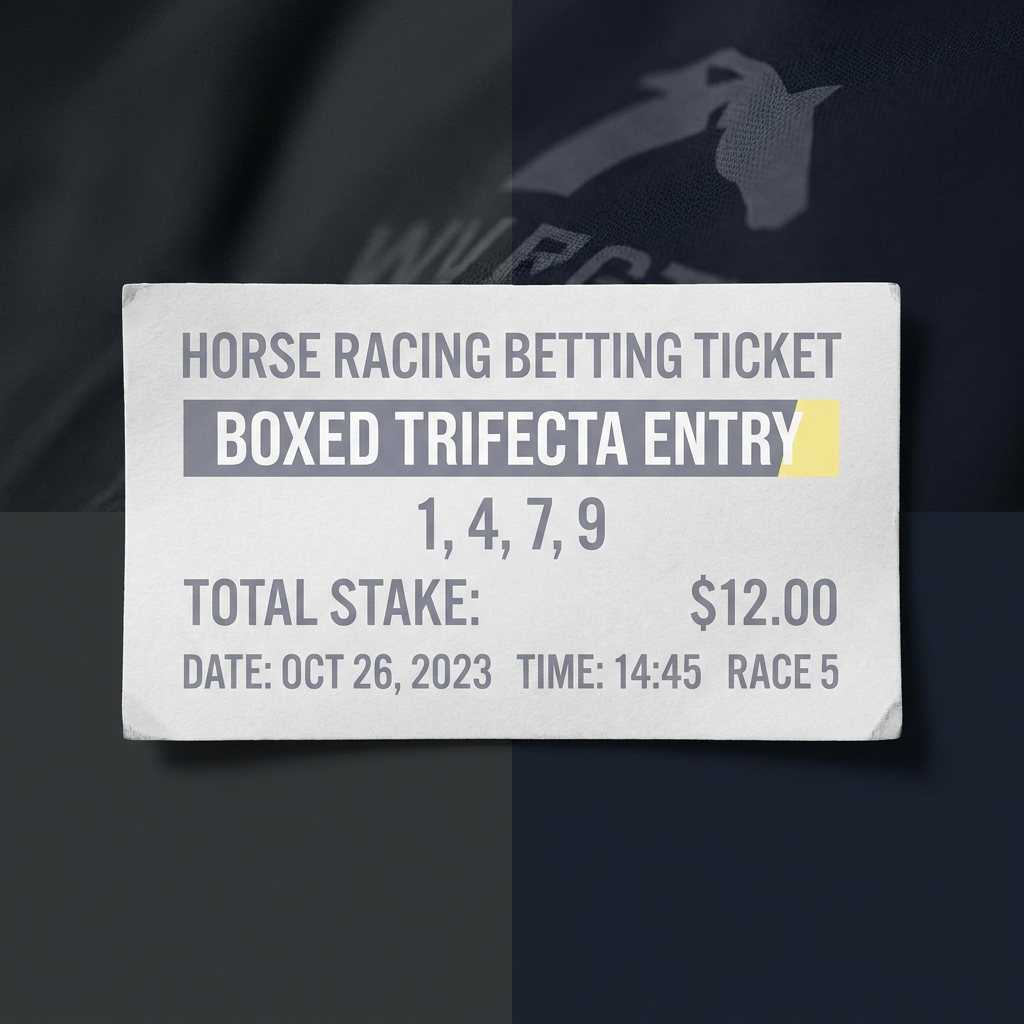
Once you know that a 5-horse trifecta box produces 60 combinations, the general cost rule is straightforward: ticket cost equals the base stake multiplied by the number of combinations. Each permutation is one ticket at the chosen base stake, so the arithmetic is linear with the stake America's Best Racing on how to bet trifectas
Here are standard denomination examples many U.S. operators show. Multiply the base stake by 60 to get total cost: $0.10 × 60 = $6.00, $0.50 × 60 = $30.00, $1.00 × 60 = $60.00, $2.00 × 60 = $120.00 Xpressbet trifecta cost examples
Worked example: if you prefer a $0.50 base stake, you buy 60 tickets at $0.50 each. Total cash laid out is 60 × $0.50 = $30.00. That is the ticket cost; it is not a guaranteed payout. Pari-mutuel pools determine final payouts after takeout and other tickets are settled NYRA on pari-mutuel pools and wagers
A 5-horse trifecta box creates 60 ordered combinations; multiply your chosen base stake by 60 to find the ticket cost, and verify minimum denominations and house rules with the racing operator.
If your track allows only a $0.10 minimum, the same 60 combinations cost 60 × $0.10 = $6.00, which can be a practical way to get full coverage at low outlay; verify the operator's minimums because availability of $0.10 trifectas varies by operator and meet ARCI model rules on minimums and offerings
Remember: buying the combinations buys exposure to winning orderings but does not set your payout. Ticket cost and payout are separate: the ticket cost is what you pay to enter those permutations while payouts come from the pooled money and depend on how many winning tickets exist in the pool America's Best Racing on pari-mutuel payouts
Reducing cost: keying and partial wheels as practical alternatives
Keying a horse means fixing it to a specific place on the ticket, for example always putting Horse A in first place, and letting other horses fill the remaining places. This reduces the number of permutations because one or more positions are locked, and keyed strategies are common to lower total outlay while keeping focused coverage TwinSpires Edge guide on keys and wheels
Example of a single key: if you key Horse A to win and box horses B, C, D, E for second and third, you calculate permutations for the remaining two places as P(4,2) = 4 × 3 = 12. So a 1-keyed ticket produces 12 permutations instead of 60, and costs base stake × 12.
Keying two horses narrows things further. For example, if you key Horse A to finish first and Horse B to finish second, the third place can be any of the remaining three horses, giving 3 permutations. The trade-off is reduced coverage versus lower cost and different payout profiles when a keyed result hits TwinSpires on keyed trifectas
Partial wheels are another common method. A partial wheel mixes boxed and keyed elements so you cover many sensible outcomes without buying every permutation. For instance, wheel Horse A and B over three others for the top two positions combined with a boxed set for third can dramatically reduce combinations compared with a full box America's Best Racing on wheels
Common mistakes, operator rules, and things to double-check
One frequent error is miscounting permutations by treating ordered bets like unordered combinations. That mistake leads to underpaying or overpaying for coverage. Verify your math using the permutation rule so you buy the expected number of tickets TwinSpires edge on counting permutations
Operator rules affect both ticket construction and cost. Minimum denominations, allowed ticket types, and how scratches or late changes are handled vary by track and are established under jurisdictional rules. Always check the host operator's wagering menu and house rules before you buy NYRA wagering rules. See the Funded Plays blog for more on house rules.

Ticket preview tools at many operators let you confirm the number of combinations and the total cost before finalizing a wager. Use the preview and a quick manual count to avoid unexpected spends or misconstructed bets Xpressbet on ticket previews and wagering 101. See the Funded Plays guide.
Worked scenarios: sample tickets and cost comparisons
Scenario A: full 5-horse box. Count: 5 × 4 × 3 = 60 combinations. Costs at common base stakes: $0.10 = $6.00, $0.50 = $30.00, $1 = $60.00, $2 = $120.00. These are direct multiplications of the base stake by 60 and show how quickly cost scales with stake size America's Best Racing examples
Scenario A worked math: if you choose $1 base, your total spend is 60 tickets × $1 = $60. If you prefer a $0.50 base to balance spend and potential payout, the total is 60 × $0.50 = $30. Use the operator's ticket preview to confirm the final charge and that the system interprets your request as a full 5-horse box Xpressbet on cost calculations
Scenario B: keyed example. Suppose you key Horse A to finish first and box B, C, D, E for the other two places. The count is P(4,2) = 4 × 3 = 12 permutations. Cost at $1 base = 12 × $1 = $12. This is a substantial reduction from $60 and is appropriate when you have strong conviction about one horse but want coverage behind it TwinSpires keyed example
Scenario B worked math: if instead you key A and B to finish in the top two spots in that order and allow C, D, E for third, count = 3 permutations; at $0.50 base your ticket cost = 3 × $0.50 = $1.50. That ticket buys tight coverage at very low cost but sacrifices full-group protection, so choose keyed approaches based on confidence and bankroll plans TwinSpires on keyed risk trade-offs
Scenario C: a partial wheel that targets top contenders. Example construction: wheel Horses A and B across C, D, E for the top two positions and box C, D, E for third. Count the specific ordered outcomes from the construction to compute total permutations and then multiply by base stake to get ticket cost. Partial wheels require explicit counting or a ticketing tool to prevent omissions America's Best Racing on wheels and permutations
Summary and next steps: quick checklist before you buy a 5-horse box
Summary and next steps: quick checklist before you buy a 5-horse box
Recap: a 5-horse trifecta box produces 60 distinct ordered permutations, and the ticket cost equals the base stake multiplied by 60. Use that rule for quick cost planning and then verify with your operator's ticket preview OpenStax on permutations
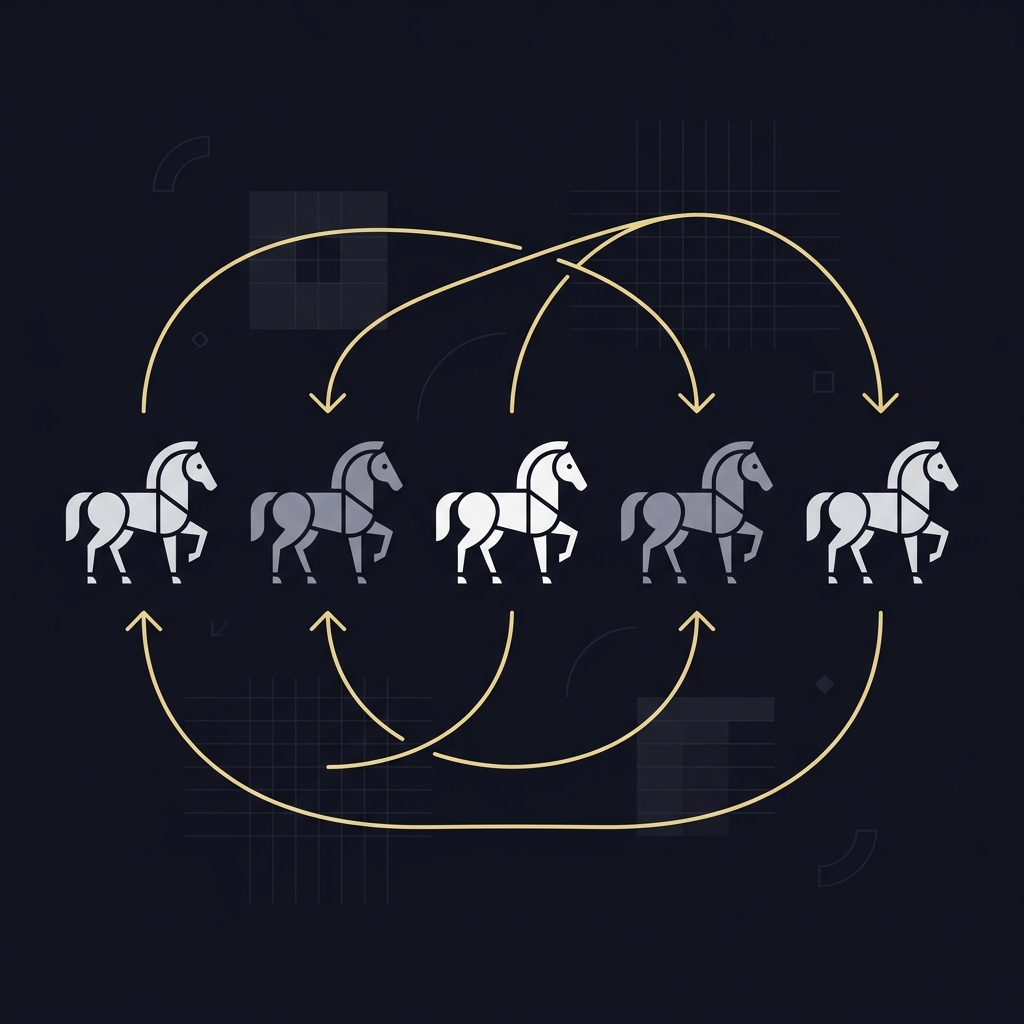
Checklist to run through before purchase: confirm the base stake and minimums, do the multiplication base stake × 60 to find the total, consider keyed or partial wheel options to reduce cost, and check scratch and house rules so you know how changes affect coverage NYRA wagering menu and rules. Also visit the Funded Plays homepage.
quick trifecta box cost calculator
Multiply base stake by combinations to get ticket cost
Final steps: use the operator's ticket preview to check that the system shows the expected number of permutations and the correct total, and confirm you are comfortable with the potential payout profile of boxed versus keyed tickets America's Best Racing on ticket previews
A 5-horse trifecta box creates 60 distinct ordered combinations, calculated using the permutation rule P(n,3) with n = 5.
Multiply the base stake by 60. For example, $0.50 base stake × 60 = $30.00 total ticket cost.
Yes. Keyed trifectas and partial wheels limit permutations and lower cost but provide less complete coverage than a full box.
References
- https://edge.twinspires.com/racing/how-to-bet-a-trifecta/
- https://www.nyra.com/belmont/racing/wagering-information/wager-types/trifecta
- https://www.arci.com/wp-content/uploads/2024/08/Model_Rules_of_Racing_Pari-Mutuel_Wagering.pdf
- https://openstax.org/books/precalculus-2e/pages/9-3-permutations-and-combinations
- https://www.americasbestracing.net/gambling/2020/how-bet-trifectas-tri-bet
- https://www.xpressbet.com/wagering-101/trifecta
- https://www.fundedplays.com/challenges
- https://www.fundedplays.com
- https://www.fundedplays.com/blogs
- https://www.fundedplays.com/blogs/how-fundedplays-evaluations-work
- https://www.covers.com/horse-racing/trifecta-wagering
- https://interbets.com/boxes-wheels/
- https://www.fanodds.com/us/blog/what-is-a-trifecta