

Quick answer: what a $1 exacta box with 4 horses costs
One-sentence summary
A 4-horse exacta box produces twelve ordered 1-2 combinations, so at a $1 base unit the total stake is $12; at tracks that use a $2 base the same box costs $24, reflecting the combination count multiplied by the track's base unit America's Best Racing guide to box costs.
Short explanation of the math
Exacta boxes pay on ordered finishes, so you are effectively buying every ordered 1-2 line among your selected horses. For four horses that produces 4 times 3, or 12 ordered combinations; each combination is priced at the track's base stake so the multiplication gives the final cost.

How boxed exactas work: the math behind combinations
Permutation formula P(n,2) explained
The general count for an n-horse exacta box is given by the permutation P(n,2) = n times (n minus 1). That formula counts ordered 1-2 finishes rather than unordered pairs, which is why adding even a single horse increases the number of combinations noticeably TwinSpires Edge exacta explanation.
Why order matters in exactas
Order matters because an exacta pays only when the exact first and second places match your ticket. A boxed exacta simply purchases every ordered pair among your chosen set so you do not have to predict which of those horses finishes first; you still must cover the order possibilities.
Worked example for n=4: P(4,2) = 4 times 3 = 12 combinations. If your track uses a $1 base, 12 combinations times $1 equals $12 total. If the track uses a $2 base, the same 12 combinations times $2 equals $24 total.

Confirm base units and totals on the FundedPlays Challenges page
Before placing a boxed exacta, check the base unit shown on the bet ticket so you know whether the platform is charging $0.50, $1, or $2 per combination.
How trifecta boxes compare: P(n,3) and the 4-horse case
Permutation formula P(n,3)
Trifecta boxes count ordered 1-2-3 finishes using the permutation P(n,3) = n times (n minus 1) times (n minus 2). Because trifectas require a specific first, second, and third, the number of combinations grows faster than with exactas.
Exact comparison: 4-horse trifecta box cost
For four horses a trifecta box yields 4 times 3 times 2 = 24 ordered combinations, so the final stake equals 24 times the track's base unit; for example, at a 50 cent base that is $12 total and at a $1 base that is $24 total America's Best Racing combination table.
Compute trifecta combinations from number of horses
Use integer values for horses
4 horse boxed trifecta cost
When someone asks about the 4 horse boxed trifecta cost, remember that 'boxed' means every ordered 1-2-3 among those four horses is included, which is 24 lines; the price you pay is those 24 lines times the base stake set by the track or operator.
Why the base unit matters: $0.50, $1 and $2 minimums
How track minimums set the price per combination
The base unit is the minimum stake charged per combination and is defined by the track or the wagering operator. A track that lists an exacta minimum of $1 will price each exacta combination at $1, while an operator with a 50 cent trifecta minimum will price each trifecta combination at $0.50; that setting directly determines the total you will be asked to pay.
A $1 exacta box with four horses costs $12 because the box covers 12 ordered combinations and each combination is $1.
Examples from major track menus
Many major U.S. tracks publish wagering minimums on their racing pages so you can confirm the base unit before betting; for a representative example of a track wagering information page consult the NYRA wagering information menu NYRA wagering information.
Step-by-step: how to place a 4-horse exacta box
Choosing horses and the box option
On a modern betting interface or at the betting window start by selecting the four horses you want to include. Look for an option labeled 'box', 'boxed exacta', or a box checkbox; choosing that option tells the system you want every ordered 1-2 combination among those selections.
Setting the base amount and confirming the total

Next set the base stake per combination, commonly a value like $0.50, $1, or $2 depending on the operator. Most digital interfaces calculate the number of combinations and display the total cost before you confirm; verify that the displayed total matches the expected multiplication of combinations by the base unit TwinSpires Edge placing boxed exacta.
Cost examples: quick calculations you can reuse
4-horse exacta and trifecta examples
Quick reference lines you can copy: 4-horse exacta box = P(4,2) = 4 times 3 = 12 combinations, so cost = 12 times base. At $1 base cost = $12. At $2 base cost = $24. 4-horse trifecta box = P(4,3) = 4 times 3 times 2 = 24 combinations, so cost = 24 times base; at $0.50 base cost = $12, at $1 base cost = $24 America's Best Racing combinations.
5-horse and scaling examples
To see scaling, compute P(n,2) and P(n,3) for n = 5: exacta P(5,2) = 5 times 4 = 20 combinations, so a $1 exacta box with five horses costs $20. Trifecta P(5,3) = 5 times 4 times 3 = 60 combinations, so at a 50 cent base that trifecta box costs $30. These examples show why adding one horse can multiply the cost by large factors quickly.
Decision criteria: when a box makes sense
Situations suited to boxed exactas
Boxing is efficient when you believe multiple horses are strong contenders and you want to cover order permutations without predicting the exact finishing order. It is a pragmatic way to cover a small set of plausible outcomes when odds or perceived value justify the aggregation of combinations.
When boxing becomes too expensive
Boxing becomes less attractive as the number of horses grows because combinations increase factorially; once the total exceeds your value threshold or bankroll rules you should prefer keyed bets or selective combinations to control cost and focus on higher-value lines FanDuel TVG explanation of combination scaling.
Bankroll impact: how quickly boxed costs can grow
Scaling formulas for exacta and trifecta
Use P(n,2) for exactas and P(n,3) for trifectas to estimate spending per race. For each additional horse the permutation product includes one more factor so costs accelerate; this makes it important to plan how much of your bankroll you are willing to expose to multi-combination bets.
Examples showing bankroll drain
Concrete comparisons: a $1 exacta box with four horses is $12, with five horses it is $20. A 50 cent trifecta box with four horses is $12, with five horses it is $30. Those jumps show how a couple of large boxed bets can use a significant portion of a small bankroll.
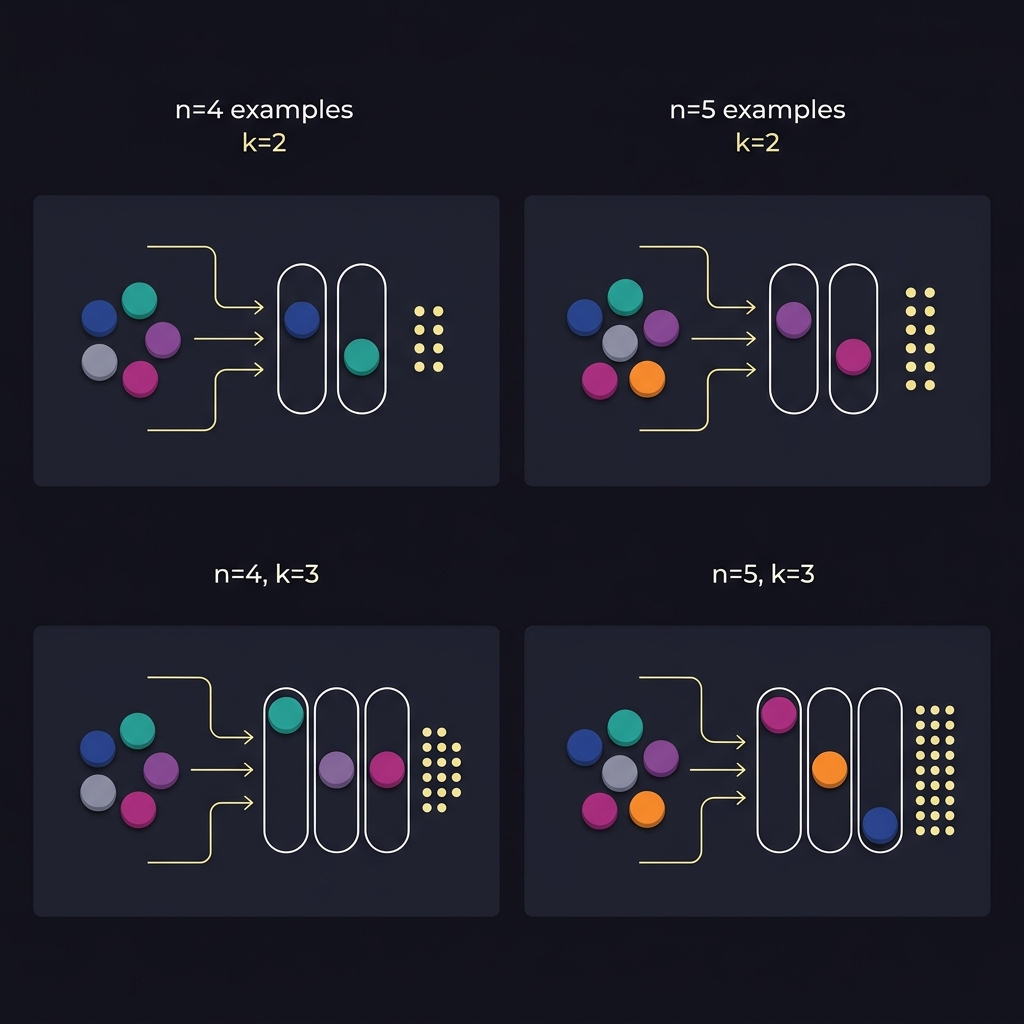
Recommended approach: cap any single race boxed exposure to a fixed percentage of your active bankroll, or set a hard dollar limit per day; treat boxed combinations as deliberate allocation decisions rather than casual ticket add-ons.
Common mistakes and pitfalls to avoid
Not checking the base unit
One frequent error is assuming the base unit when the operator uses a different minimum. Since total cost equals combinations times base, failing to verify the base unit can result in an unexpectedly large charge; always confirm the base before finalizing the ticket TwinSpires Edge warning on bet entry.
Accidentally duplicating horses or incorrect ordering
Another common problem is choosing the wrong bet type or duplicating a horse selection so that you buy fewer or different combinations than intended. Always re-check the ticket summary to confirm the chosen horses, the 'box' option, the base stake, and the displayed total.
Real-world references: what menus at NYRA, Churchill Downs and Keeneland show
Where to find wagering minimums on track sites
Track wagering pages list current minimums and betting rules; for example consult NYRA's wagering information page to see their stated minimums and rules that set the base unit used to price combinations NYRA wagering information.
How menus affect your bet price
Churchill Downs and Keeneland also publish minimums and wagering menus that determine whether an exacta is priced at $1 or another denomination; review their pages before betting so you know what the operator will charge per combination Churchill Downs wagering page.
For another regional wagering menu example see the Keeneland wagering page to confirm local minimums and any special rules that affect the base unit Keeneland wagering menu.
Pre-submit checklist: what to confirm before you hit place
Quick items to review on the bet ticket
Checklist: selected horses correct; 'box' option engaged; base unit visible; displayed total equals your manual calculation; track/operator rules acknowledged. If any item looks off, pause and adjust before confirming the bet.
Final sanity checks
When unsure, do a quick manual multiplication of combinations times base unit to compare with the interface total. That quick cross-check prevents accidental overspending due to mis-clicks or misread denomination settings FanDuel TVG placing guidance.
Remember that stake calculation and payout calculation are separate. The boxed combination cost sets how much you pay; the eventual payout comes from the pari-mutuel pool after takeout and depends on how many winning tickets share the pool. High cost does not guarantee a high payout.
Treat the stake math as a budget decision and the potential payout as an independent check based on pool size and final odds. Check the published takeout rates and watch pools near closing if you want a better sense of likely return dynamics.
Quick examples and FAQs for fast calculations
Mini Q and A with sample math
Quick lines to reuse: Exacta box combos = P(n,2) = n*(n-1). Trifecta box combos = P(n,3) = n*(n-1)*(n-2). Cost = combinations * base unit. Use these lines in a phone calculator to confirm the ticket total in seconds America's Best Racing quick table.
Conversion examples for different base units
Conversion cheat: multiply the known combination counts by 0.5, 1, or 2 to get the cost at 50 cent, $1, or $2 bases respectively. For the 4-horse exacta that is 12 times those factors, giving $6 at 50 cents, $12 at $1, and $24 at $2.
Wrap-up: the takeaway on boxed exacta and trifecta costs
One-paragraph summary
Use P(n,2) for exactas and P(n,3) for trifectas to compute combinations, then multiply by the track's base unit to get the total stake; specifically a 4-horse exacta box is 12 combinations so costs $12 at a $1 base, and a 4-horse trifecta box is 24 combinations so costs 24 times whatever base your operator sets TwinSpires Edge reference.
Next steps for the reader
Before you place a boxed bet, confirm the base unit on the platform menu, run the P(n,2) or P(n,3) calculation for your n, and use the pre-submit checklist to avoid entry errors. Practicing the math on a small number of lines builds confidence and helps preserve your bankroll.
A 4-horse exacta box has 12 ordered combinations, calculated as 4 times 3 using P(n,2).
A 4-horse trifecta box has 24 combinations, so it costs 24 times the track's base unit; for example, $12 at a 50 cent base or $24 at a $1 base.
Confirm the selected horses, that the 'box' option is active, the base unit displayed, and that the interface total matches a manual combinations times base calculation.
References
- https://www.americasbestracing.net/gambling/2017-handicapping-how-much-does-exacta-trifecta-and-superfecta-box-cost
- https://www.fundedplays.com/challenges
- https://edge.twinspires.com/racing/what-is-an-exacta-bet/
- https://www.nyra.com/belmont/racing/wagering-information
- https://www.keeneland.com/racing/wagering/details
- https://www.churchilldowns.com/come-to-the-track/visiting-information/event-information/
- https://www.keeneland.com/racing/wagering
- https://www.tvg.com/learn/exacta-bet
- https://www.fundedplays.com
- https://www.fundedplays.com/blogs
- https://www.fundedplays.com/blogs/how-fundedplays-evaluations-work